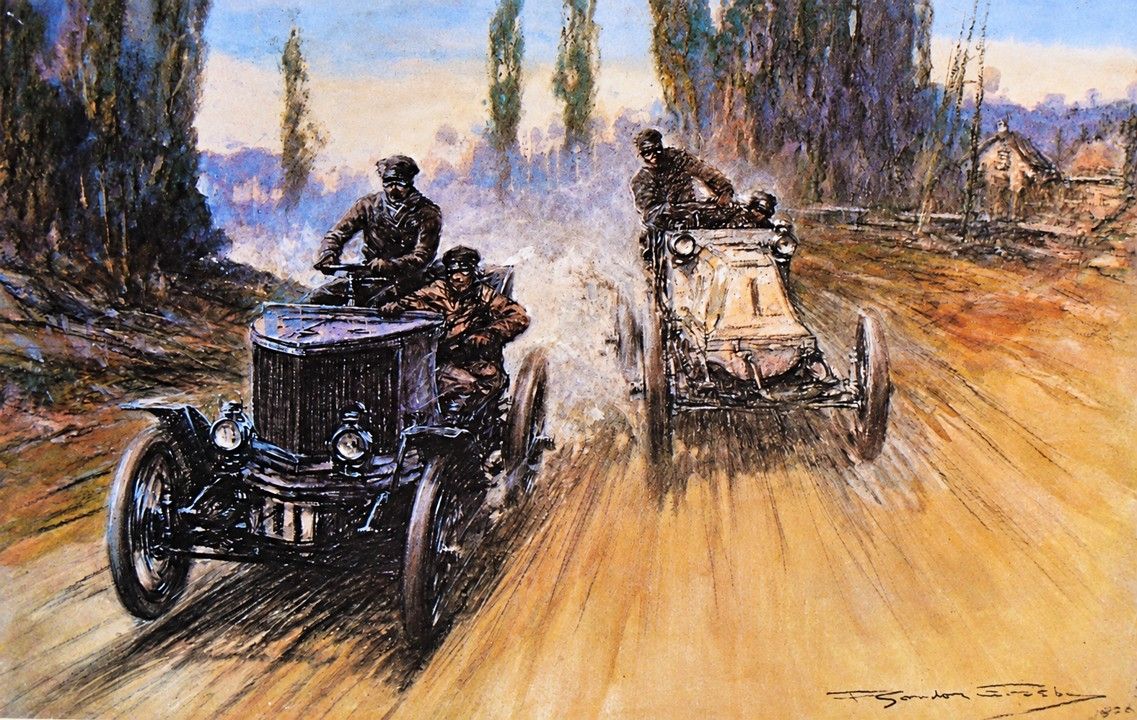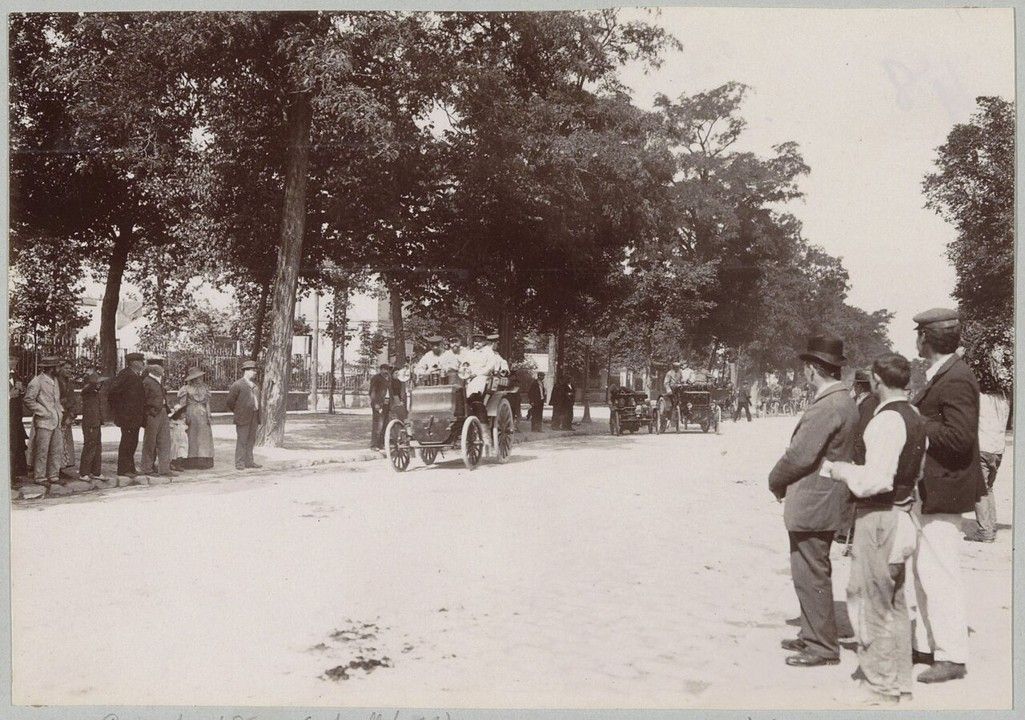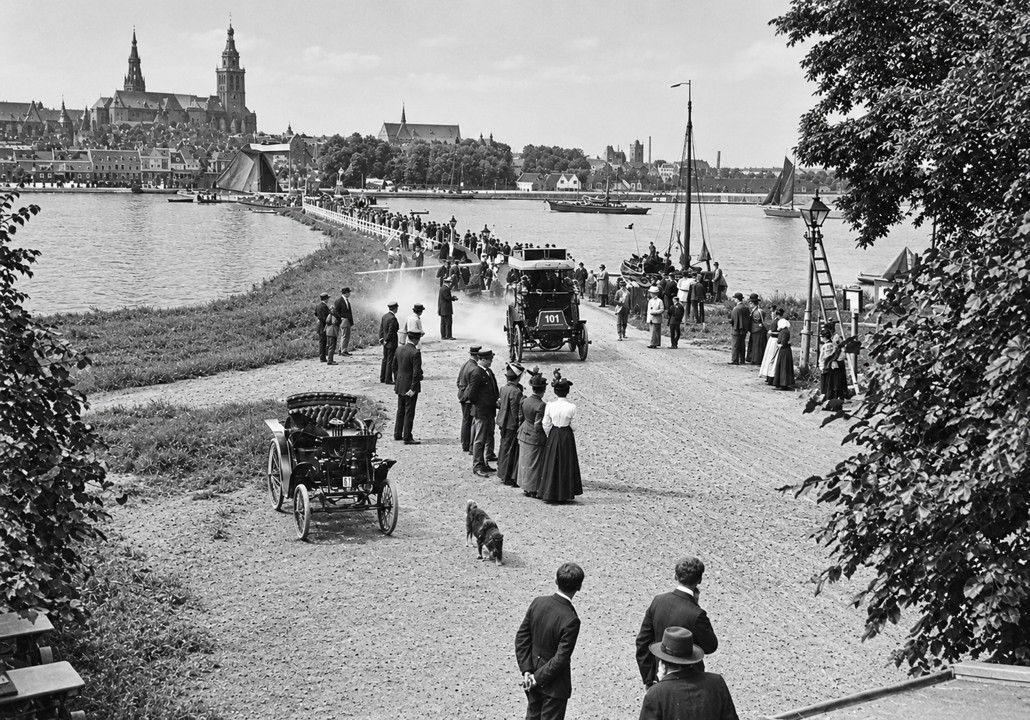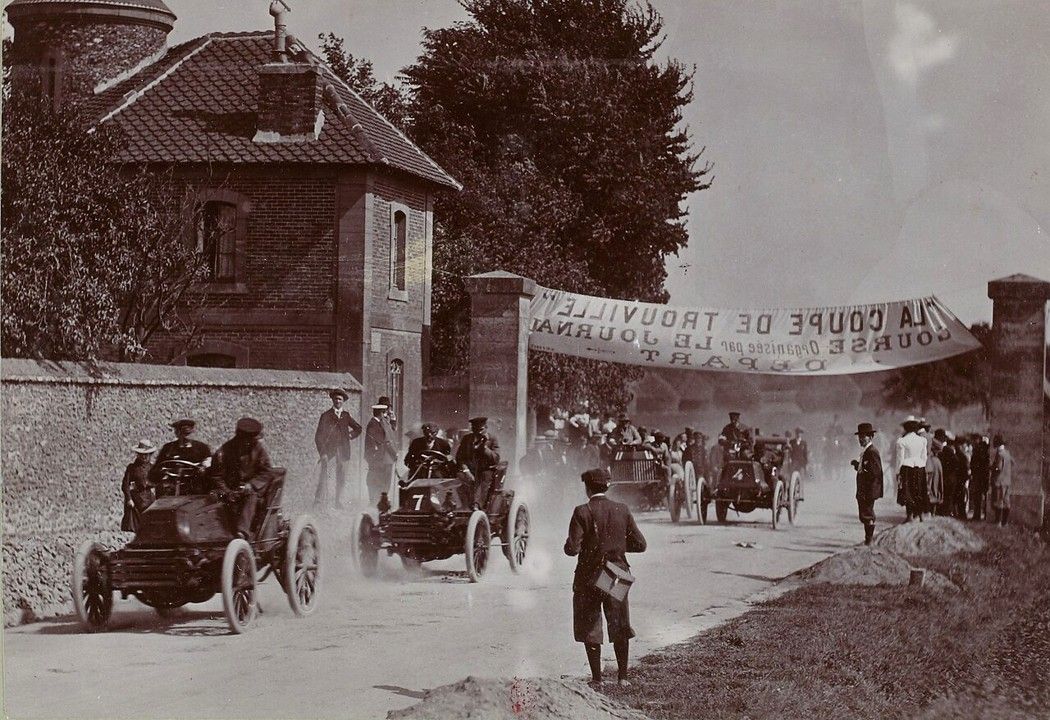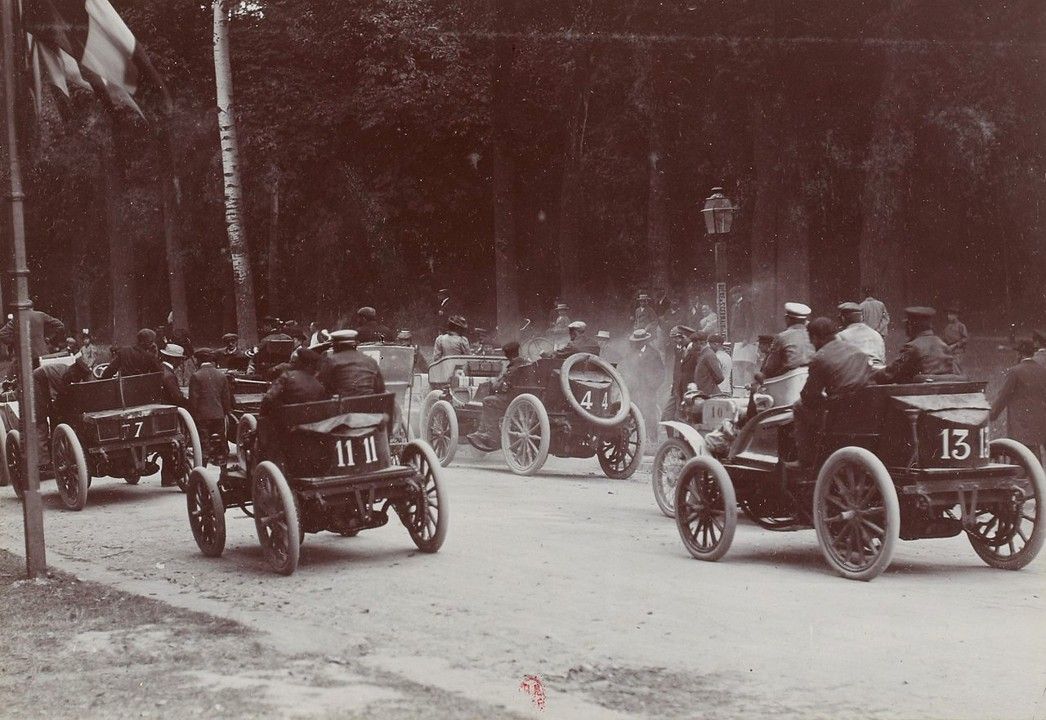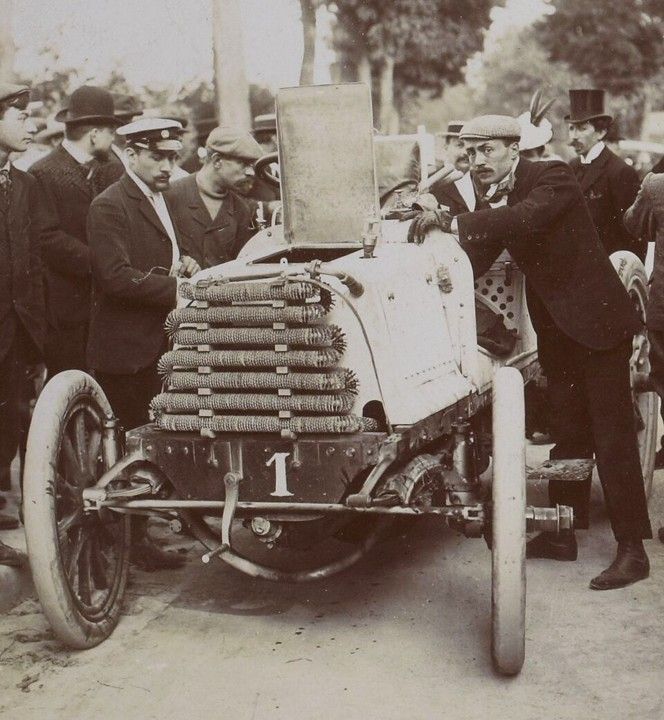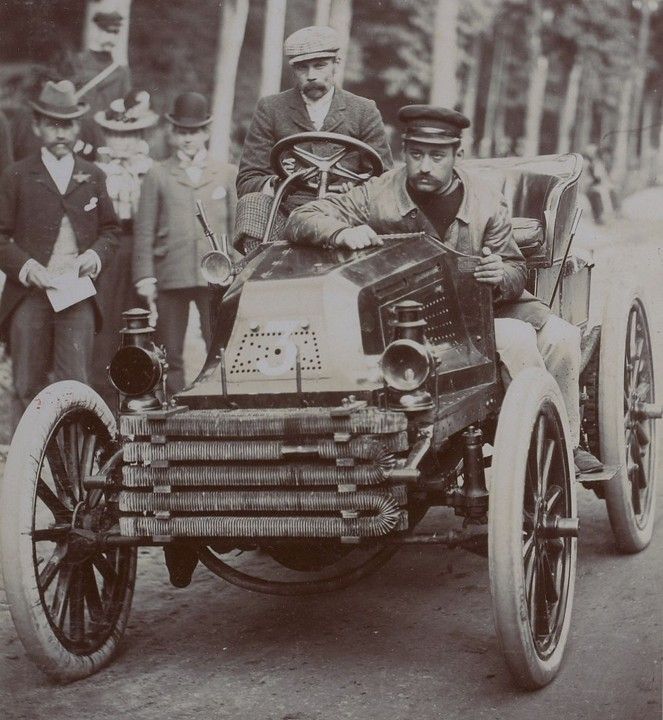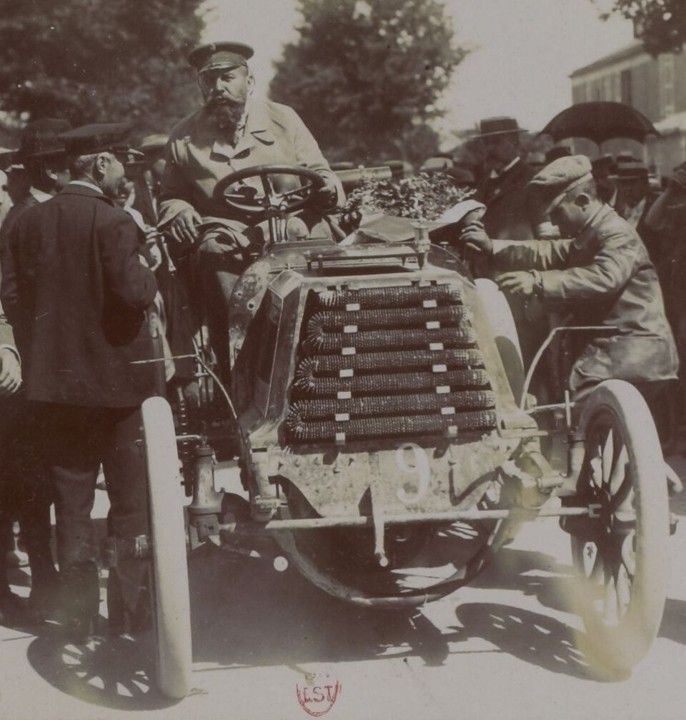
After three years of the original and first City-to-City races (or courses), the period 1897-1900 can be considered as the empirical validation phase of early automotive engineering. The IC-engine rapidly emerged as the dominant motive power, although the vehicles mostly resembled the older horse-drawn chariots and the steering wheel only came to replace the tiller somewhere in 1898. In 1899 even some thirty épreuves were organized from January till October.
The 1897 Paris-Dieppe and Paris-Trouville races over some 170 km, demonstrated the IC-engine’s baseline design.
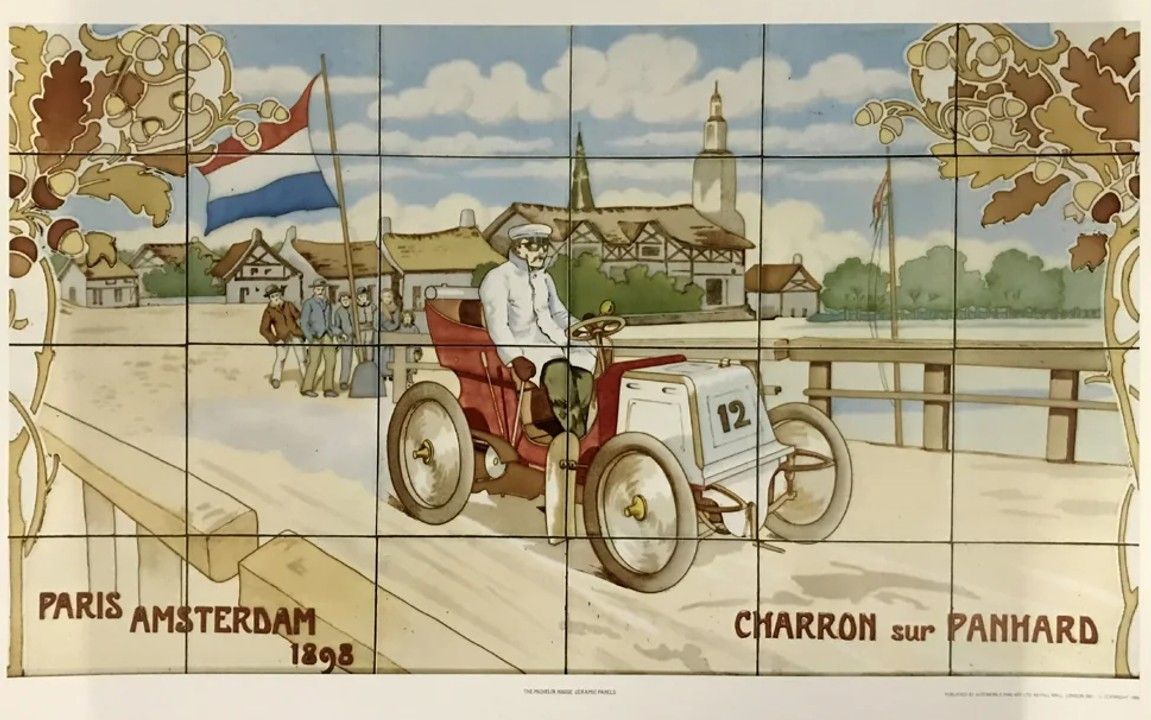
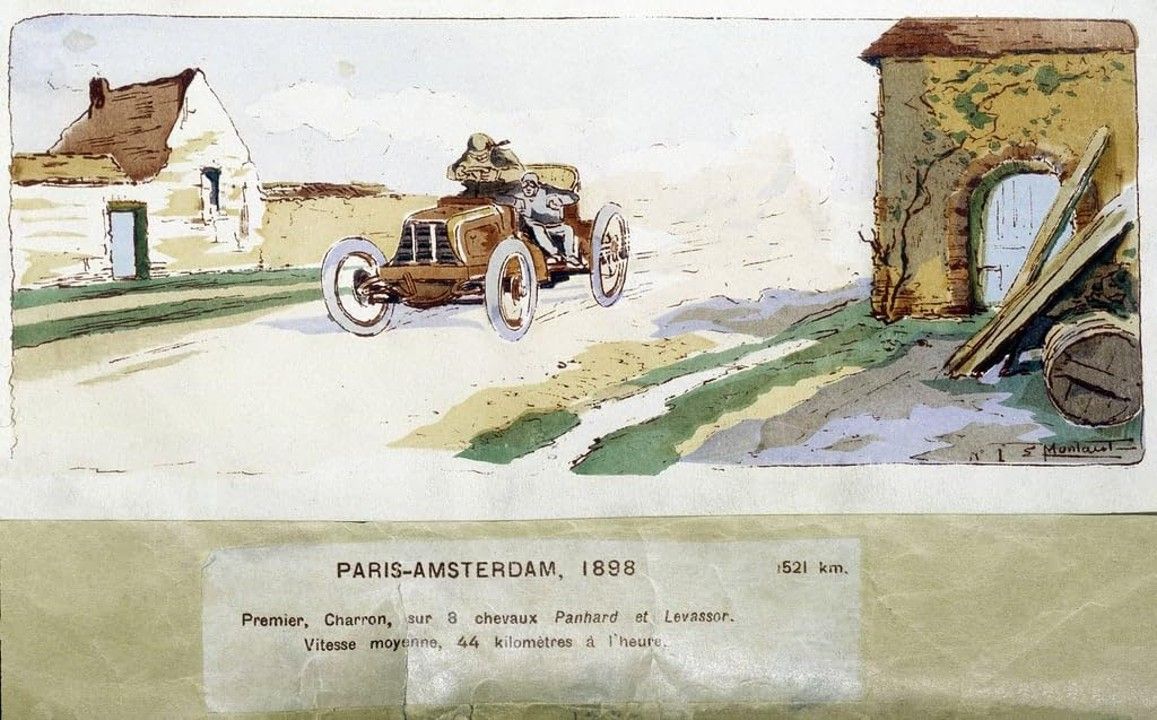
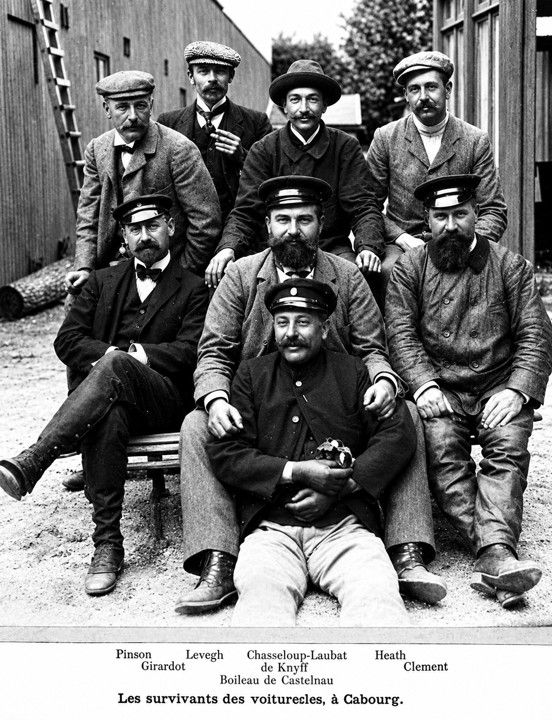
The 1898 Paris-Amsterdam-Paris race proved its long distance durabilty on a distance of more than 1300 km.
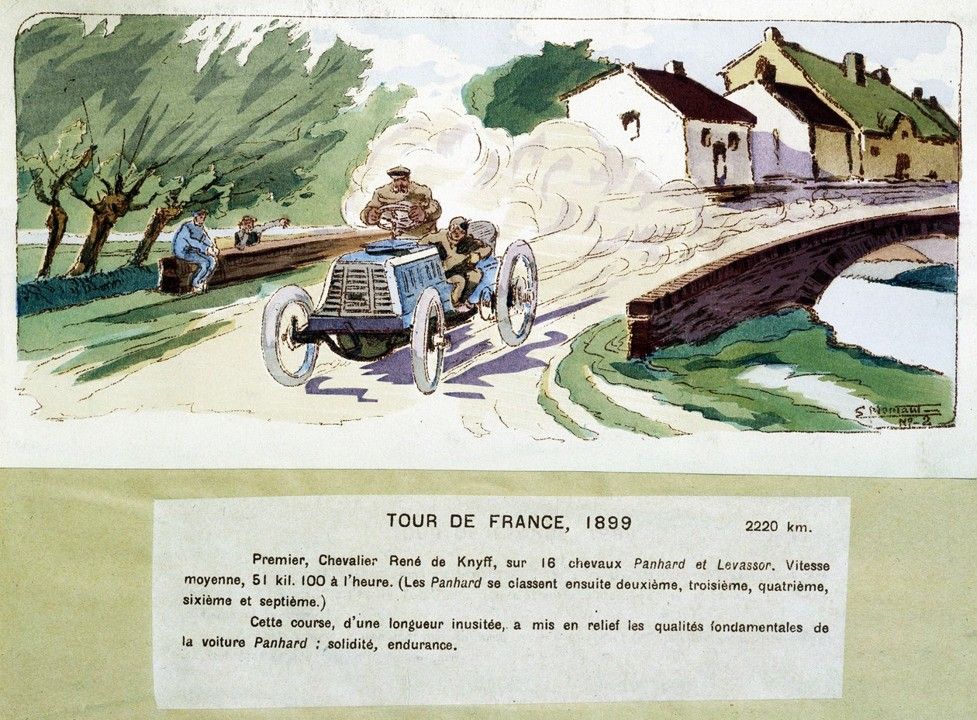
1899’s Tour de France with an even longer distance over some 2170 km with multiple stages, gave enormous amounts of data on durabilty, chassis and tires.
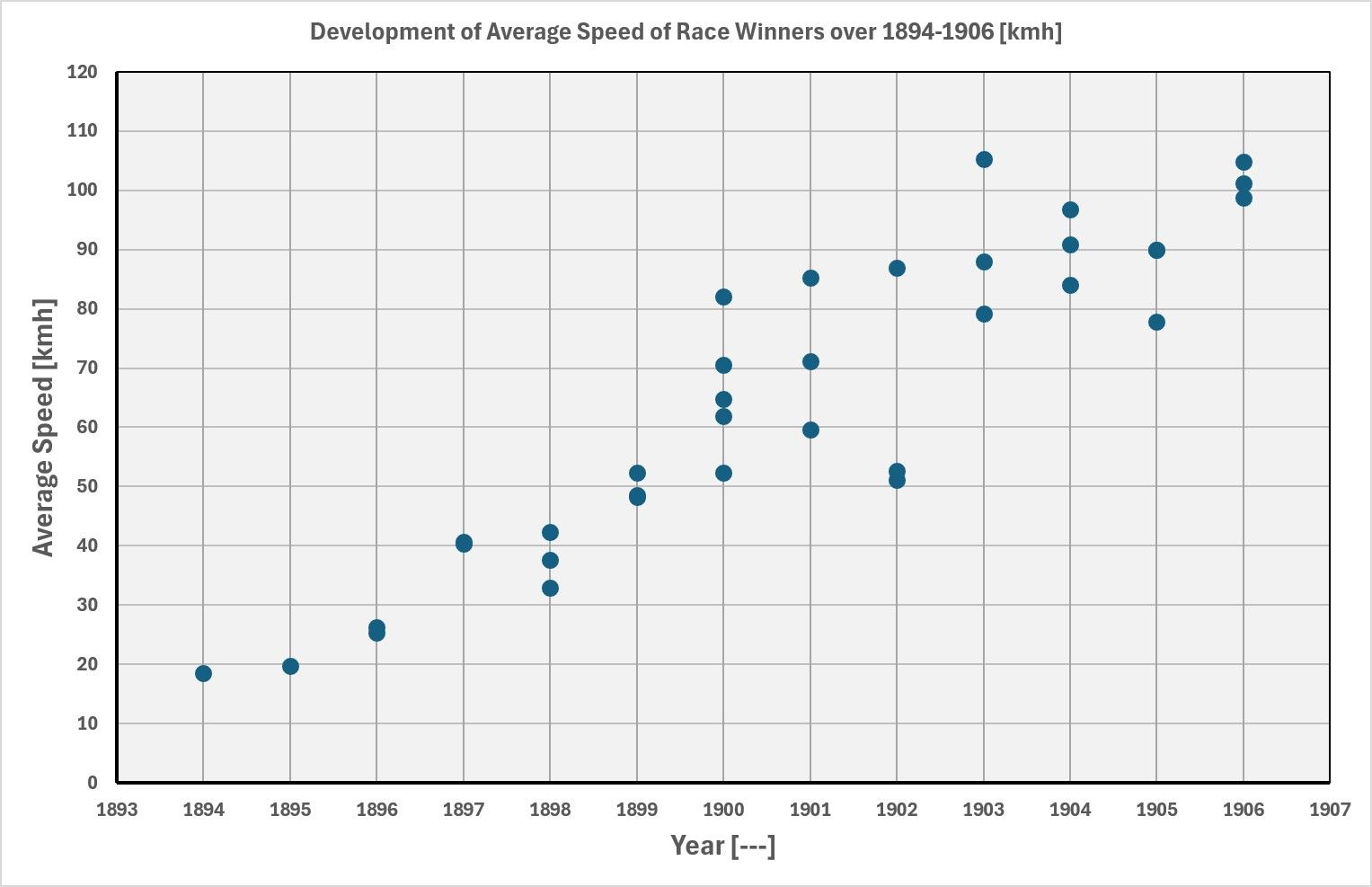
The shorter Paris-Bordeaux and Paris-Ostende races saw average speed even go up to some 50 kmh.
In the Early 1900 Course du Catalogue, where classes according to manufacturer’s catalog prizes were introduced, some 45 kmh were realized; whereas the Circuit de Sud-Ouest already showed that an average speed of roundabout 60 kmh became possible, as did the Paris-Bordeaux of that year.
The gallery shows a graph containing the development of the average contest speed over these years. Next to engine power, tire- and wheel technology as well as the condition of the roads were the most infuential factors for that period. On the other hand, these increasing speeds were one of the reasons that City-to-City races were banned some years later (1903 – “Race of Death”). (As per October 2026, this page is still under construction.)
1897 – 1900 Les Épreuves
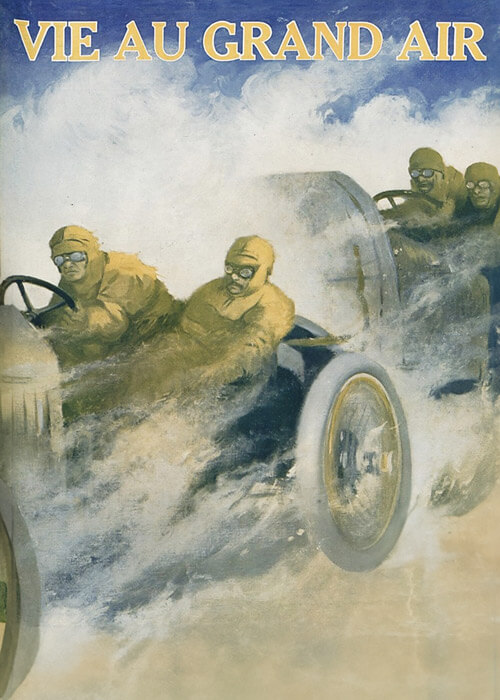
La Vie au Grand Air
- Mes Trois Courses Bordeaux-Paris - 1 June 1898 (on its way)
Le Matin
La Locomotion Automobile
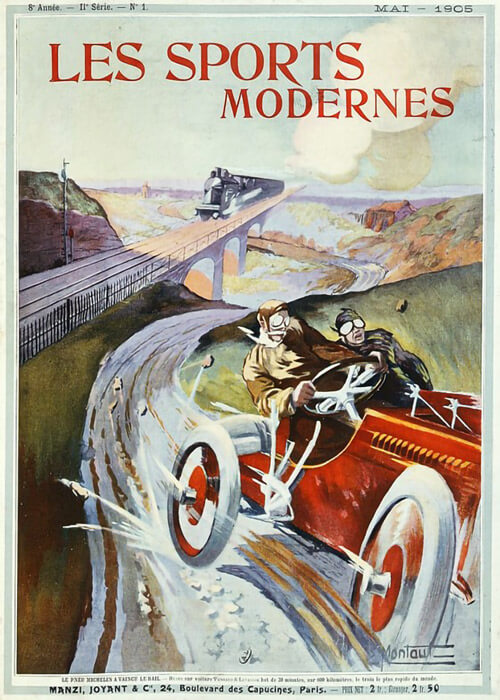
Les Sports modernes
Le Sport Universel Illustré
- La Course de Marseille-Nice - 19 March 1898 (on its way)
- Paris-Bordeaux et Bordeaux-Paris - 21 May 1898 (on its way)
- La Semaine de Bordaux-Paris - 10 June 1899 (on its way)