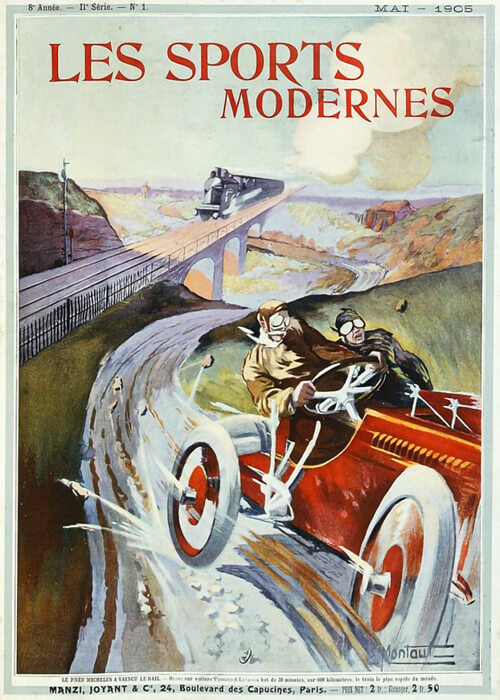
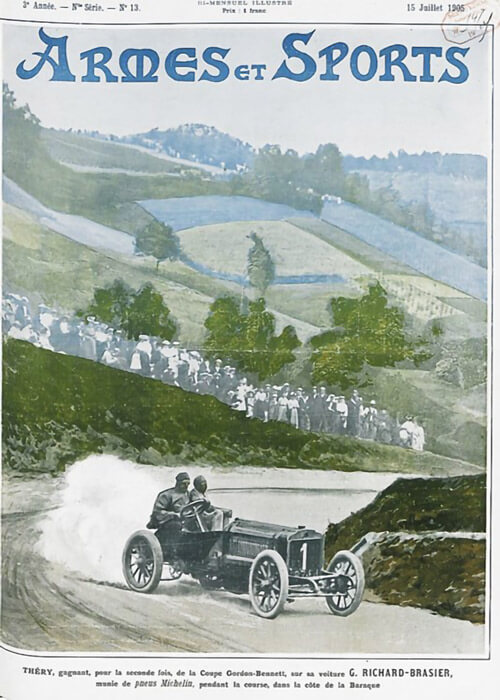
In this article, most of the “Grandes Épreuves” are briefly highlighted. The 1895 Paris-Bordeaux, the 1896 Paris-Marseille, the 1897 Paris-Dieppe, the 1898 Paris-Amsterdanm as well as the 1899 Tour de France. From 1900, the Circuit du Sud-Ouest, Semaine de Nice, Paris-Roubaix as the Bordeaux-Périgueux races. Then finally the Paris-Lyon, being the first Gordon Bennet Cup race, then finishing at the Course du Chanteloup and the Course du Gallion. As not all épreuves of that time are mentioned, a clear indication how much épreuves or courses were organised in that time period: a veritable concours era! (Translation separately).
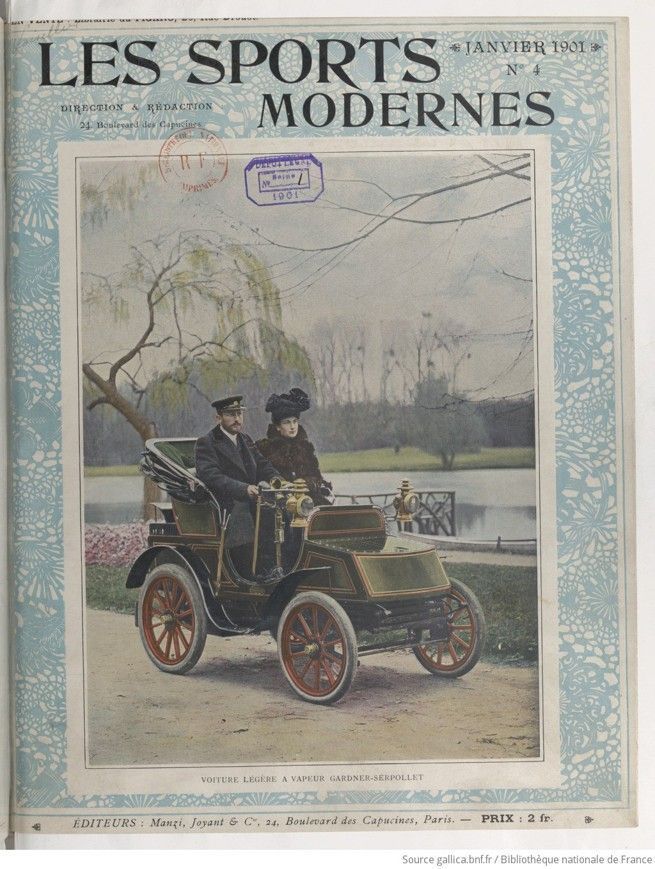
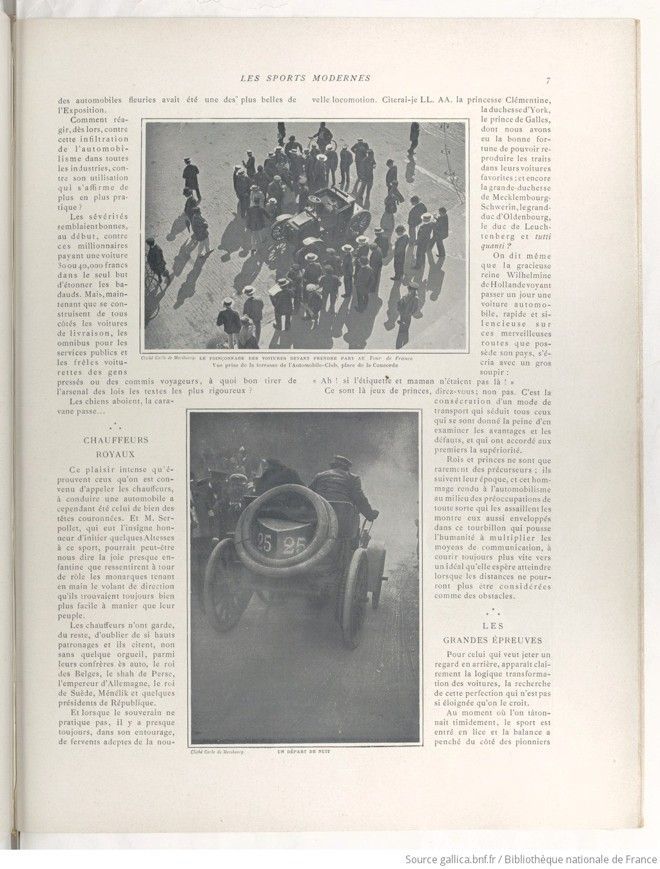
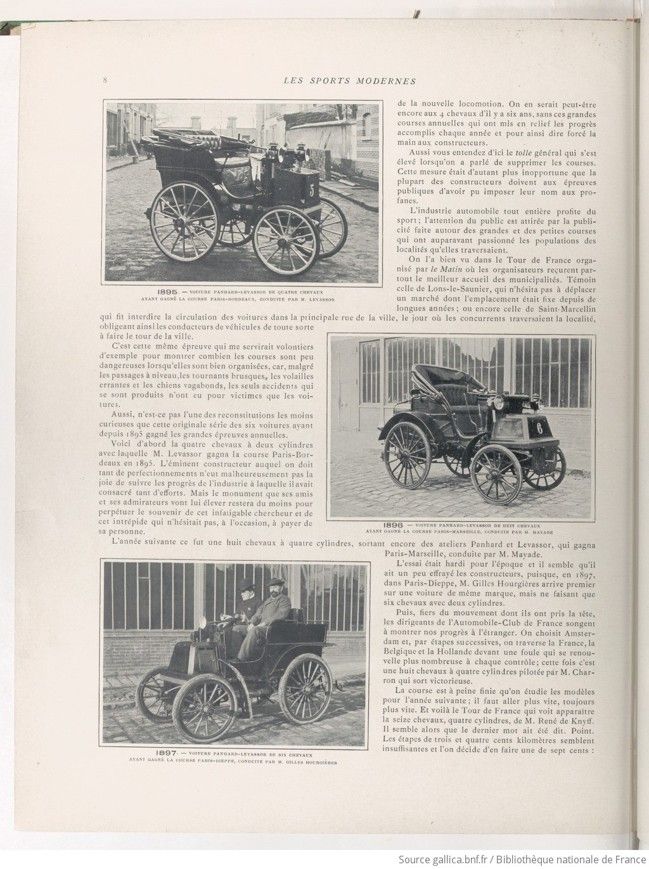
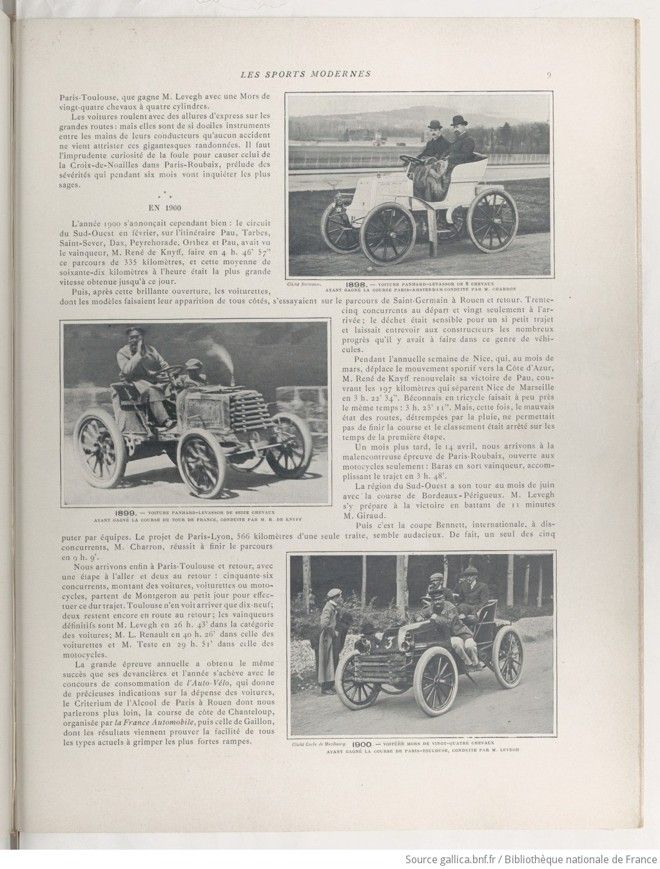
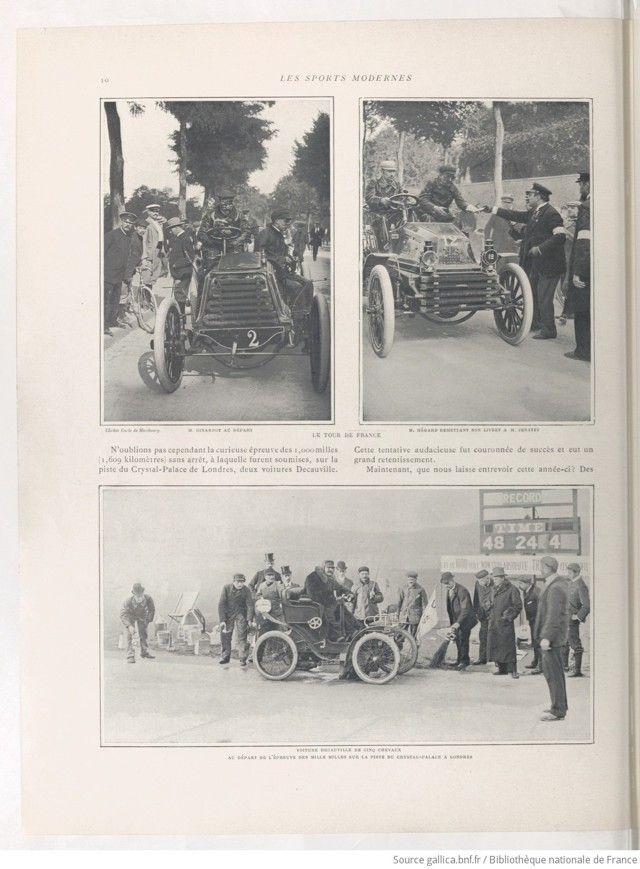
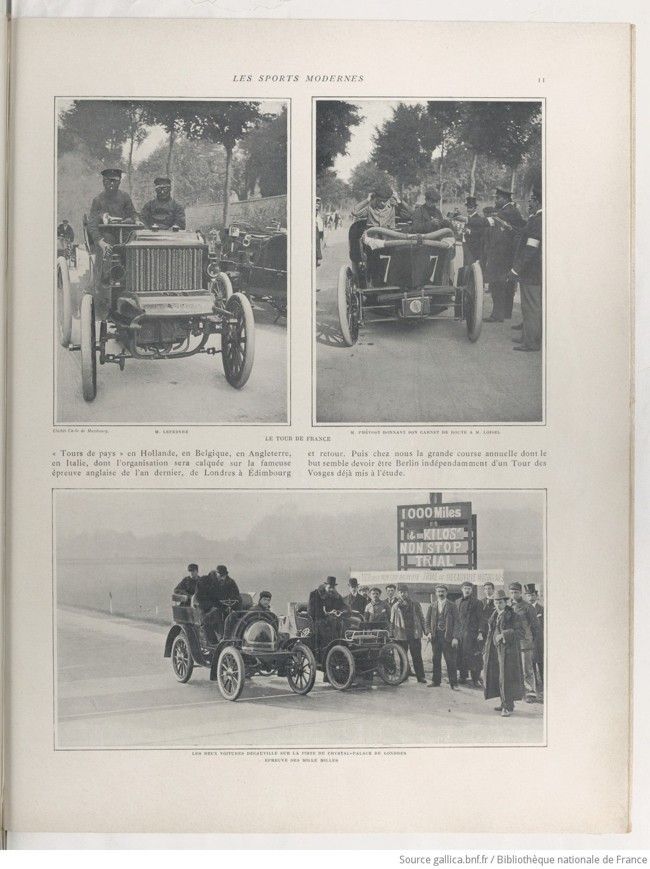
With permission of the Bibliothèque national francais gallica.bnf.fr
Text and photos compiled by motorracinghistory, Translation by DeepL deepl.com
Les Sports modernes (Modern Sports) – 4th Year, No. 4, January 1901
THE AUTOMOBILE – THE GREAT RACES
For those who look back, the logical evolution of automobiles becomes clear, as does the pursuit of that perfection—which is not as far off as one might think.
Just as we were tentatively feeling our way forward, the sport entered the fray, and the scales tipped in favor of the pioneers of this new mode of transportation. We might still be stuck with the 4-horsepower engines of six years ago were it not for these major annual races, which have highlighted the progress made each year and, so to speak, forced the manufacturers’ hand.
So you can imagine the general uproar that arose when there was talk of abolishing the races. This measure was all the more ill-timed given that most manufacturers owe their name recognition among the general public to these public events.
The entire automotive industry benefits from the sport; the public’s attention is drawn by the publicity surrounding races—both major and minor—that once captivated the residents of the towns they passed through.
This was clearly evident in the Tour de France organized by Le Matin, where the organizers received a warm welcome from local municipalities everywhere they went. Take, for example, the town of Lons-le-Saunier, which did not hesitate to relocate a market that had been held at the same location for many years; or the town of Saint-Marcellin, which banned car traffic on the town’s main street on the day the competitors passed through, thereby forcing drivers of all types of vehicles to go around the town.
It is this very race that I would gladly use as an example to show just how safe races are when they are well organized, for despite railroad crossings, sharp turns, stray poultry, and stray dogs, the only accidents that occurred involved only the cars themselves.
Moreover, is this original series of six cars—which have won the major annual races since 1895—not one of the most fascinating reenactments?
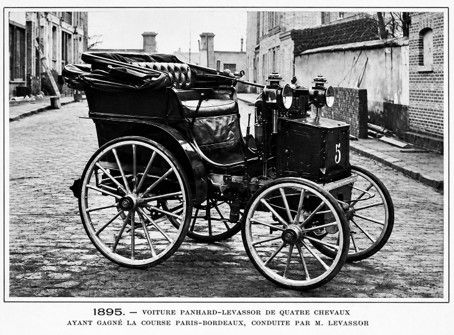
First is the two-cylinder four-horsepower car with which Mr. Levassor won the Paris-Bordeaux race in 1895. The eminent manufacturer, to whom we owe so many improvements, unfortunately did not live to see the progress of the industry to which he had devoted so much effort. But the monument that his friends and admirers will erect in his honor will at least serve to perpetuate the memory of this tireless innovator and intrepid man who did not hesitate, when necessary, to put himself on the line.
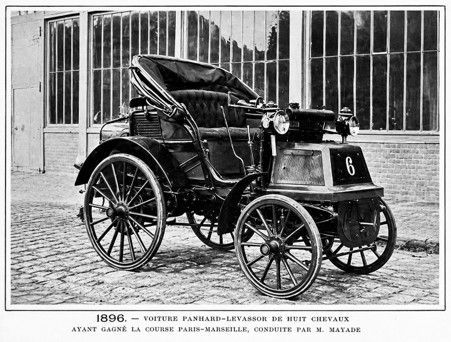
The following year, it was an eight-horsepower, four-cylinder car—also from the Panhard and Levassor workshops—that won the Paris-Marseille race, driven by Mr. Mayade.
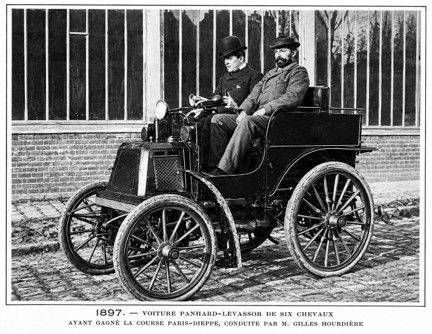
The endeavor was daring for the time, and it seems to have alarmed the manufacturers somewhat, since, in 1897, in the Paris-Dieppe race, Mr. Gilles Hourgières finished first in a car of the same make, but with only six chevaux and two-cylinders.
Then, proud of the movement they had spearheaded, the leaders of the Automobile Club of France decided to showcase our progress abroad. Amsterdam was chosen, and, in successive stages, the route crossed France, Belgium, and Holland before crowds that grew larger at each checkpoint; this time, it was an eight-horsepower, four-cylinder car driven by Mr. Charron that emerged victorious..
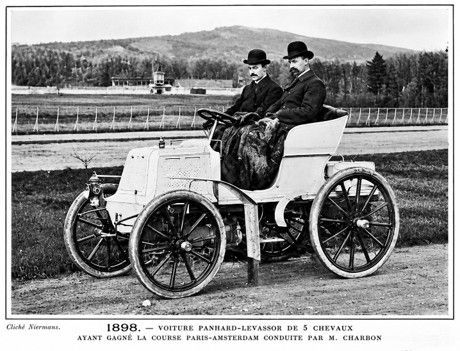
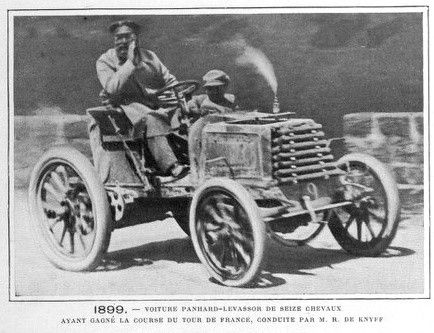
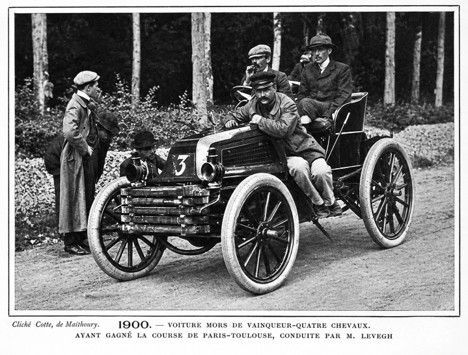
No sooner had the race ended than plans were already being made for the following year’s models; they had to go faster—always faster. And so the Tour de France saw the debut of Mr. René de Knyff’s sixteen-horsepower, four-cylinder car. It seemed then that the final word had been spoken. Period. The three- and four-hundred-kilometer stages seemed insufficient, so it was decided to add a seven-hundred-kilometer stage: Paris–Toulouse, which Mr. Levegh won in a twenty-four-horsepower, four-cylinder Mors.
The cars raced along the highways at express speeds: yet they were such docile machines in the hands of their drivers that not a single accident marred these gigantic journeys. It took the reckless curiosity of the crowd to cause the accident at Croix-de-Noailles during the Paris–Roubaix race, a prelude to the hardships that would trouble even the wisest for the next six months.
IN 1900
The year 1900 got off to a promising start, however: the Southwest Circuit in February—which followed the route Pau, Tarbes, Saint-Sever, Dax, Peyrehorade, Orthez, and back to Pau—saw the winner, Mr. René de Knyff, complete this 335-kilometer course in 4 h. 46′ 57s to complete this 335-kilometer course, and this average speed of seventy kilometers per hour was the highest recorded to date.
Then, following this brilliant debut, the small cars—models of which were appearing everywhere—took on the route from Saint-Germain to Rouen and back. Thirty-five competitors started, but only twenty finished; the dropout rate was significant for such a short journey and gave manufacturers a glimpse of the considerable progress that still needed to be made in this type of vehicle.
During the annual Nice-Week, which, in March, shifts the focus of the sporting world to the French Riviera, Mr. René de Knyff repeated his victory from Pau, covering the 197 kilometers between Nice and Marseille in 3 h. 22′ 34“. Béconnais, driving a tricycle, posted roughly the same time: 3 h. 23′ 1 1” . However, this time, the poor condition of the roads, soggy from the rain, made it impossible to finish the race, and the standings were determined based on the times from the first stage.
A month later, on April 14, we come to the ill-fated Paris-Roubaix race, open only to motorcycles: Baras emerged victorious, completing the course in 3 hours, 48 minutes. The Southwest region had its turn in June with the Bordeaux-Périgueux race. Mr. Levegh secured victory there, beating Mr. Giraud by 11 minutes.
Next came the international Bennett Cup, contested by teams. The Paris-Lyon project—566 kilometers in a single stretch—seemed daring. In fact, only one of the five competitors, Mr. Charron, managed to complete the course in 9 hours, 9 minutes.
We finally arrive at the Paris-Toulouse race and return trip, with one stage on the way there and two on the way back: fifty-six competitors, driving cars, small cars, or motorcycles, set out from Montgeron at dawn to tackle this grueling journey. Toulouse saw only nineteen of them arrive; two were still en route on the return leg; the overall winners were Mr. Levegh in 26 hours, 43 minutes in the car category; Mr. L. Renault in 40 hours, 26 minutes in the small car category; and Mr. Teste in 29 hours, 51 minutes in the motorcycle category.
The major annual event was as successful as its predecessors, and the year concludes with the Auto-Vélo fuel-consumption contest, which provides valuable data on vehicle fuel consumption; the Paris-Rouen Alcohol Criterium, which we will discuss later; the Chanteloup hill climb, organized by France Automobile, and the Gaillon race, whose results demonstrate the ability of all current vehicle types to climb the steepest inclines.
Let us not forget, however, the curious 1,000-mile (1,609-kilometer) non-stop endurance test to which two Decauville cars were subjected on the track at London’s Crystal Palace. This daring attempt was crowned with success and caused quite a stir. Now, what does this year have in store for us? “Tour de Pays” events in Holland, Belgium, England, and Italy, organized along the lines of last year’s famous English race from London to Edinburgh and back. Then, here at home, the major annual race, the destination of which appears to be Berlin, in addition to a Tour of the Vosges that is already being planned.
Photos.
Page 8. 1895 — FOUR-HORSE PANHARD-LEVASSOR CAR THAT WON THE PARIS-BORDEAUX RACE, DRIVEN BY MR. LEVASSOR
1896. — EIGHT-HORSE PANHARD-LEVASSOR CAR THAT WON THE PARIS-MARSEILLE RACE, DRIVEN BY MR. MAYADE
1897. — SIX-HORSE PANHARD-LEVASSOR CAR THAT WON THE PARIS-DIEPPE RACE, DRIVEN BY MR. GILLES BOURGIERES
Page 9. 1898. — 8-HORSEPOWER PANHARD-LEVASSOR CAR—Winner of the Paris-Amsterdam Race, driven by Mr. Charron (Photo by Bertaux.)
1899. — 16-HORSE PANHARD-LEVASSOR CAR — WINNER OF THE TOUR DE FRANCE RACE, DRIVEN BY MR. R. DE KNYFF
1900. — A 24-HORSE MORS CAR — WINNER OF THE PARIS-TOULOUSE RACE, DRIVEN BY MR. LEVEGH (Photo by Carle de Mazibourg.)
Page 10.
THE TOUR DE FRANCE: MR. GIRARDOT AT THE START (Photos by Carle de Mazibourg.) – Mr. HÉRARD HANDED HIS LOGBOOK TO Mr. JENATZY – DECAUVILLE FIVE-HORSE CARRIAGE—AT THE START OF THE “MILLE MILLES” RACE ON THE CRYSTAL PALACE TRACK IN LONDON
Page 11.
THE TOUR OF FRANCE: Mr. LEFEBVRE AND Mr. PRÉVOST HANDING THEIR ROAD BOOK TO Mr. LOISEL (Photos by Carie de Mazibourg.) – THE TWO DECAUVILLE CARS ON THE CRYSTAL PALACE TRACK IN LONDON—THE “MILLE MILLES” RACE