June 2026: comment still to be written; is on it’s way. (GrocerJack)
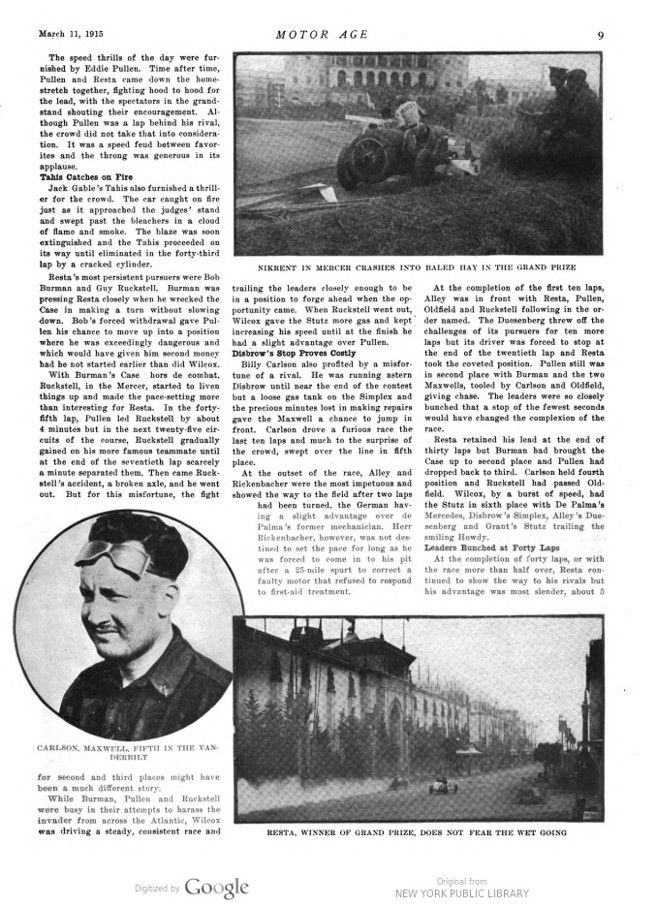
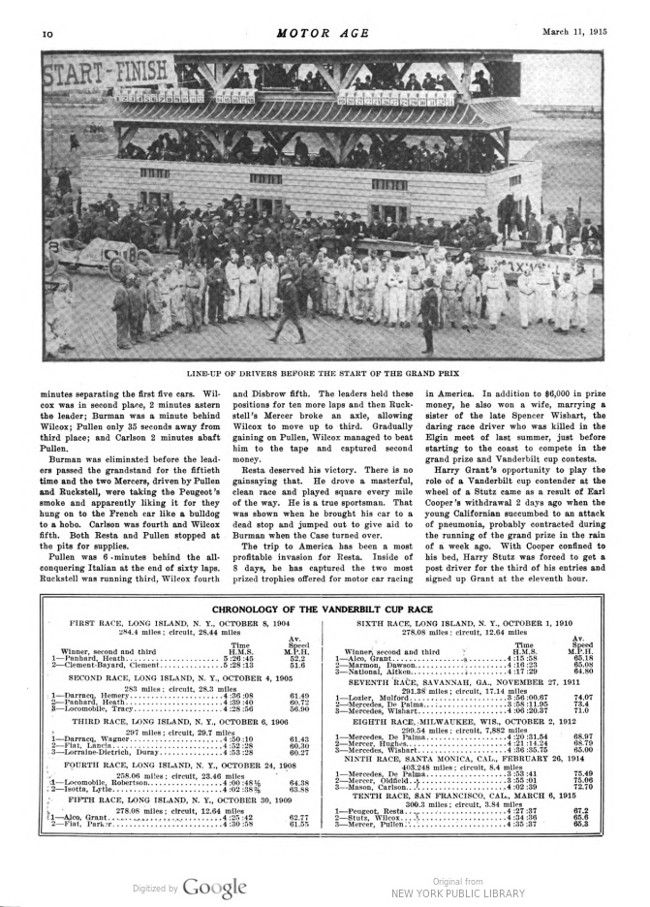
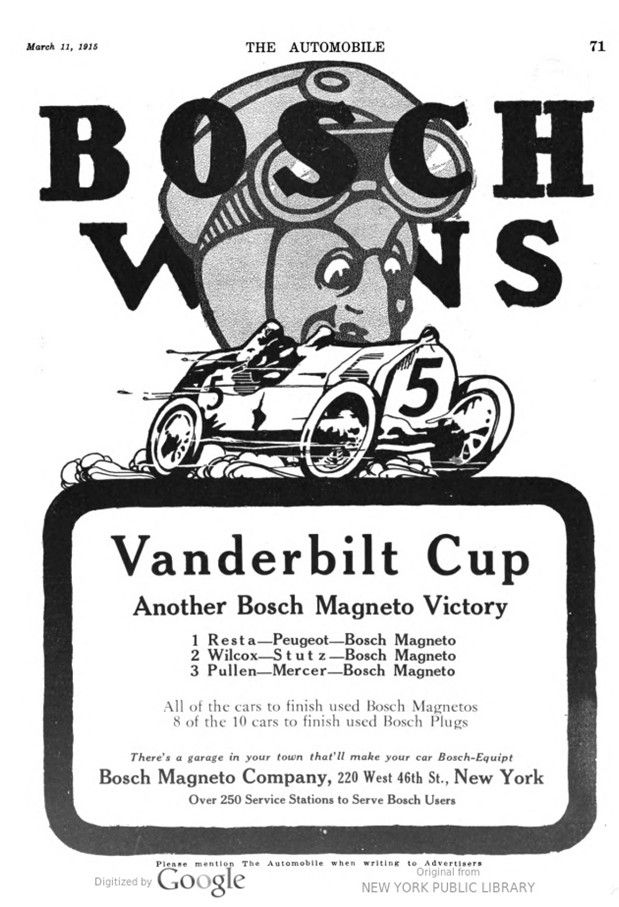
With permission of hathitrust hathitrust.org == Text and fotos compiled by motorracinghistory motorracinghistory.com
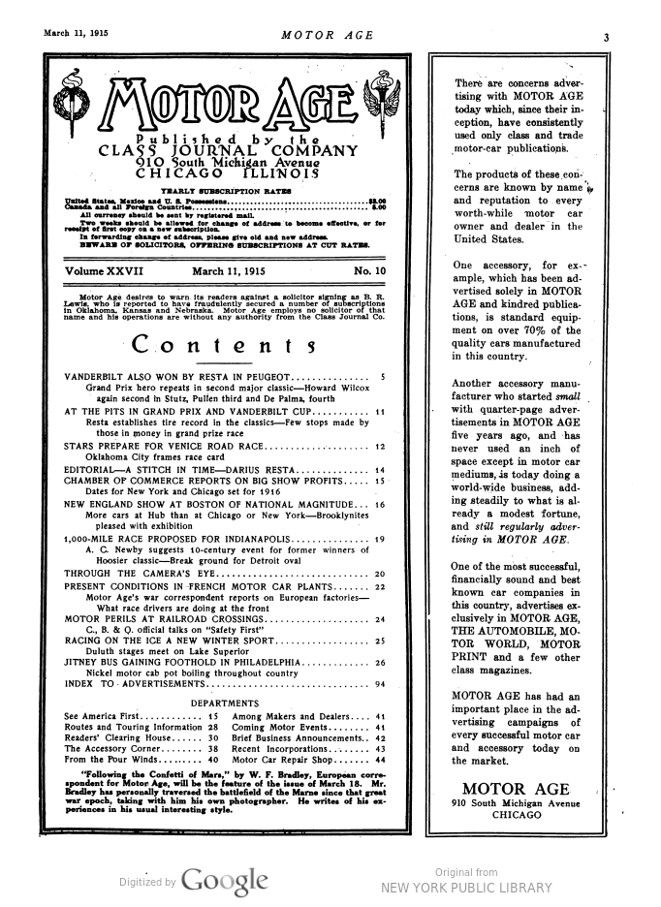
MOTOR AGE Vol. XXVIII, No.10, March 11, 1915
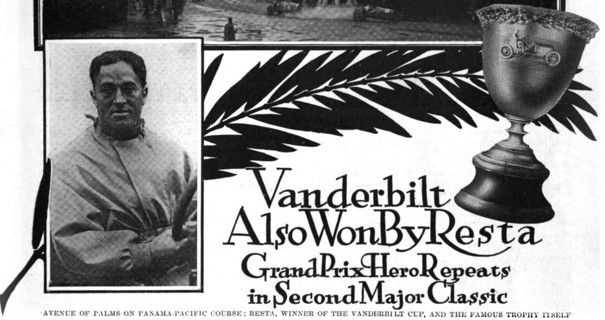
Vanderbilt Also Won By Resta
Grand Prix Hero Repeats in Second Major Classic
By Al G. Waddell
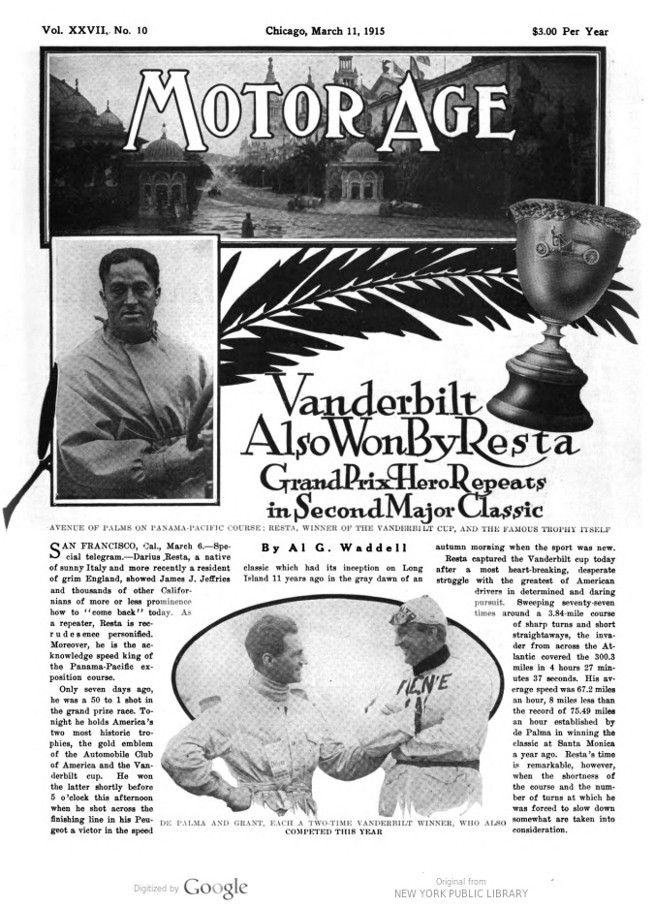
SAN FRANCISCO, Cal., March 6. – Special telegram. – Darius Resta, a native of sunny Italy and more recently a resident of grim England, showed James J. Jeffries and thousands of other Californians of more or less prominence how to come back” today. As a repeater, Resta is recrudescence personified. Moreover, he is the acknowledge speed king of the Panama-Pacific exposition course.
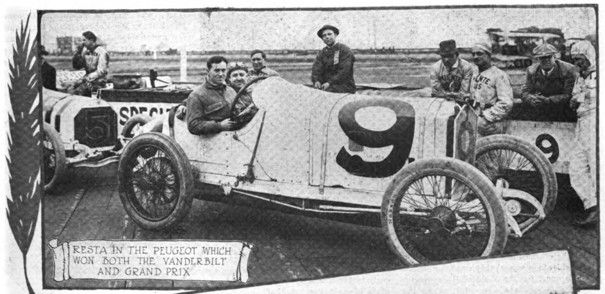
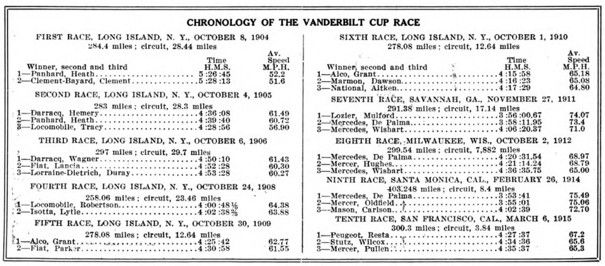
Only seven days ago, he was a 50 to 1 shot in the grand prize race. Tonight he holds America’s two most historic trophies, the gold emblem of the Automobile Club of America and the Vanderbilt cup. He won the latter shortly before 5 o’clock this afternoon when he shot across the finishing line in his Peugeot a victor in the speed classic which had its inception on Long Island 11 years ago in the gray dawn of an autumn morning when the sport was new.
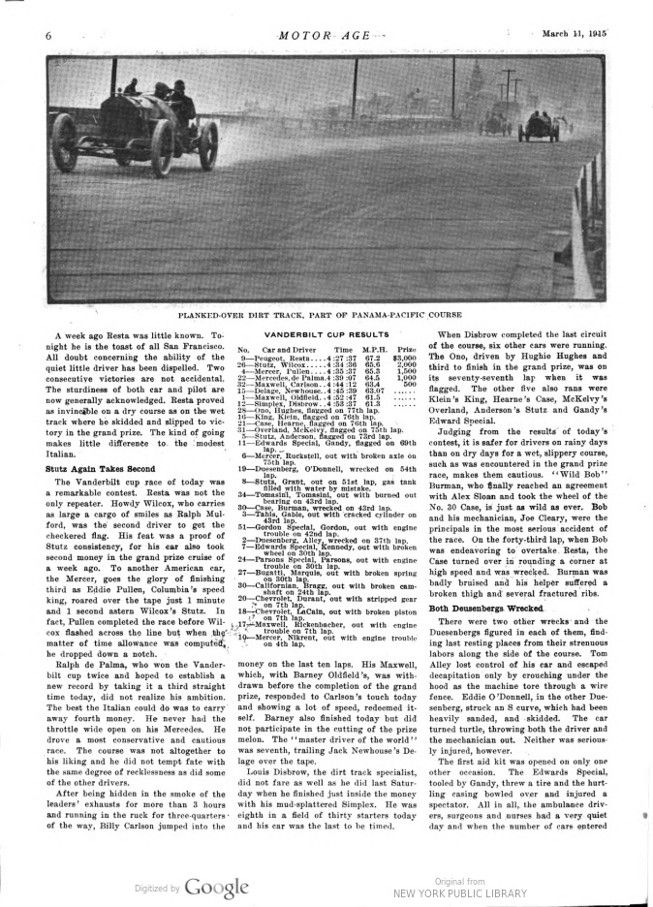
Resta captured the Vanderbilt cup today after most heart-breaking, desperate struggle with the greatest of American drivers in determined and daring pursuit. Sweeping seventy-seven times around a 3.84-mile course of sharp turns and short straightaways, the invader from across the Atlantic covered the 300.3 miles in 4 hours 27 minutes 37 seconds. His average speed was 67.2 miles an hour, 8 miles less than the record of 75.49 miles an hour established by de Palma in winning the classic at Santa Monica a year ago. Resta’s time is remarkable, however, when the shortness of the course and the number of turns at which he was forced to slow down somewhat are taken into consideration.
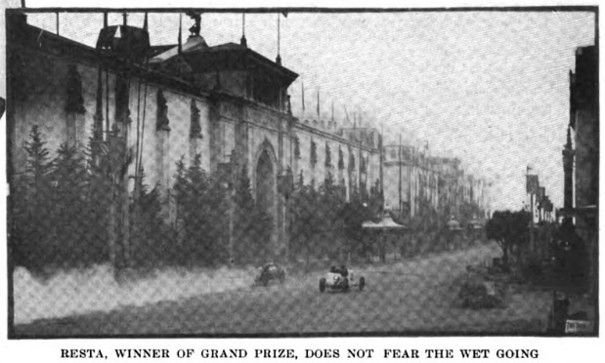
A week ago, Resta was little known. Tonight he is the toast of all San Francisco. All doubt concerning the ability of the quiet little driver has been dispelled. Two consecutive victories are not accidental. The sturdiness of both car and pilot are now generally acknowledged. Resta proved as invincible on a dry course as on the wet track where he skidded and slipped to victory in the grand prize. The kind of going makes little difference to the modest Italian.
Stutz Again Takes Second
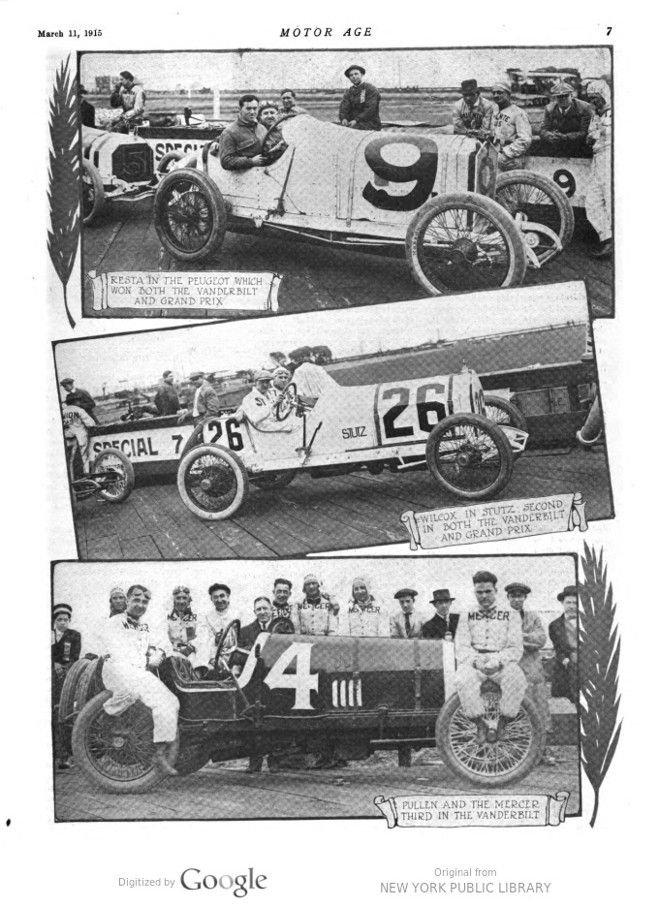
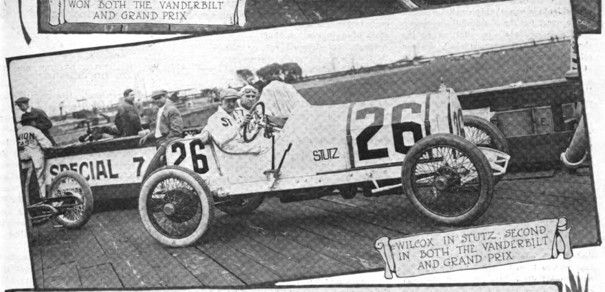
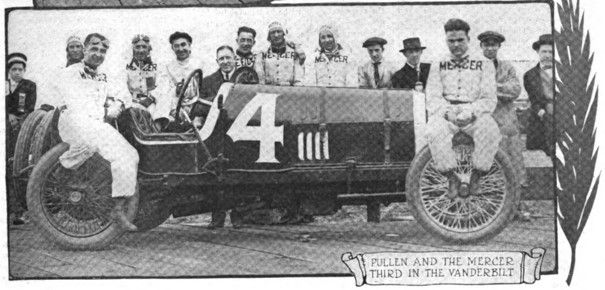
The Vanderbilt cup race of today was a remarkable contest. Resta was not the only repeater. Howdy Wilcox, who carries as large a cargo of smiles as Ralph Mulford, was the second driver to get the checkered flag. His feat was a proof of Stutz consistency, for his car also took second money in the grand prize cruise of a week ago. To another American car, the Mercer, goes the glory of finishing third as Eddie Pullen, Columbia’s speed king, roared over the tape just 1 minute and 1 second astern Wilcox’s Stutz. In fact, Pullen completed the race before Wilcox flashed across the line but when the matter of time allowance was computed, he dropped down a notch.
Ralph de Palma, who won the Vanderbilt cup twice and hoped to establish a new record by taking it a third straight time today, did not realize his ambition. The best the Italian could do was to carry away fourth money. He never had the throttle wide open on his Mercedes. He drove a most conservative and cautious race. The course was not altogether to his liking, and he did not tempt fate with the same degree of recklessness as did some of the other drivers.
After being hidden in the smoke of the leaders’ exhausts for more than 3 hours and running in the ruck for three-quarters of the way, Billy Carlson jumped into the money on the last ten laps. His Maxwell, which, with Barney Oldfield’s, was withdrawn before the completion of the grand prize, responded to Carlson’s touch today and showing a lot of speed, redeemed itself. Barney also finished today but did not participate in the cutting of the prize melon. The “master driver of the world” was seventh, trailing Jack Newhouse’s Delage over the tape.
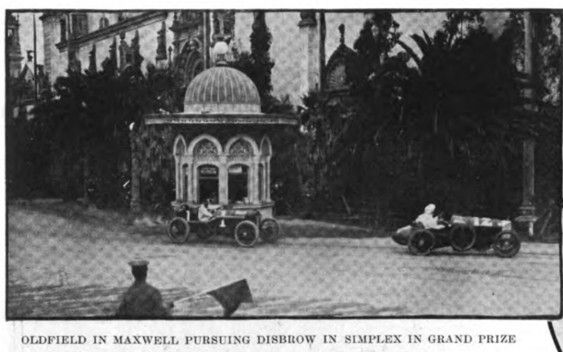
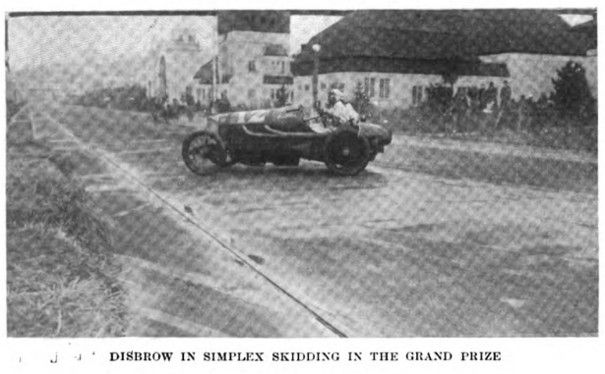
Louis Disbrow, the dirt track specialist, did not fare as well as he did last Saturday when he finished just inside the money with his mud-splattered Simplex. He was eighth in a field of thirty starters today and his car was the last to be timed.
When Disbrow completed the last circuit of the course, six other cars were running. The Ono, driven by Hughie Hughes and third to finish in the grand prize, was on its seventy-seventh lap when it was flagged. The other five also rans were Klein’s King, Hearne’s Case, McKelvy’s Overland, Anderson’s Stutz and Gandy’s Edward Special.
Judging from the results of today’s contest, it is safer for drivers on rainy days than on dry days for a wet, slippery course, such as was encountered in the grand prize race, makes them cautious. “Wild Bob” Burman, who finally reached an agreement with Alex Sloan and took the wheel of the No. 30 Case, is just as wild as ever. Bob and his mechanician, Joe Cleary, were the principals in the most serious accident of the race. On the forty-third lap, when Bob was endeavoring to overtake, Resta, the Case turned over in rounding a corner at high speed and was wrecked. Burman was badly bruised and his helper suffered a broken thigh and several fractured ribs.
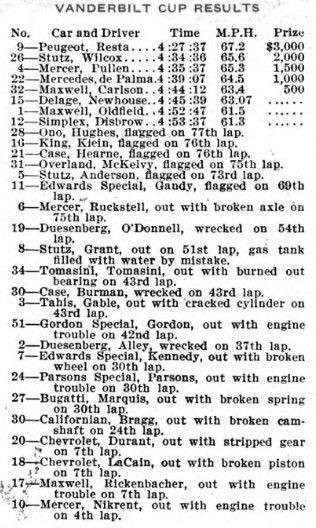
Both Deusenbergs Wrecked.
There were two other wrecks and the Duesenbergs figured in each of them, finding last resting places from their strenuous labors along the side of the course. Tom Alley lost control of his car and escaped decapitation only by crouching under the hood as the machine tore through a wire fence. Eddie O’Donnell, in the other Duesenberg, struck an S curve, which had been heavily sanded, and skidded. The car turned turtle, throwing both the driver and the mechanician out. Neither was seriously injured, however.
The first aid kit was opened on only one other occasion. The Edwards Special, tooled by Gandy, threw a tire and the hurt- ling casing bowled over and injured a spectator. All in all, the ambulance drivers, surgeons and nurses had a very quiet day and when the number of cars entered and the course are considered, the catalog of accidents is remarkably small.
The quest for the Vanderbilt cup was a hard race on cars. In addition to the three mounts that were wrecked, thirteen other machines were docked permanently at the pits with internal disorders.
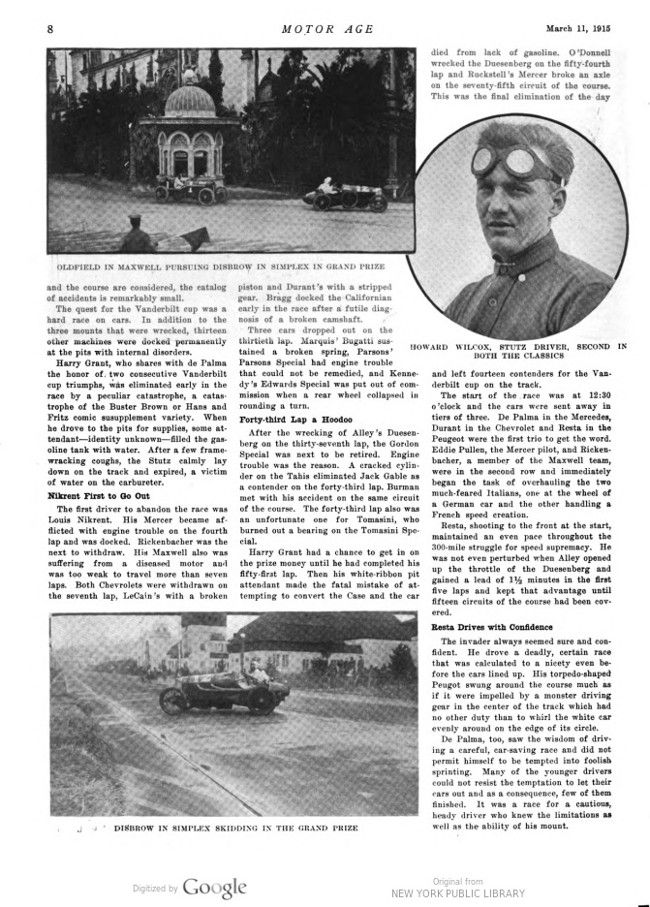
Harry Grant, who shares with de Palma the honor of two consecutive Vanderbilt cup triumphs, was eliminated early in the race by a peculiar catastrophe, a catastrophe of the Buster Brown or Hans and Fritz comic supplement variety. When he drove to the pits for supplies, some attendant – identity unknown – filled the gasoline tank with water. After a few frame-wracking coughs, the Stutz calmly lay down on the track and expired, a victim of water on the carbureter.
Nikrent First to Go Out
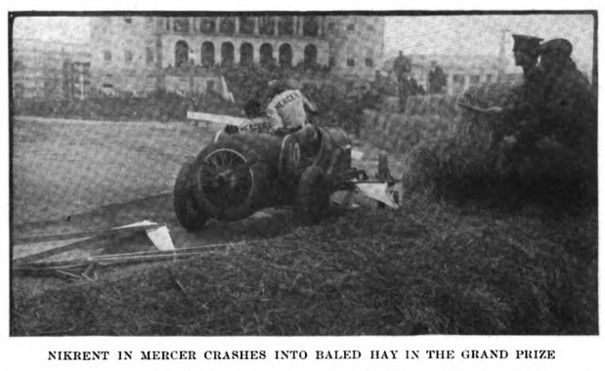
The first driver to abandon the race was Louis Nikrent. His Mercer became afflicted with engine trouble on the fourth lap and was docked. Rickenbacher was the next to withdraw. His Maxwell also was suffering from diseased motor and was too weak to travel more than seven laps. Both Chevrolets were withdrawn on the seventh lap, LeCain’s with a broken piston and Durant’s with a stripped gear. Bragg docked the Californian early in the race after a futile diagnosis of a broken camshaft.
Three cars dropped out on the thirtieth lap. Marquis’ Bugatti sustained broken spring, Parsons’ Parsons Special had engine trouble that could not be remedied, and Kennedy’s Edwards Special was put out of commission when a rear wheel collapsed in rounding a turn.
Forty-third Lap a Hoodoo
After the wrecking of Alley’s Duesenberg on the thirty-seventh lap, the Gordon Special was next to be retired. Engine trouble was the reason. A cracked cylinder on the Tahis eliminated Jack Gable as a contender on the forty-third lap. Burman met with his accident on the same circuit of the course. The forty-third lap also was an unfortunate one for Tomasini, who burned out a bearing on the Tomasini Special.
Harry Grant had a chance to get in on the prize money until he had completed his fifty-first lap. Then his white-ribbon pit attendant made the fatal mistake of attempting to convert the Case and the car died from lack of gasoline. O’Donnell wrecked the Duesenberg on the fifty-fourth lap and Ruckstaell’s Mercer broke an axle on the seventy-fifth circuit of the course. This was the final elimination of the day and left fourteen contenders for the Vanderbilt cup on the track.
The start of the race was at 12:30 o’clock and the cars were sent away in tiers of three. De Palma in the Mercedes, Durant in the Chevrolet and Resta in the Peugeot were the first trio to get the word. Eddie Pullen, the Mercer pilot, and Rickenbacher, a member of the Maxwell team, were in the second row and immediately began the task of overhauling the two much-feared Italians, one at the wheel of a German car and the other handling a French speed creation.
Resta, shooting to the front at the start, maintained an even pace throughout the 300-mile struggle for speed supremacy. He was not even perturbed when Alley opened up the throttle of the Duesenberg and gained a lead of 12 minutes in the first five laps and kept that advantage until fifteen circuits of the course had been covered.
Resta Drives with Confidence
The invader always seemed sure and confident. He drove a deadly, certain race that was calculated to a nicety even before the cars lined up. His torpedo-shaped Peugot swung around the course, much as if it were impelled by a monster driving gear in the center of the track which had no other duty than to whirl the white car evenly around on the edge of its circle.
De Palma, too, saw the wisdom of driving a careful, car-saving race and did not permit himself to be tempted into foolish sprinting. Many of the younger drivers could not resist the temptation to let their cars out and as a consequence, few of them finished. It was a race for a cautious, heady driver who knew the limitations as well as the ability of his mount.
The speed thrills of the day were furnished by Eddie Pullen. Time after time, Pullen and Resta came down the home-stretch together, fighting hood to hood for the lead, with the spectators in the grandstand shouting their encouragement. Although Pullen was a lap behind his rival, the crowd did not take that into consideration. It was a speed feud between favorites and the throng was generous in its applause.
Tahis Catches on Fire
Jack Gable’s Tahis also furnished a thrill- er for the crowd. The car caught on fire just as it approached the judges’ stand and swept past the bleachers in a cloud of flame and smoke. The blaze was soon extinguished and the Tahis proceeded on its way until eliminated in the forty-third lap by a cracked cylinder.
Resta’s most persistent pursuers were Bob Burman and Guy Ruckstell. Burman was pressing Resta closely when he wrecked the Case in making a turn without slowing down. Bob’s forced withdrawal gave Pullen his chance to move up into a position where he was exceedingly dangerous and which would have given him second money had he not started earlier than did Wilcox.
With Burman’s Case hors de combat, Ruckstell, in the Mercer, started to liven things up and made the pace-setting more than interesting for Resta. In the forty-fifth lap, Pullen led Ruckstell by about 4 minutes but in the next twenty-five circuits of the course, Ruckstell gradually gained on his more famous teammate until at the end of the seventieth lap scarcely a minute separated them. Then came Ruckstell’s accident, a broken axle, and he went out. But for this misfortune, the fight for second and third places might have been a much different story. While Burman, Pullen and Ruckstell were busy in their attempts to harass the invader from across the Atlantic, Wilcox was driving a steady, consistent race and trailing the leaders closely enough to be in a position to forge ahead when the opportunity came. When Ruckstell went out, Wilcox gave the Stutz more gas and kept increasing his speed until at the finish he had a slight advantage over Pullen.
Disbrow’s Stop Proves Costly Billy Carlson also profited by a misfortune of a rival. He was running astern Disbrow until near the end of the contest but a loose gas tank on the Simplex and the precious minutes lost in making repairs gave the Maxwell a chance to jump in front. Carlson drove a furious race the last ten laps and much to the surprise of the crowd, swept over the line in fifth place.
At the outset of the race, Alley and Rickenbacher were the most impetuous and showed the way to the field after two laps had been turned, the German having a slight advantage over de Palma’s former mechanician. Herr Rickenbacher, however, was not destined to set the pace for long as he was forced to come in to his pit after a 25-mile spurt to correct a faulty motor that refused to respond to first-aid treatment.
At the completion of the first ten laps, Alley was in front with Resta, Pullen, Oldfield and Ruckstell following in the order named. The Duesenberg threw off the challenges of its pursuers for ten more laps but its driver was forced to stop at the end of the twentieth lap and Resta took the coveted position. Pullen still was in second place with Burman and the two Maxwells, tooled by Carlson and Oldfield, giving chase. The leaders were so closely bunched that a stop of the fewest seconds would have changed the complexion of the race.
Resta retained his lead at the end of thirty laps but Burman had brought the Case up to second place and Pullen had dropped back to third. Carlson held fourth position and Ruckstell had passed Oldfield. Wilcox, by a burst of speed, had the Stutz in sixth place with De Palma’s Mercedes, Disbrow’s Simplex, Alley’s Duesenberg and Grant’s Stutz trailing the smiling Howdy.
Leaders Bunched at Forty Laps
At the completion of forty laps, or with the race more than half over, Resta continued to show the way to his rivals but his advantage was most slender, about 5 minutes separating the first five cars. Wilcox was in second place, 2 minutes astern the leader; Burman was a minute behind Wilcox; Pullen only 35 seconds away from third place; and Carlson 2 minutes abaft Pullen.
Burman was eliminated before the leaders passed the grandstand for the fiftieth time and the two Mercers, driven by Pullen and Ruckstell, were taking the Peugeot’s smoke and apparently liking it for they hung on to the French car like a bulldog to a hobo. Carlson was fourth and Wilcox fifth. Both Resta and Pullen stopped at the pits for supplies.
Pullen was 6 minutes behind the all-conquering Italian at the end of sixty laps. Ruckstell was running third, Wilcox fourth and Disbrow fifth. The leaders held these positions for ten more laps and then Ruckstell’s Mercer broke an axle, allowing Wilcox to move up to third. Gradually gaining on Pullen, Wilcox managed to beat him to the tape and captured second money.
Resta deserved his victory. There is no gainsaying that. He drove a masterful, clean race and played square every mile of the way. He is a true sportsman. That was shown when he brought his car to a dead stop and jumped out to give aid to Burman when the Case turned over.
The trip to America has been a most profitable invasion for Resta. Inside of 8 days, he has captured the two most prized trophies offered for motor car racing in America. In addition to $6,000 in prize money, he also won a wife, marrying a sister of the late Spencer Wishart, the daring race driver who was killed in the Elgin meet of last summer, just before starting to the coast to compete in the grand prize and Vanderbilt cup contests.
Harry Grant’s opportunity to play the role of a Vanderbilt cup contender at the wheel of a Stutz came as a result of Earl Cooper’s withdrawal 2 days ago when the young Californian succumbed to an attack of pneumonia, probably contracted during the running of the grand prize in the rain of a week ago. With Cooper confined to his bed, Harry Stutz was forced to get a post driver for the third of his entries and signed up Grant at the eleventh hour.
Photos.
Page 5. AVENUE OF PALMS ON PANAMA-PACIFIC COURSE; RESTA, WINNER OF THE VANDERBILT CUP, AND THE FAMOUS TROPHY ITSELF – DE PALMA AND GRANT, EACH A TWO-TIME VANDERBILT WINNER, WHO ALSO COMPETED THIS YEAR
Page 6. PLANKED-OVER DIRT TRACK, PART OF PANAMA-PACIFIC COURSE – VANDERBILT CUP RESULTS
Page 7. RESTA IN THE PEUGEOT WHICH WON BOTH THE VANDERBILT AND GRAND PRIX – WILCOX IN STUTZ, SECOND IN BOTH THE VANDERBILT AND GRAND PRIX – PULLEN AND THE MERCER HE 9 20 THIRD IN THE VANDERBILT
Page 8. OLDFIELD IN MAXWELL PURSUING DISBROW IN SIMPLEX IN GRAND PRIZE – HOWARD WILCOX, STUTZ DRIVER, SECOND IN BOTH THE CLASSICS – DISBROW IN SIMPLEX SKIDDING IN THE GRAND PRIZE
Page 9. MERCER NIKRENT IN MERCER CRASHES INTO BALED HAY IN THE GRAND PRIZE – CARLSON, MAXWELL, FIFTH IN THE VANDERBILT – RESTA, WINNER OF GRAND PRIZE, DOES NOT FEAR THE WET GOING
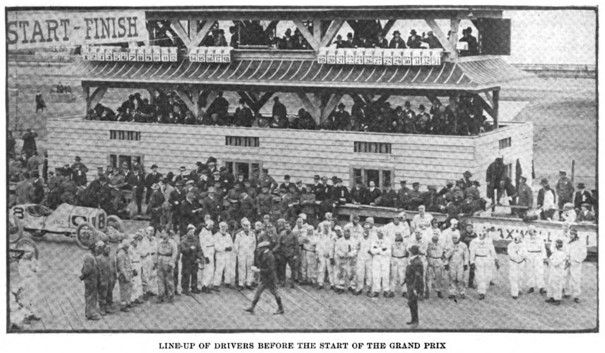
Page 10. LINE-UP OF DRIVERS BEFORE THE START OF THE GRAND PRIX – CHRONOLOGY OF THE VANDERBILT CUP RACE