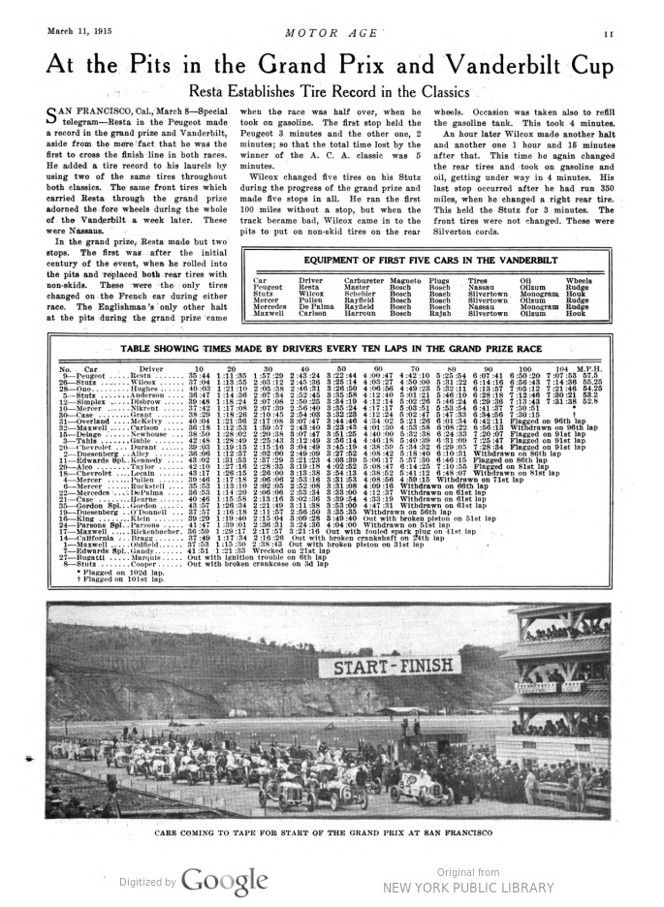
After the Grand Prize and the Vanderbilt Cup races, this article mentioned the relative higher tire durability, although differences between some of the brands still existed. A second interesting feature was the eletric cranking of the cars, thereby reducing time loss in the pits.
With permission of hathitrust hathitrust.org == Text and fotos compiled by motorracinghistory motorracinghistory.com
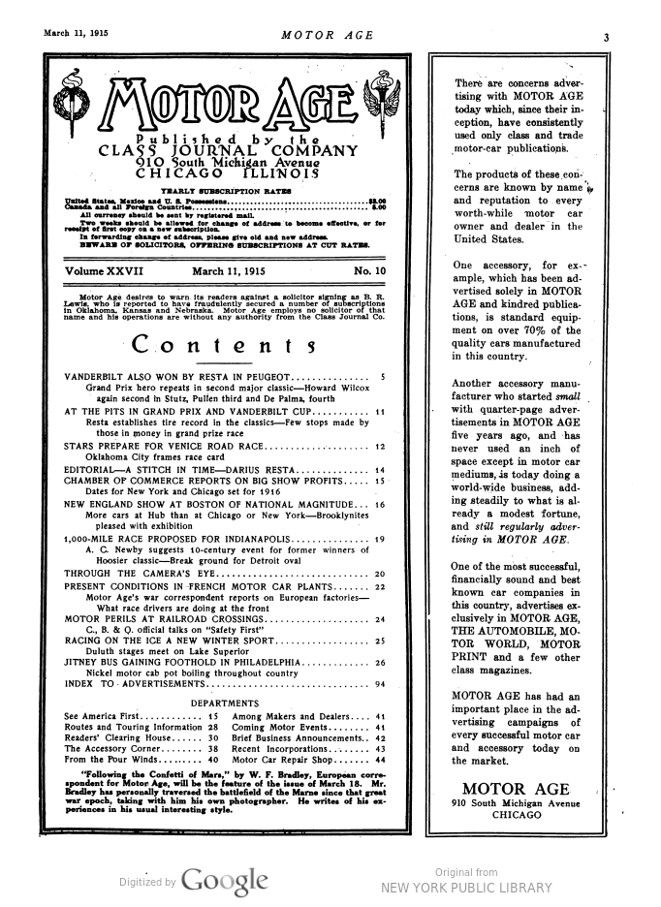
MOTOR AGE Vol. XXVIII, No.10, March 11, 1915
At the Pits in the Grand Prix and Vanderbilt Cup
Resta Establishes Tire Record in the Classics
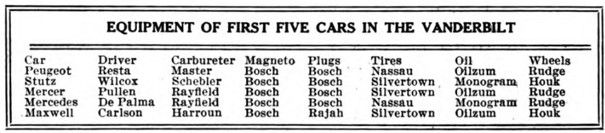
SAN FRANCISCO, Cal., March 8 – Special telegram – Resta in the Peugeot made a record in the grand prize and Vanderbilt, aside from the mere fact that he was the first to cross the finish line in both races. He added a tire record to his laurels by using two of the same tires throughout both classics. The same front tires which carried Resta through the grand prize adorned the fore wheels during the whole of the Vanderbilt a week later. These were Nassau’s.
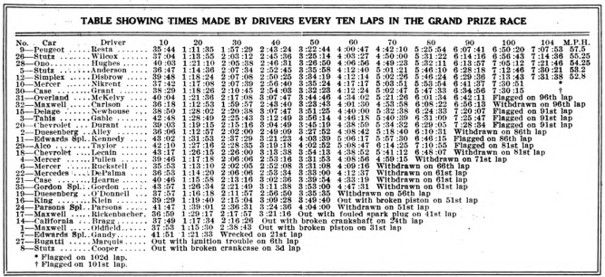
In the grand prize, Resta made but two stops. The first was after the initial century of the event, when he rolled into the pits and replaced both rear tires with non-skids. These were the only tires changed on the French car during either race. The Englishman’s only other halt at the pits during the grand prize came when the race was half over, when he took on gasoline. The first stop held the Peugeot 3 minutes and the other one, 2 minutes; so that the total time lost by the winner of the A. C. A. classic was 5 minutes.
Wilcox changed five tires on his Stutz during the progress of the grand prize and made five stops in all. He ran the first 100 miles without a stop, but when the track became bad, Wilcox came in to the pits to put on non-skid tires on the rear wheels. Occasion was taken also to refill the gasoline tank. This took 4 minutes.
An hour later Wilcox made another halt and another one 1 hour and 15 minutes after that. This time he again changed the rear tires and took on gasoline and oil, getting under way in 4 minutes. His last stop occurred after he had run 350 miles, when he changed a right rear tire. This held the Stutz for 3 minutes. The front tires were not changed. These were Silverton cords.
Hughes made only two tire changes on his Ono, both of them on the right rear wheel, and both within the first 75 miles of the race. After this, Hughes finished the race without a tire change. The tires used were Firestones. When the race was nearly half over, Hughes made a third stop at the pits and examined his fuel tank and brakes, but went ahead without taking on gasoline or adjusting the brakes. He was on the track 52 seconds after he stopped.
Another 30 miles and Hughes was at the pit again, this time taking on gasoline and oil, and being held 1 minute and 43 seconds. That was Hughes’ last stop at the pits, but 3 hours later, when he had not more than 30 miles to go, spectators became aware that the Englishman had duplicated his Indianapolis performance and run out of gasoline on the back stretch. His mechanic staggered into the pits after a sprint across the infield, secured the precious liquid, getting back to the Ono in time to finish in third place.
Anderson made but two stops during the entire 428 miles of the grand prize. These two stops did not seem to be occasioned by worn tires but were to find the proper non-skid tread for the treacherous track. The Stutz had gone about 130 miles when the track got bad and Anderson stopped for 2 minutes to put non-skids on the rear wheels. Two hours later he made a second and last halt to put on another type of tread. This took 3 minutes, the gasoline tank being replenished at the same time. The front tires went through without change. These were Silverton cords.
Louis Disbrow, in the Simplex, had little opportunity to show the efficiency of his electric cranker as he made but two stops. He ran the first 180 miles without a halt and came into the pits to adjust some slight motor trouble, but was away again in a few minutes. When 250 miles had been covered, Disbrow made his second and last stop to take on gasoline and change the rear tires. This was the only tire change he made, the front ones going through without change. These were Silverton cords.
On the two pit stops the electric cranking outfit worked to perfection. This includes a Rushmore cranking motor weighing only 27 pounds, and a stationary battery in the pit. When the car came to a halt, a lead from the battery was snapped into connection with the motor and disconnected automatically as the car started up.
** In the text, the tire brand “Silverton” is mentioned. In the table, the name “Silvertown” is listed. I assume, the latter name is correct (GrocerJack) **
Photos.
Page 11.
EQUIPMENT OF FIRST FIVE CARS IN THE VANDERBILT (table)
TABLE SHOWING TIMES MADE BY DRIVERS EVERY TEN LAPS IN THE GRAND PRIZE RACE (table)
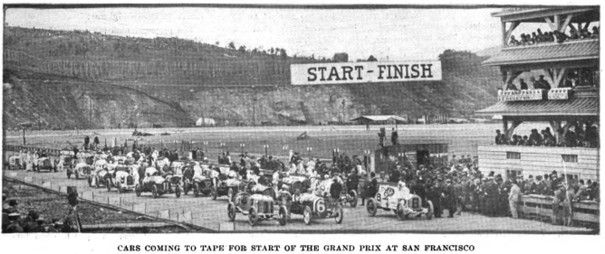
START-FINISH – CARS COMING TO TAPE FOR START OF THE GRAND PRIX AT SAN FRANCISCO