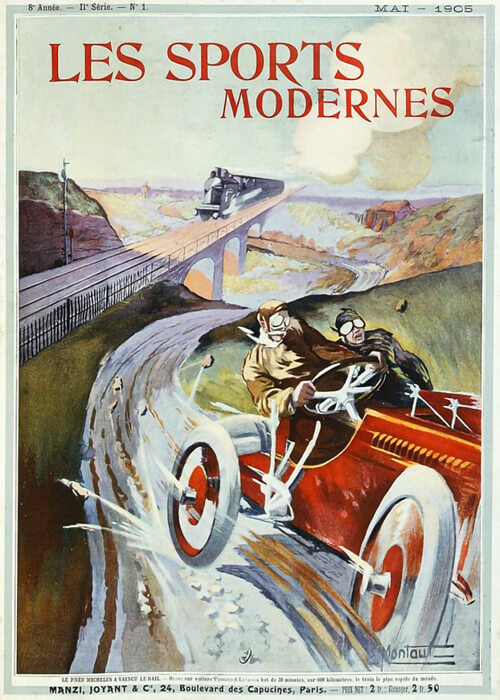
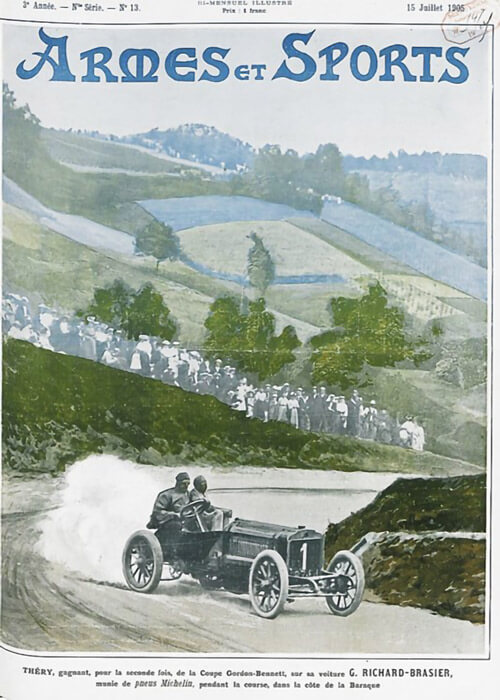
The course for the eliminatory races of the coming 1905 Gordon Bennett Cup was determined alreadyduring the meeting of the ACF on december 28 1904, when the Circuit d’Auvergne was unanimously chosen. In that same meeting, however, it was also decided that the ACF was to hold a first “Grand Prix de l’Automobile Club de France” at the same time of the Gordon Bennett Cup. If and what French cars were to participate in both events or only in the new 1905 Grand Prix, can’t be deciphered from the meeting notes. More important, it was also decided that France would not particpate in Gordon Bennett races under the current conditions, as from 1906 on. That decision already stood firm by the end of 1904. All important decisions are listed directly after the regulatories for the 1905 Gordon Bennett elimination races.

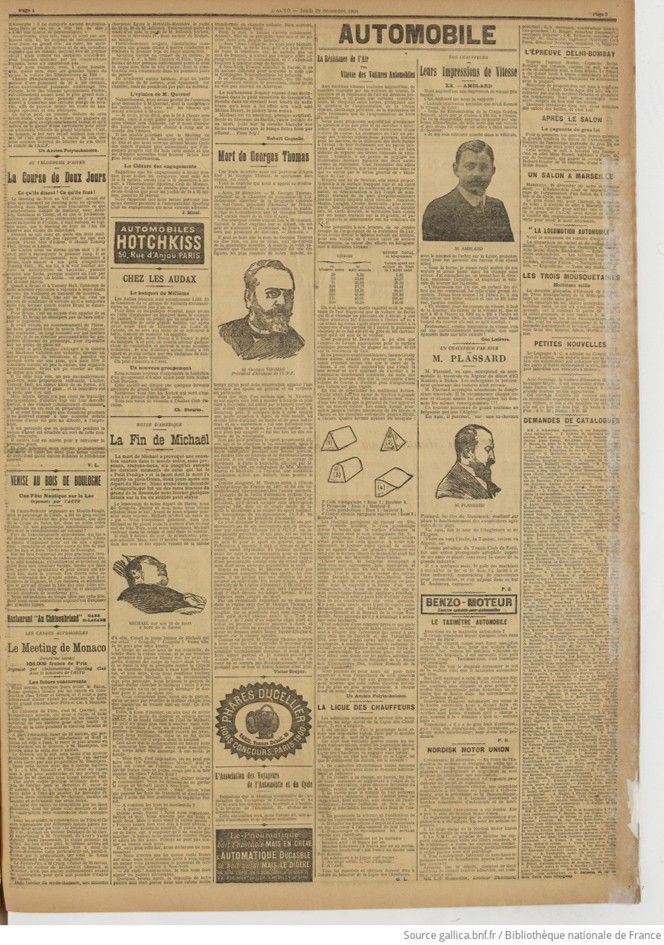
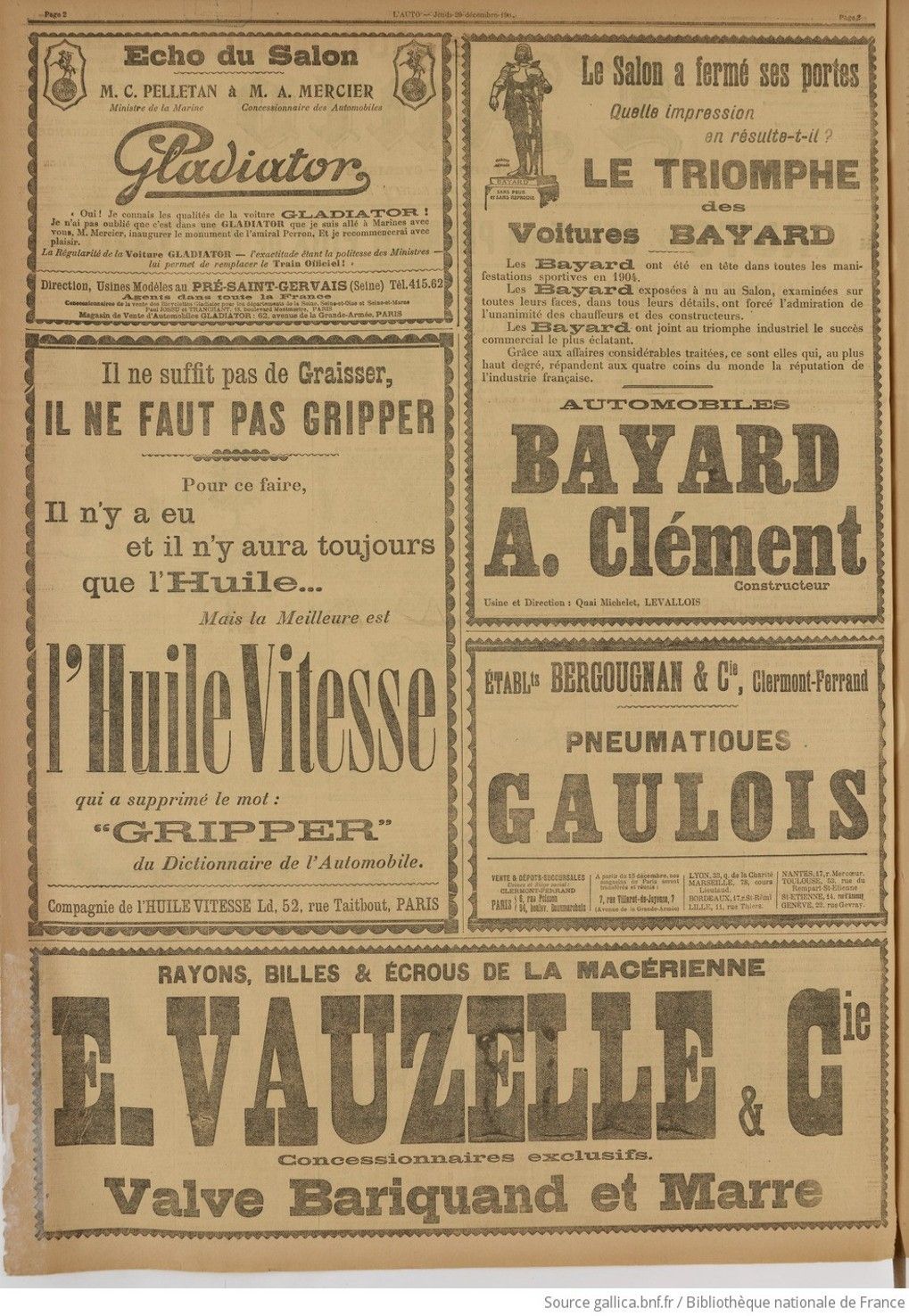

With permission of the Bibliothèque national francais gallica.bnf.fr
Text and photos compiled by motorracinghistory, translation by DeepL deepl.com
L’Auto — 5th Year, No. 1535, December 29, 1904 – Part 2
AUTOMOBILE CLUB DE France
Comittee of December 1904
The meeting was called to order at 5:30 p.m., with Baron de Zuylen presiding.
Present: Baron de Zuylen, Marquis de Dion, E. Muller, A. Lehideux-Vernimmen, A. de Rollepot, L. Dumontpallier, A. Ballif, Marquis de Chasseloup-Laubat, Count Récopé, G. Rives, Prince P. d’Arenberg, B. Artieue, A. Avigdor, H. Georges Berger, A. de Bezieux, H. Brasier, G. Broca, E. Chaix, C. Chenu. A. Clément, E. Danjoy, F. Delasalle, L. Delaunay-Belleville, H. Deutsch de la Meurthe, O. Doin, Faiconnet, E. Hospitalier, C. Houry, J. Journu, Chevalier René de Knyff, Lavoignat, L. Lemoine, A. Loreau, R. Loysel, A. Michelin, L. Mill, E. Mors, L. Mors, R. Panhard, H. Petit, A. Peugeot, G. Pierron, A. Poidatz, Georges Prévost, J.-M. Quinonès de Léon, F.-M. Richard, Baron H. de Rothschild, A. Theulier, Baron A. de Turclcheim, A. Vernes, Count R. de Vogué, R. Vuillemot, G. Huillier, Renault.
Apologies: Messrs. R. Berge, L. Gamard, G. Menier.
The minutes of the last meeting were read and adopted.
The ballot for the election of new members is held, during which the following are elected: Mr. Alexandre Carteret, Mr. André Morin, Mr. Gustave Caillois, Mr. Maurice Raynaud, Mr. Raymond Sée, Mr. B. Spalding de Garmendia, Léon Lemoine, Pierre Saint, Paul Barbarin, Henri Mialaret, André Colliez, Edouard Cosson, François Boissy-d’Anglas, Pierre Maruéjouls, Baron de Brandenstein, André Troncin, Henry Hugh Peter Deasy, Henry Caplet Lofft Holden.
The president gives the word to Chevalier René de Knyff, president of the Sports Commission. He reports to the Committee on the various studies carried out by the members of the Commission with a view to choosing the most favorable circuit for the Eliminatory Races and the 1905 Gordon Bennett Cup.
The Sports Commission has chosen the Circuit de l’Auvergne, which presents all the difficulties requested by the committee’s vote on June 29.
Baron de Zuylen reads out a letter from the Mayor of Clermont-Ferrand and Mr. Michelin, informing him that the Clermont-Ferrand initiative committee is making the sum of 200,000 francs available to the Automobile Club de France to contribute to the expenses of the Gordon Bennett Cup and the 1905 Qualifying Races.
The Circuit d’Auvergne is unanimously chosen for the Qualifying Heats and the 1905 Gordon Bennett Cup.
Mr. Chevalier de Knyff reads out the draft regulations for the Qualifying Heats for the Cup. Gordon Bennett 1905, which are unanimously adopted.
The regulations are as follows:
Rules of the Eliminatory Competition for the Gordon Bennett Cup – 1905
Article 1. — An eliminatory competition will be held to designate the cars and drivers to be part of the French team for the Gordon Bennett Cup in 1905.
Art. 2. — Only French manufacturers will be eligible to take part. Only car manufacturers who themselves produce the engine and transmission used in the car will be eligible to enter cars in the qualifiers.
Art. 3. — The route, which will be chosen at a later date, will be at least 500 kilometers and no more than 600 kilometers, and may include neutralized sections.
Art. 4. — Each manufacturer will have the right to enter a maximum of three cars. Companies manufacturing cars using an engine or mechanism built under the same license may not enter more than three cars between them.
In the event of disagreement between the companies manufacturing cars using an engine or mechanism built under the same license, the Sporting Commission will decide on the number of cars to which each company is entitled, based on the importance of each of the companies and the number of cars delivered to the public in the last three years, and, regardless of the number of manufacturers, there will be no derogation from the first paragraph of this article.
Art. 5. — The entry fee will be 10,000 francs per car.
Art. 6. — The entry fee will be used to cover the organizational costs of both the elimination event and the Gordon Bennett Cup, and if there is any remaining amount, it will be divided, regardless of the ranking, among all the cars that completed the elimination race in a time not more than one-fifth of the time taken by the winner.
Art. 7. L. The three cars that finish first in the elimination race will be chosen to form the team.
Art. 8. — The same cars driven by the same drivers and fitted with tires of the same brand will take part in the Gordon Bennett Cup. This rule may only be broken with the consent of the Automobile Club de France Sporting Commission.
Art. 9. — Drivers of cars taking part in the elimination round must be qualified according to the current Gordon Bennett Cup regulations. The Automobile Club de France Sporting Commission has the absolute right to disqualify any driver without having to give a reason. Any driver who, after the publication of these regulations, has taken part as a driver in either a qualifying event or the Gordon Bennett Cup in a foreign car will no longer be eligible to take part in these events under the French flag.
Art. 10. — As soon as the manufacturers have entered drivers for their respective cars, they will be required to inform the Sporting Commission by letter accompanied by a commitment worded as follows:
“The following has been agreed between the undersigned, Mr. X…, automobile manufacturer, and Mr. Y…:
Mr. Y… undertakes to enter a car of the make X… for the Gordon Bennett Cup Qualifying Races and for the Cup itself.
Mr. X…, car manufacturer, undertakes to provide Mr. Y… with a car of the make X… for the Qualifying Races.
Signed: X …, Y….”
Consequently, the driver may not drive a car of a different make, either for the Eliminatory Races or for the Gordon Bennett Cup, unless both parties agree to terminate the contract and the Sporting Committee authorizes them to do so…
Art. 11. – Between the elimination race and the date of the Gordon Bennett Cup, the selected cars will remain under the control of the Sporting Commission of the Automobile Club de France, and it is understood that the manufacturers of the various cars will not be able to enter them in any other race, record, etc.
Art. 12. – Each manufacturer of a designated car must undertake to keep a second one available to the Automobile Club de France, so that it can be used as a replacement in the event of an accident before the Cup.
Art. 13. – If, due to circumstances, a manufacturer is unable to enter the chosen car or cars, the Sporting Committee will designate the vehicle or vehicles immediately following in the ranking of the elimination event.
Art. 14. — Each manufacturer undertakes to cover the necessary expenses to facilitate the task of his car or cars during the Cup.
Art. 15 – The elimination round will take place, if possible, one month before the date set for the Gordon Bennett Cup.
Art. 16. – Entries will be accepted from today at the Sports Commission of the Automobile Club de France and will close on February 1, at six o’clock in the evening.
Art. 17. — An entry will only be recognized as valid if it is accompanied by the amount, the entry fee and subject to approval by the Sports Commission.
This approval will take place within a maximum period of one month after the closing of entries.
Art. 18. L The places for the start, drawn by lot among the participating companies, and the starts will be given every two minutes as a minimum.
Art. 19. – The Sports Commission of the Automobile Club de France remains the sole judge of the application of these regulations and reserves the right to make any changes that events may dictate.
Art. 20. – All points not covered in these regulations will be decided according to the Gordon Bennett Cup regulations and the general racing regulations of the Automobile Club de France.
The Committee voted by acclamation to thank the Sporting Commission for its dedication in the circumstances.
On the proposal of the Marquis de Dion, the Committee decided to consider a team race project for 1906. The Marquis de Dion announced that he would endow this event with a cup. The Committee voted to thank him by acclamation.
On the proposal of the Marquis de Chasseloup-Laubat, the Committee passed the following resolutions:
1. For the year 1905, the Gordon Bennett Cup will be run at the same time as an international race which will be called the Grand Prix de l’Automobile Club de France, and in which manufacturers will have equal chances, whatever nation they belong to.
2° For the year 1906 and subsequent years, the Automobile Club de France will not take part in the Gordon Bennett Cup under the current conditions.
3° In 1906 and the following years, the Automobile Club de France will organize an international race every year in which manufacturers will have equal chances, regardless of the nation to which they belong. This race will be called the Grand Prix de l’Automobile Club de France.
4° The Coupe Chasseloup-Laubat is maintained for the French Eliminatoires.
The president read out a letter from Mr. Kellner, president of the Chambre Syndicale de la Carrosserie, informing him of the foundation of a Cup intended to reward the best tire manufacturer. This Cup will be placed under the patronage of the Automobile Club de France. The Committee accepted this Cup and voted to thank the Chambre Syndicale de la Carrosserie for its welcome initiative.
The Committee recognizes the Federation of Provincial Automobile Clubs, of which Prince Pierre d’Arenberg is president, and which will be placed under the patronage of the Automobile Club de France. The meeting was adjourned at eight o’clock.
The Secretary C. Ward
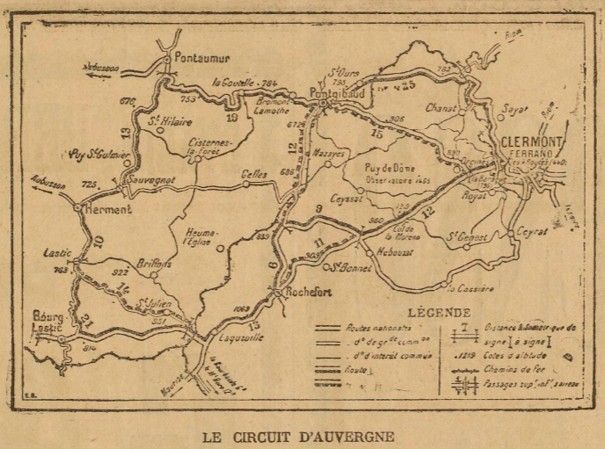
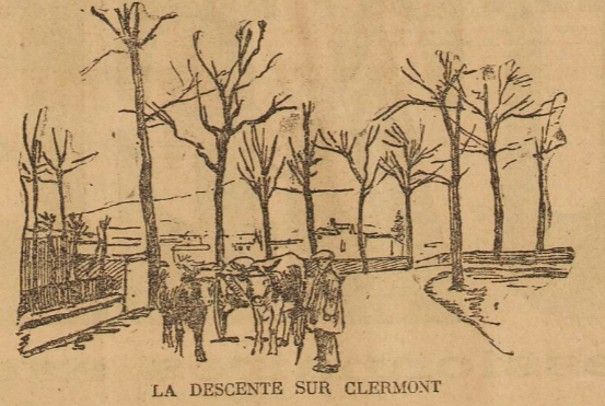
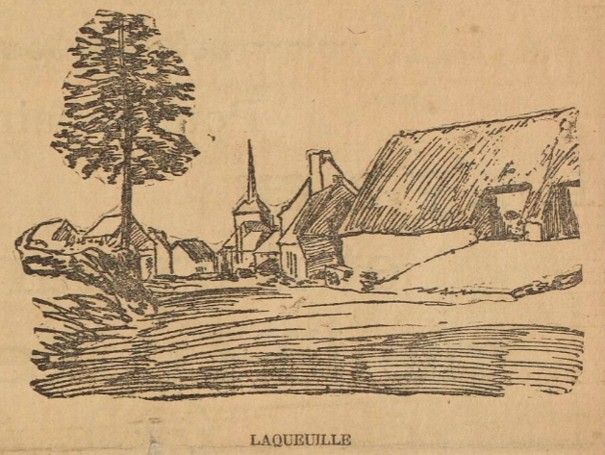
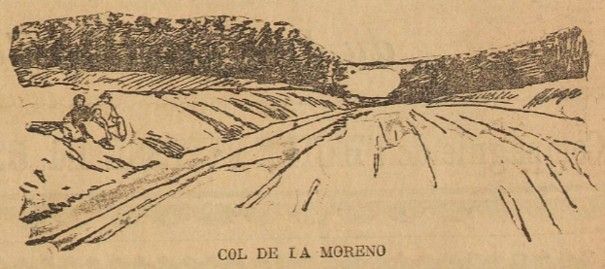
Photos. The Circuit of Auvergne – The Descent to Clermont – Laqueuille – Pass of the Moreno
What the Eliminatory Race Car Will Be Like
As our readers have also seen, the A.C.F. committee has definitively chosen the Auvergne circuit for the French Eliminatory Race in 1905. This route seems to us to be a very fortunate choice, and here’s why:
All those who traveled the adopted route were unanimous in their judgment: “The course is hard,” said one. “Very hard,” added a second. “Too hard,” corrected a third.
But, while recognizing the difficulties, it had to be acknowledged that the roads were wide and not very busy (to the point that no neutralization was necessary): these last two points are of paramount importance and undoubtedly contributed significantly to the committee’s decision.
How will the cars in the Eliminatory be designed? What will their essential characteristics be? What trends will they show? This is what we propose to examine here. We certainly do not claim to be showing our manufacturers the way; we only want, for our readers, to examine what type of car is rationally imposed by the adopted route.
As we have seen, this is an extremely uneven course, both in plan and profile: the bends are frequent and short, the changes in gradient repeated; some ramps, tortuous in their layout, nevertheless have a long development. It is already apparent that one cannot possibly think of launching monsters with exaggerated wheelbases, specialists in momentary speeds, on such roads. Moreover, if the latter had received some kind of official encouragement, through the choice of a circuit-track, we would soon have seen strange vehicles on this side of the Atlantic as well as on the other, incapable of crossing a gutter at speed, of starting quickly or of climbing a somewhat steep hill without overheating.
A circuit with a rough profile, i.e. with bends, requires a flexible and maneuverable car, i.e. with good brakes, a medium wheelbase, and able to jump quickly in its gear, therefore with a good clutch and a well-designed gear range.
A circuit with a rough profile, i.e. with lots of slopes and ramps, also requires a flexible car, since it must be able to change speed quickly and be equipped with excellent braking systems.
So, these two considerations lead us to more or less identical conclusions: let’s not complain about it, on the contrary. The solution becomes easier.
That leaves the final characteristic of the Auvergne circuit: it has no neutralization. In this case, it is easy to say:
“It’s a tire race.”
That’s certainly true, but it’s not the only factor. Cooling systems will play a major role here; in addition, the materials used in the engine and its smallest components, as well as the chassis, will have to be top quality; but as these latter conditions are always met by French manufacturers, we will not dwell on them.
To summarize, here, in our humble opinion, is what the car for the 1905 Eliminatoires will be like, at least in broad terms:
Chassis with an average wheelbase of approximately 2.70; engine with a power of 90 to 100 horsepower, extremely powerful brakes, very robust clutch, specially designed gearbox, cooling provided with the greatest care; as for the weight, we think it will be best to maintain a certain safety margin, so that the wheels can be fitted with special, very resistant tires.
What we can deduce from this brief study is that the car that will win in Auvergne will be exceptionally good and that it will be enough to fit it with a body to have an admirable touring car: This, in short, is the goal of our races, and it is precisely for this reason that we are happy to congratulate the A.C.F. committee on its choice.A former Polytechnician.