
Text and jpegs by courtesy of hathitrust.org www.hathitrust.org, compiled by motorracinghistory.com
The Automobile, Vol. XXX (30), No. 22, May 28, 1914
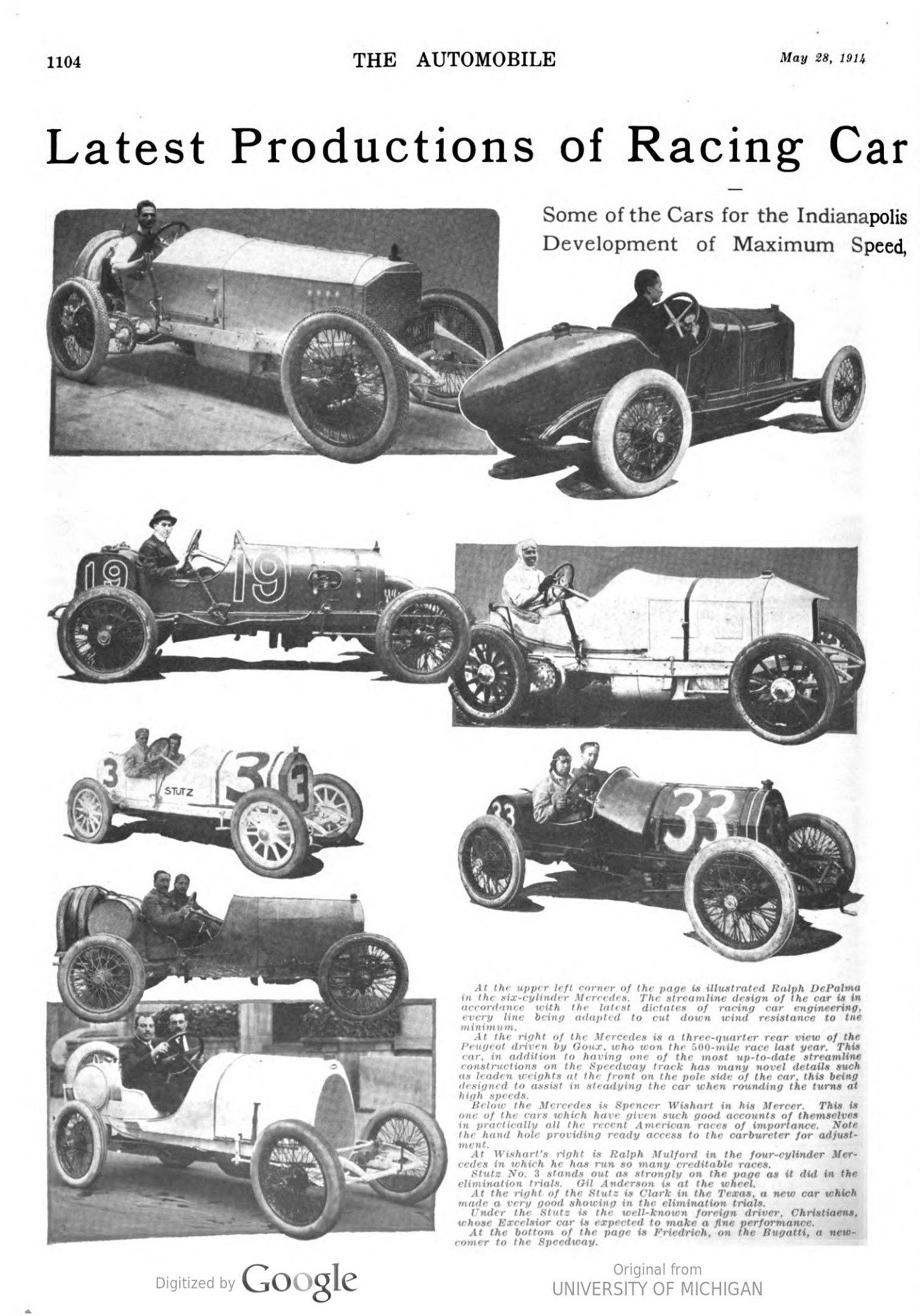
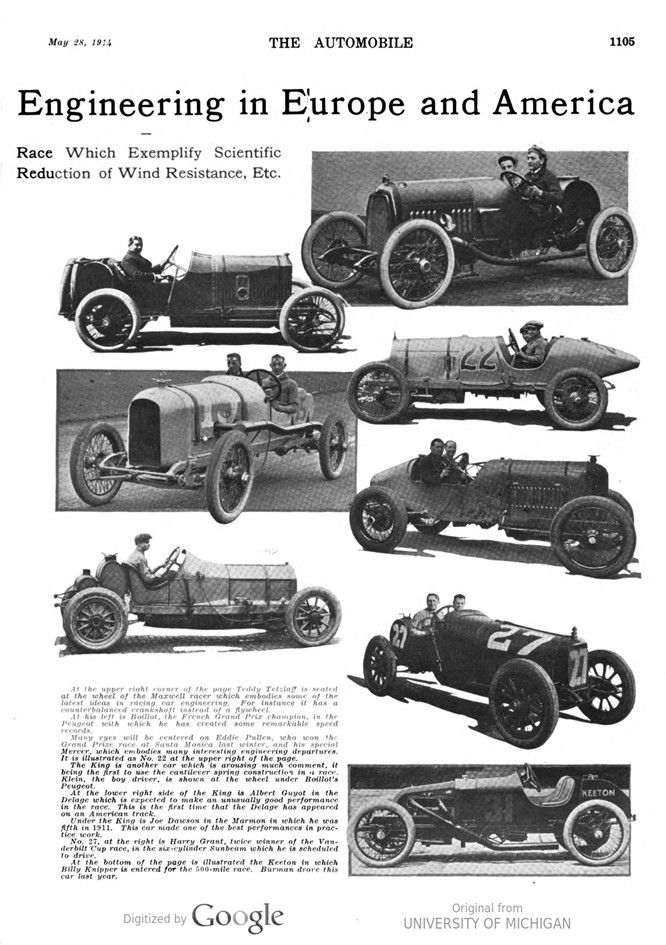
Latest Productions of Racing Car Engineering in Europe and America
Some of the Cars for the Indianapolis Race Which Exemplify Scientific Development of Maximum Speed, Reduction of Wind Resistance, Etc.
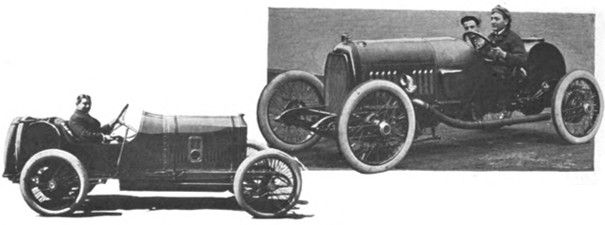
At the upper left corner of the page is illustrated Ralph DePalma in the six-cylinder Mercedes. The streamline design of the car is in accordance with the latest dictates of racing car engineering, every line being adapted to cut down wind resistance to the minimum.
At the right of the Mercedes is a three-quarter rear view of the Peugeot driven by Goux, who won the 500-mile race last year. This car, in addition to having one of the most up-to-date streamline constructions on the Speedway track has many novel details such as leaden weights at the front on the pole side of the car, this being designed to assist in steadying the car when rounding the turns at high speeds.
Below the Mercedes is Spencer Wishart in his Mercer. This is one of the cars which have given such good accounts of themselves in practically all the recent American races of importance. Note the hand hole providing ready access to the carbureter for adjustment.
At Wishart’s right is Ralph Mulford in the four-cylinder Mercedes in which he has run so many creditable races.
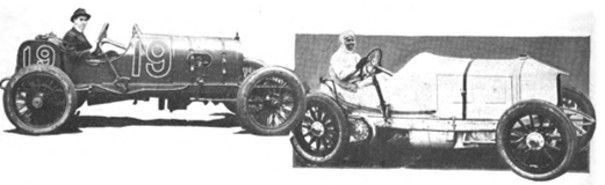
Stutz No. 3 stands out as strongly on the page as it did in the elimination trials. Gil Anderson is at the wheel.
At the right of the Stutz is Clark in the Texas, a new car which made a very good showing in the elimination trials.
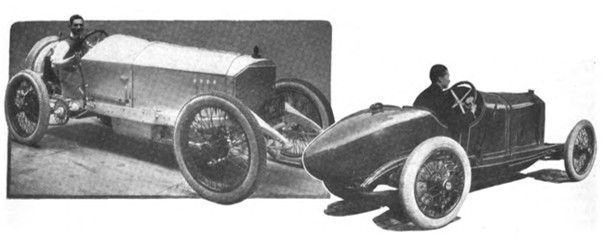
Under the Stutz is the well-known foreign driver, Christiaens, whose Excelsior car is expected to make a fine performance.
At the bottom of the page is Friedrich, on the Bugatti, a new- comer to the Speedway.
At the upper right corner of the page Teddy Tetzlaff is seated at the wheel of the Maxwell racer which embodies some of the latest ideas in racing car engineering. For instance, it has a counterbalanced crankshaft instead of a flywheel.
At his left is Boillot, the French Grand Prix champion, in the Peugeot with which he has created some remarkable speed records.
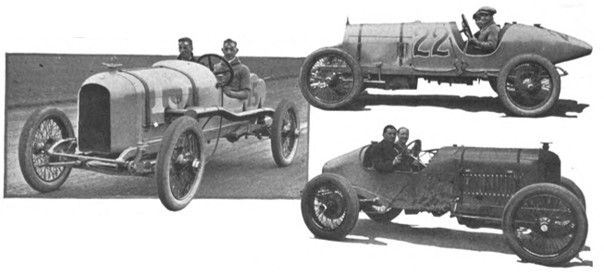
Many eyes will be centered on Eddie Pullen, who won the Grand Prize race at Santa Monica last winter, and his special Mercer, which embodies many interesting engineering departures. It is illustrated as No. 22 at the upper right of the page.
The King is another car which is arousing much comment, it being the first to use the cantilever spring construction in a race. Klein, the boy driver, is shown at the wheel under Boillot’s Peugeot.
At the lower right side of the King is Albert Guyot in the Delage which is expected to make an unusually good performance in the race. This is the first time that the Delage has appeared on an American track.
Under the King is Joe Dawson in the Marmon in which he was fifth in 1911. This car made one of the best performances in practice work.
No. 27, at the right is Harry Grant, twice winner of the Vanderbilt Cup race, in the six-cylinder Sunbeam which he is scheduled to drive.
At the bottom of the page is illustrated the Keeton in which Billy Knipper is entered for the 500-mile race. Burman drove this car last year.