A short, concise summary is given of the race and the final results, showing that the winner Felice Nazzaro (by the way: Nazzaro’s name was spelled wrong in this article) in his Fiat 28/40 HP attained an average speed of 54 kmh, although some 15% faster than Allessandro Cagno’s last year average. (Translation included at the end.)



With permission of Internet Archive archive.org == Text and fotos compiled by motorracinghistory
L’Illustraziona Italiana — Anno XXXIV, No. 18, 5 Maggio 1907
La “Targa Florio” a Palermo.
La vittoria di Nazaro.
Di questa importante gara automobilistica di corsa con macchine da turismo, istituita dalla munificenza di Vincenzo Florio, ha, dato la viva impressione nel numero scorso dell’Illustrazione Mario Morasso, da par suo. Come è noto, la gara fu disputata domenica, 21 aprile, in un circuito di circa 150 chilometri che le macchine concorrenti dovevano percorrere tre volte, compiendo in tutto 451 chilometri e 900 metri, nel centro dell’ampia catena delle Madonie. Le vetture partenti furono 48, sopra 55 inscritte. La prima partenza segni alle 5.40 ant., e l’ultima alle 8.11, ed i partenti furono in quest’ordine i seguenti: Salvioni, Opel, Wagner, Magioni, Ceirano, Trucco, Tolotti, Garcet, Rigal, Duray, Ison, Buzio, Gasté, Hieronymus, Dureste, Lancia, Cagno, Caspar, Erle, Pizzagolli, Henriot, Conti, Gallina, Minoja, Gremo, Gondermann, Porporato, Gabriel, Hemery, Marnier, Hubel, Faure, Nazaro, Fabry, Liebemann, Di Boiano, Da Zara, Cariolato, Sorel, De Martino, Colinet, Le Blond, Dowet, Weillschott, Tasca, Spamann, Cappucci e Tamagni.
Il risultato finale — trionfo della grande industria italiana — è noto: giunse primo Nazaro su una Fiat in ore 8.17 seguito da Lancia; che fece ore 8.29’29”, con altra Fiat.
Seguirono Fabry con Itala, in ore 8.32’47”; 4. Duray, con De-Dietrich, in 8.39’7”; 5. Cagno, con Itala, in 8.39’16”; 6. Gabriel, con De-Dietrich, in 7.39’46”; 7. Tamagni, con Isotta-Fraschini, in 8.41’45”; 8. Weillschott, con Fiat, in 8.42’52”; 9. Sorel, con Isotta-Fraschini, in 8.52’10”; Garcet con Clément, in 8.57; Isson, con De Luca-Daimler, in 9.1; Maggioni, con Züst, in 9.7; Dureste, con Gobron in 9.10’24”; Erle, con Benz, in 9.11: Gremo, con Junior, in 9.13: Buzio, con Diatto-Clément; in 9.20; Gondermann, con Diatto-Clément, in 9.29; Conti, con Züst, in 9.37: Di Bojano, con Benz, in 9.35; Gallina, con Rapid, in 9.50; Hemery, con De Luca-Daimler, in 10.16; Gasté, con Badia, in 10.37.
Nazaro fu salutato trionfatore, come nella gara perla coppa Vanderbilt e in altre del 1906, e guadagnò il primo premio (15 000 lire) oltre alla Targa Florio (riprodotta nell’Illustrazione del 3 marzo) che resta di sua proprietà. La coppa di Termini Imerese per il corridore che avesse compiuto il giro più velocemente, dopo il primo, toccò a Lancia.
Nazaro fece una media di circa 58 chilometri all’ora, record notevole, avuto riguardo alla natura del circuito, formato di continue salite e discese, con quasi mille curve, e con le strade rese pessime dal tempo.
Immagini.
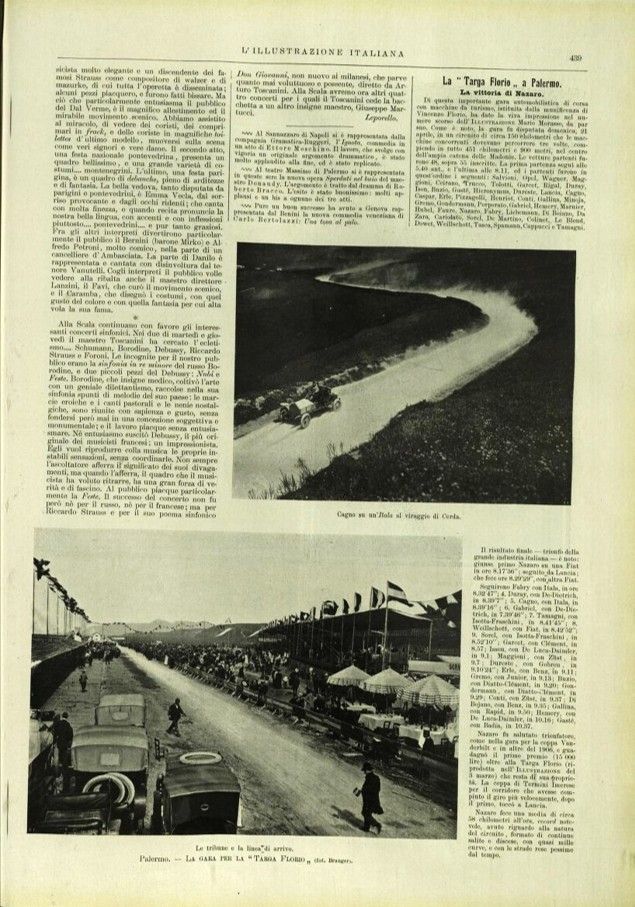
Pagina 439: Cagno su un’Itala al viraggio di Cerda. – Le tribune e la linea di arrivo.
Palermo. — LA GARA PER LA “TARGA FLORIO” (fot. Branger).
Pagina 440:
Lancia, secondo arrivato. – Nazaro dopo la vittoria. – Nazaro in corsa.
Sportmen e signore all’arrivo. – Le vetture pronte per la partenza.
Termini. — LA GARA PER LA “TARGA FLORIO” (fot. C. Abéniacar).
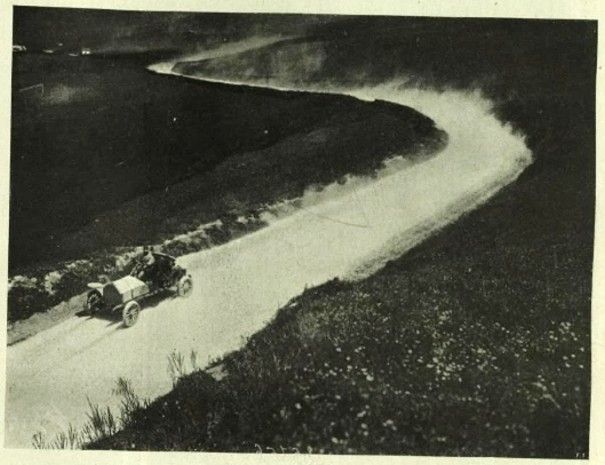
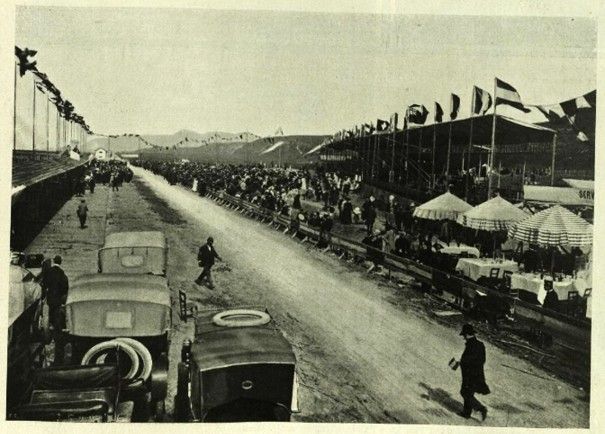

Cagno su un’Itala al viraggio di Cerda. —— Le tribune e la linea di arrivo. —— Nazaro dopo la vittoria.
Palermo. — LA GARA PER LA “TARGA FLORIO” (fot. Branger).
————————————————
L’Illustrazione Italiana, Anno XXXIV, No. 9, 3 Marzo 1907
La targa Florio e la Perla del Mediterraneo.
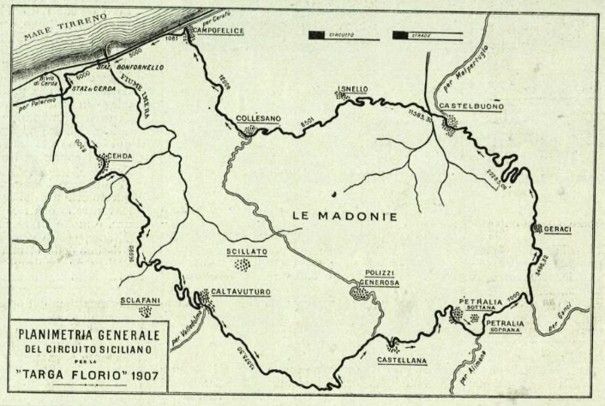
Anche quest’anno, e precisamente il 21 aprile, sarà corsa in Sicilia la gara automobilistica per la Targa Florio, con 30 000 lire di premi ed un percorso di 400 a 600 chilometri. Diamo qui di fronte la fotografia della Targa d’oro, e il tracciato del percorso per la gara automobilistica terrestre. La domenica successiva, 28 aprile, si avrà, la gara di lancie automobili detta la Perla del Mediterraneo, su un percorso di 200 chilometri nel golfo di Palermo, e con 18 000 lire di premi, compresa la Perla che toccherà al primo della classifica generale. La Perla del Mediterraneo che si correrà il 28 aprile nel golfo di Palermo, oltre a soddisfare alle esigenze tecniche dello sport e dare tutti quei risultati che l’industria e gli amatori si aspettano da una simile gara, procurerà anche un avvenimento di singolare attrattiva per la bellezza dei luoghi in cui si svolgerà.
Dopo il raid del Club nautico di Nizza, i canotti inscritti alla Perla del Mediterraneo saranno gratuitamente trasportati a Palermo e potranno essere accompagnati da 3 persone, che godranno anch’ esse del viaggio gratuito. Due vapori faranno da boa. Non è fuor di luogo dire qualche cosa del lavoro della Perla, fine opera del Lalique di Parigi che ne ha fatto un gioiello d’arte. La gran Perla – come si vede nella nostra fotografia – è in alto nel cielo di un bell’ azzurro tutto a smalto ed è agghindata da tre pesci che con il loro corpo sapientemente mosso, raffigurano la Trinacria.
Sotto, la spuma anch’essa a smalto, lambisce un canotto d’oro. Questo è il dono che il vincitore della gara dovrà tenere caro non solamente come ricordo e attestato della sua vittoria, ma come pregevole gioiello d’arte.
Translation by Deepl, deepl.com
L’Illustraziona Italiana — Year XXXIV, No. 18, May 5, 1907
The “Targa Florio” in Palermo.
Nazaro’s Victory.
Mario Morasso, in his characteristic style, provided a vivid account of this important automobile race for touring cars—established through the generosity of Vincenzo Florio—in the previous issue of L’Illustrazione. As is well known, the race took place on Sunday, April 21, on a circuit of approximately 150 kilometers that the competing cars had to complete three times, covering a total of 451 kilometers and 900 meters, in the heart of the vast Madonie mountain range. Forty-eight cars started, out of 55 registered. The first car started at 5:40 a.m., and the last at 8:11 a.m.; the starters were, in this order: Salvioni, Opel, Wagner, Magioni, Ceirano, Trucco, Tolotti, Garcet, Rigal, Duray, Ison, Buzio, Gasté, Hieronymus, Dureste, Lancia, Cagno, Caspar, Erle, Pizzagolli, Henriot, Conti, Gallina, Minoja, Gremo, Gondermann, Porporato, Gabriel, Hemery, Marnier, Hubel, Faure, Nazaro, Fabry, Liebemann, Di Boiano, Da Zara, Cariolato, Sorel, De Martino, Colinet, Le Blond, Dowet, Weillschott, Tasca, Spamann, Cappucci, and Tamagni.
The final result—a triumph for Italian heavy industry—is well known: Nazaro finished first in a Fiat with a time of 8:17, followed by Lancia, who clocked 8:29:29 in another Fiat.
Next came Fabry in an Itala, in 8:32:47; 4. Duray, in a De-Dietrich, in 8:39:07; 5. Cagno, in an Itala, in 8:39:16; 6. Gabriel, in a De-Dietrich, in 7:39:46; 7. Tamagni, in an Isotta-Fraschini, in 8:41:45; 8. Weillschott, in a Fiat, in 8:42:52; 9. Sorel, in an Isotta-Fraschini, in 8:52:10; Garcet, in a Clément, in 8:57; Isson, driving a De Luca-Daimler, in 9.1; Maggioni, driving a Züst, in 9.7; Dureste, driving a Gobron, in 9:10.24; Erle, driving a Benz, in 9.11; Gremo, driving a Junior, in 9.13; Buzio, driving a Diatto-Clément, in 9.20; Gondermann, in a Diatto-Clément, in 9.29; Conti, in a Züst, in 9.37; Di Bojano, in a Benz, in 9.35; Gallina, in a Rapid, in 9.50; Hemery, in a De Luca-Daimler, in 10.16; Gasté, in a Badia, in 10.37.
Nazaro was hailed as the winner, just as he had been in the race for the Vanderbilt Cup and in other races in 1906, and he won the first prize (15,000 lire) as well as the Targa Florio (reproduced in the “Illustrazione” of March 3), which remains in his possession. The Termini Imerese Cup for the driver who completed the lap fastest after the leader went to Lancia.
Nazaro averaged about 58 kilometers per hour, a remarkable record, given the nature of the circuit, consisting of continuous ascents and descents, with nearly a thousand curves, and with the roads made terrible by the weather.
Images.
Cagno in an Itala at the Cerda turn. — The grandstands and the finish line.
Palermo. — THE “TARGA FLORIO” RACE (photo by Branger).
Lancia, who finished second. — Nazaro after his victory. — Nazaro during the race.
Sportsmen and ladies at the finish line. — The cars ready for the start.
Termini. — THE “TARGA FLORIO” RACE (photo by C. Abéniacar).
L’Illustrazione Italiana— Year XXXIV, No. 9, March 3, 1907
The Targa Florio and the Pearl of the Mediterranean.
Once again, this year, specifically on April 21, the Targa Florio car race will take place in Sicily, with 30,000 lire in prize money and a course ranging from 400 to 600 kilometers. Here we present a photograph of the Golden Targa, along with the map of the route for the land-based car race. The following Sunday, April 28, the motorboat race known as the Pearl of the Mediterranean will take place on a 200-kilometer course in the Gulf of Palermo, with 18,000 lire in prizes, including the Pearl, which will go to the winner of the overall standings. The Pearl of the Mediterranean, to be held on April 28 in the Gulf of Palermo, will not only meet the technical requirements of the sport and deliver the results that the industry and enthusiasts expect from such a race, but will also provide an event of unique appeal due to the beauty of the locations where it will take place.
Following the race organized by the Nice Yacht Club, the boats entered in the Perla del Mediterraneo will be transported to Palermo free of charge and may be accompanied by three people, who will also enjoy free travel. Two steamships will serve as buoys. It is worth mentioning the design of the Perla, a masterpiece by Lalique of Paris, who has turned it into a jewel of art. The great “Perla”—as seen in our photograph—soars high against a beautiful blue enamel sky and is adorned with three fish whose skillfully rendered bodies depict Trinacria.
Below, the foam—also made of enamel—laps against a golden rowboat. This is the gift that the winner of the race will cherish not only as a memento and testament to his victory, but as a precious work of art.