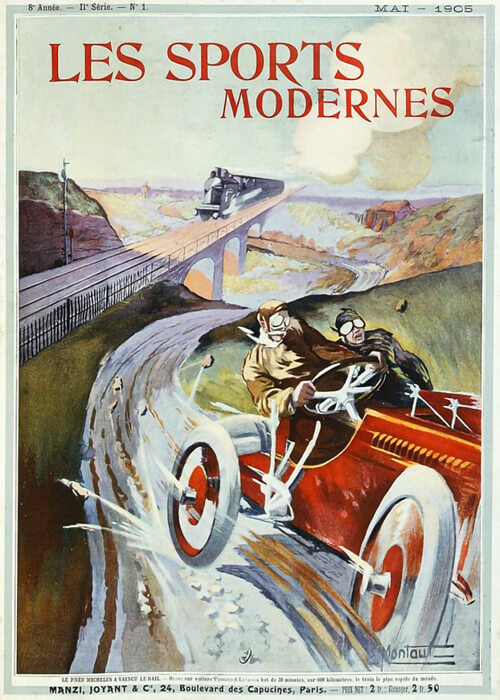
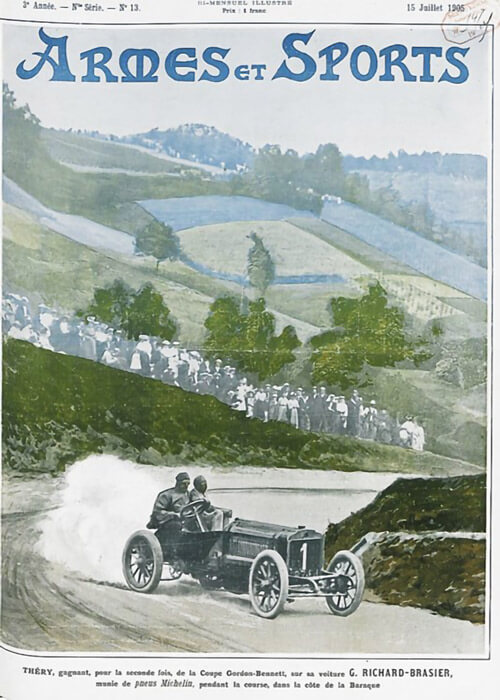
On May 6th 1906, for the first time the Targa Florio was held on the island of Sicily. The road course was called the “Madonie”, named after the northern mountain range. The route led through villages with almost fairy-tale names, such as Cerda, Caltavuturo, Petralia, Castelbuono. The race was won by the then unknown Alessandro Cagno in an all italian car, the Itala. A first proof of Italy’s growing automobile industry. And there was more to come. (Translation included at the end.)
With permission of Internet Archive archive.org == Text and fotos compiled by motorracinghistory
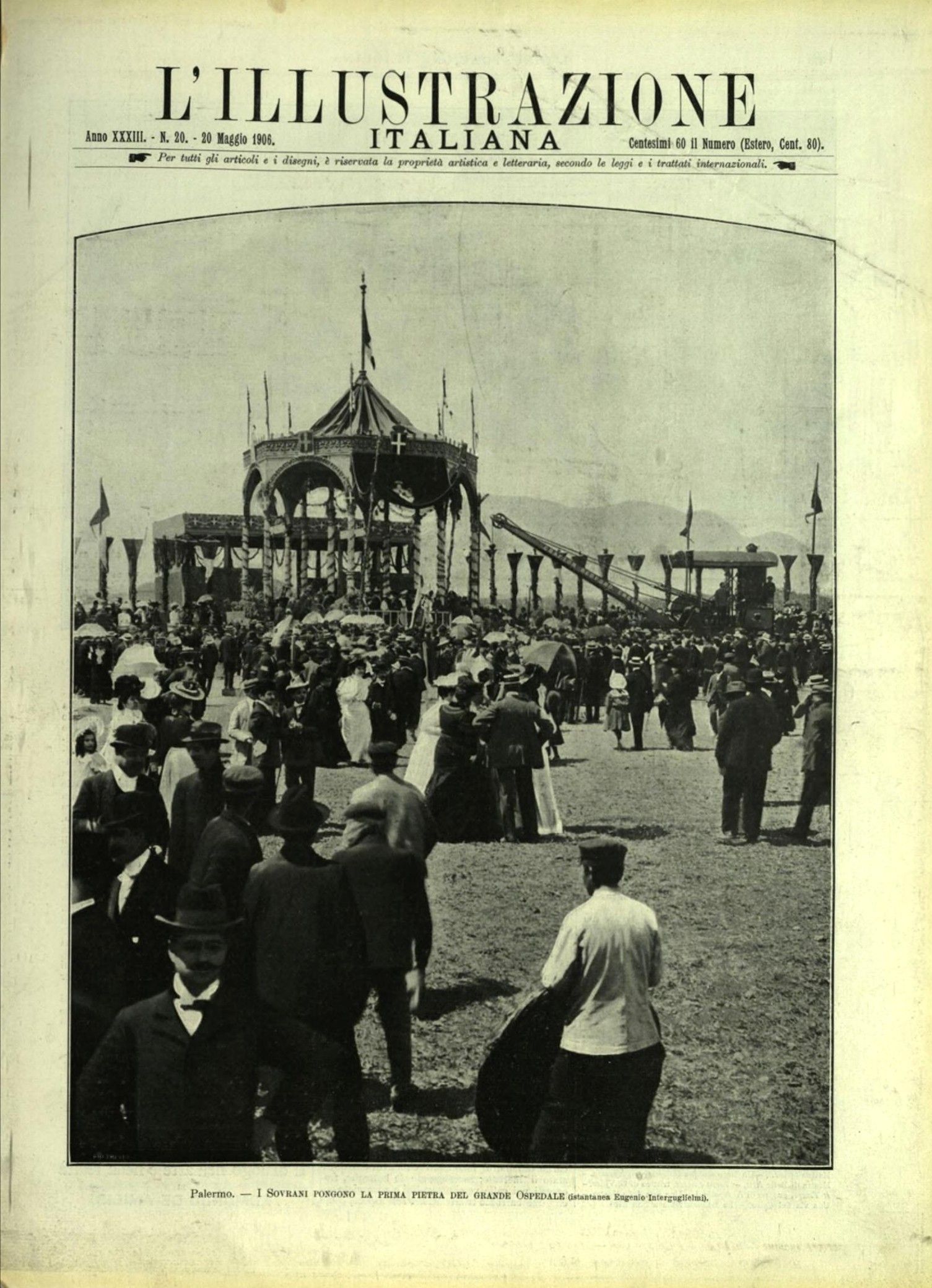
L’Illustraziona Italiana — Anno XXXIII, No. 20, 20 maggio 1906
I Sovrani alle feste di Palermo.
La prima settimana di maggio è stata por Palermo una settimana di feste solenni, memorabili, sportive, di beneficenza, mondane, all’ultimo periodo delle quali hanno assistito i sovrani d’Italia, accolti con entusiasmo nella capitale dell’isola forte ed incantevole.
Le feste sportive avevano attirato a Palermo, per le iniziative munificenti del cav. Vincenzo Florio, un pubblico internazionale; l’automobilismo marittimo e terrestre era invitato a due grandi gare, quella nautica per la Perla del Mediterraneo e quella stradale per la Targa Florio, che, corsa pochi giorni prima della Coppad’Oro d’Italia, raccoglieva un insieme di modernissime forze automobilistiche nazionali e straniere, attratte dall’importanza della gara o dallo bellezze quasi sconosciute del circuito.
Vincenzo Fiorio, dando tutta ln generosità del suo patronato mecenatesco alle due gare, volle richiamare l’attenzione del grando pubblico sportivo non solo attorno alle incantevoli coste sicule, ma sulla regione circostante a Palermo, e specialmente sulla parte che prende nome dalle Madonie, campo vergine inesplorato, dove l’artista può trarre nuove e geniali inspirazioni dalle maravigliose bellezze del paesaggio, e dai capolavori d’arte sparsi nelle chiese o nei conventi; dove gli archeologi hanno da ricercare preziosi avanzi delle più remote civiltà; dove pei naturalisti sono esemplari di fossili sconosciuti, e pei folkloristi note etnografiche purissime, non ancora modificato dal contatto uguagliatore della moderna civiltà.
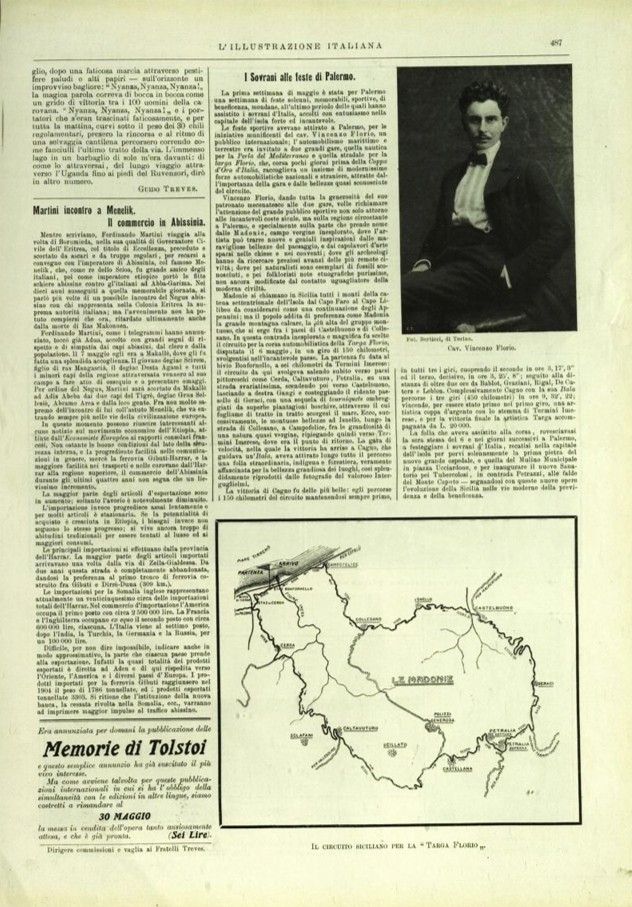
Madonie si chiamano in Sicilia tutti i monti della catena settentrionale dell’Isola dal Capo Faro al Capo Lilibeo da considerarsi come una continuazione degli Appennini; ma il popolo addita di preferenza como Madonia la grande montagna calcare, la più alta del gruppo montuoso, che si erge fra i paesi di Castelbuono e di Collesano. In questa contrada inesplorata o magnifica fu scelto il circuito per la corsa automobilistica della Targa Florio, disputata il 6 maggio, in un giro di 150 chilometri, svolgentisi nell’incantevole paese. La partenza fu data al bivio Bonfornello, a sei chilometri da Termini Imere: il circuito da qui svolgeva salendo subito verso paesi pittoreschi come Cerda, Caltavuturo, Petralia, su una strada svariatissima, scendendo poi verso Castelbuono, lasciando a destra Gangi e costeggiando il ridente paesello di Geraci, con una sequela di tourniquets ombreggiati da superbe piantagioni boschive, attraverso il cui fogliame di tratto in tratto scorgessi il mare. Ecco, successivamente, le montuose bellezze ad Isnello, lungo la strada di Collesano, a Campofelice, fra la grandiosità di una natura quasi vergine, ripiegando quindi verso Termini Imerese, dove era il punto di ritorno. La gara di velocità, nella quale la vittoria ha arriso a Cagno, che guidava un’Itala, aveva attirato lungo tutto il percorso una folla straordinaria, indigena 6 forestiera, veramente affascinata per la bellezza grandiosa dei luoghi, così splendidamente riprodotti dalle fotografie del valoroso Interguglielmi.
La vittoria di Cagno fu delle più bello: egli percorse i 150 chilometri del circuito mantenendosi sempre primo, in tutti tre i giri, coprendo il secondo in ore 3, 17’, 8″ ed il terzo, decisivo, in ore 3, 20’, 8”; seguito alla distanza di oltre duo ore da Bablot, Graziani, Rigal, De Caters e Leblon. Complessivamente Cagno con la sua percorso i tre giri (450 chilometri) in ore 9, 32’, 22”, vincendo, per essere stato primo nel primo giro, una artistica coppa d’argento con lo stemma di Termini Imerese per la vittoria finale la artistica Targa accompagnata da L. 20000.
La folla che aveva assistito alla corsa rovesciava sì la sera stessa del 6 e nei giorni successivi a Palermo, a festeggiare i sovrani d’Italia, recatisi dell’isola per porvi solennemente la prima pietra ospedale, e quella del Mulino Municipale in piazza Ucciardone, e per inaugurare il nuovo Sanatorio pei Tubercolosi, in contrada Petrazzi, alle falde del Monte Caputo — segnandosi con queste nuove opere l’evoluzione della Sicilia nelle vie moderno della previdenza e della beneficenza.
Immagini.
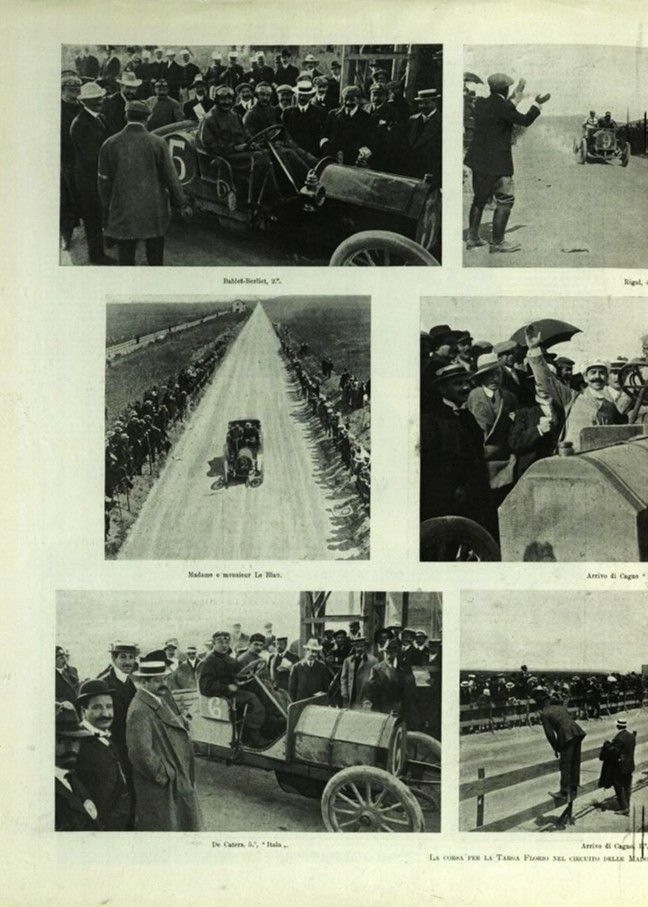
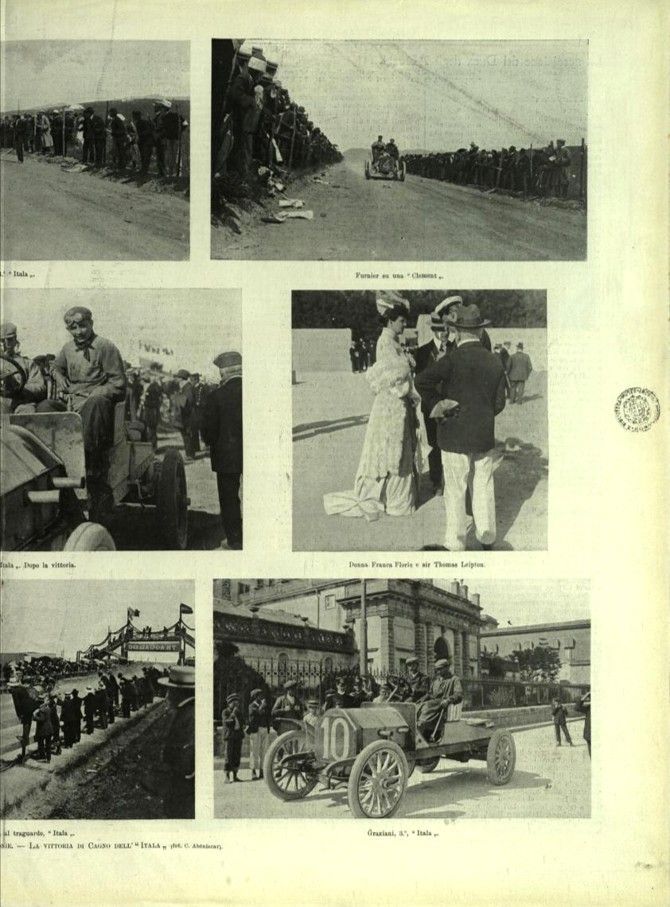
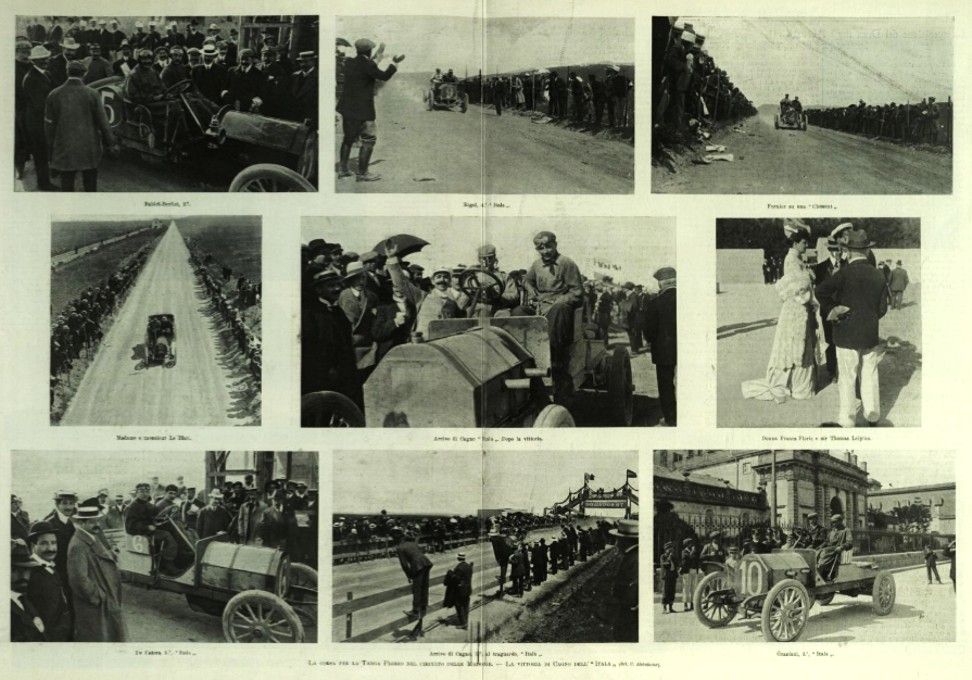
Bablot-Berliet, 2”. – Rigal, Itala, – Furnier su una “Clement”
Madame e monsieur Le Blon. – Arrivo di Cagno, Itala, Dopo la vittoria. – Donna Franca Florio e sir Thomas Leipton
De Caters, 5.”, Itala – Arrivo di Cagno 1° al traguardo, Itala. – Graziani, 3°,“Itala.
LA CORSA PER LA TARGA Florio NEL circuito delle Madonie. — La VITTORIA DI CAGNO DELL’ ITALA. (fot. C. Abénjacar).
Cav. Vincenzo Florio. (Fot. Bertieri, di Torino).
IL CIRCUITO SICILIANO PER LA “TARGA FLORIO”
Translation by DeepL deepl.com
Italian Illustration — Year XXXIII, No. 20, May 20, 1906
The Monarchs at the Palermo Festivals.
The first week of May was, for Palermo, a week of solemn, memorable, sporting, charitable, and social festivities, the final events of which were attended by the monarchs of Italy, who were welcomed with enthusiasm in the island’s strong and enchanting capital.
Thanks to the generous initiatives of Cav. Vincenzo Florio, the sporting events had attracted an international audience to Palermo; both maritime and land-based motorsports were featured in two major races: the nautical race for the Pearl of the Mediterranean and the road race for the Targa Florio, which—held just a few days before the Coppa d’Oro d’Italia—brought together a field of state-of-the-art Italian and foreign racing cars, drawn either by the race’s prestige or by the almost unknown beauty of the circuit.
Vincenzo Florio, devoting all the generosity of his patronage to the two races, sought to draw the attention of the general sports-loving public not only to the enchanting Sicilian coastline but also to the region surrounding Palermo—and especially to the area known as the Madonie, an unexplored virgin territory where artists can draw new and brilliant inspiration from the marvelous beauty of the landscape, and from the masterpieces of art scattered throughout churches and convents; where archaeologists can search for precious remnants of the most ancient civilizations; where naturalists find specimens of unknown fossils, and folklorists discover pure ethnographic traditions, not yet altered by the homogenizing influence of modern civilization.
In Sicily, the term “Madonie” refers to all the mountains of the island’s northern range, stretching from Capo Faro to Capo Lilibeo, which are considered a continuation of the Apennines; but the locals prefer to use the name “Madonia” specifically for the great limestone mountain—the highest in the range—that rises between the towns of Castelbuono and Collesano. In this unexplored yet magnificent region, the route was chosen for the Targa Florio car race, held on May 6, covering a distance of 150 kilometers, taking place in this enchanting area. The race started at the Bonfornello junction, six kilometers from Termini Imere: from there, the route immediately climbed toward picturesque villages such as Cerda, Caltavuturo, and Petralia, along a highly varied road, then descending toward Castelbuono, passing Gangi on the right and skirting the charming little village of Geraci, with a succession of bends shaded by superb, wooded plantations, through whose foliage I could glimpse the sea from time to time. Next came the mountainous beauty of Isnello, along the road to Collesano, and on to Campofelice, amidst the grandeur of an almost untouched natural landscape, before turning back toward Termini Imerese, which served as the turnaround point. The speed race, in which victory went to Cagno, who was driving an Itala, had drawn an extraordinary crowd along the entire route—both locals and visitors—who were truly captivated by the magnificent beauty of the scenery, so splendidly captured in the photographs by the talented Interguglielmi.
Cagno’s victory was one of the most impressive: he covered the 150-kilometer circuit while maintaining the lead throughout all three laps, completing the second lap in 3 hours, 17 minutes, and 8 seconds, and the third—and decisive—lap in 3 hours, 20 minutes, and 8 seconds; he was followed, more than two hours behind, by Bablot, Graziani, Rigal, De Caters, and Leblon. Overall, Cagno completed the three laps (450 kilometers) in 9 hours, 32 minutes, and 22 seconds. For finishing first in the first lap, he won an ornate silver cup bearing the coat of arms of Termini Imerese; for the overall victory, he received the ornate Targa along with 20,000 lire.
The crowd that had watched the race indeed poured into Palermo that very evening of the 6th and in the days that followed to celebrate the sovereigns of Italy, who had traveled to the island to solemnly lay the cornerstone of the hospital, as well as that of the Municipal Mill in Piazza Ucciardone, and to inaugurate the new Sanatorium for Tuberculosis Patients in the Petrazzi district, at the foot of Mount Caputo—these new works marking Sicily’s progress toward modern forms of social welfare and charity.
Photos.
Bablot-Berliet, 2”. – Rigal, Itala, – Furnier in a “Clement”
Madame and Monsieur Le Blon. – Cagno’s arrival, Itala, after the victory. – Donna Franca Florio and Sir Thomas Leipton.
De Caters, 5”, Itala – Cagno’s arrival, 1st across the finish line, Itala. – Graziani, 3rd, “Itala.
THE TARGA FLORIO RACE ON THE MADONIE CIRCUIT. — CAGNO’S VICTORY IN THE ITALA. (Photo: C. Abénjacar).
Cav. Vincenzo Florio. (Photo: Bertieri, Turin). THE SICILIAN CIRCUIT FOR THE “TARGA FLORIO”