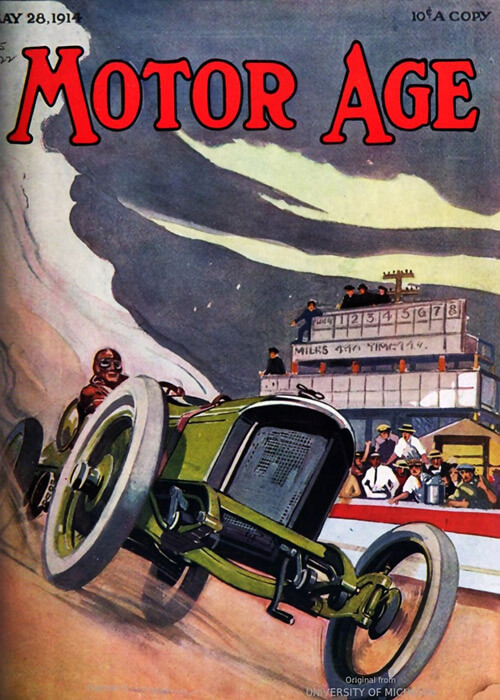
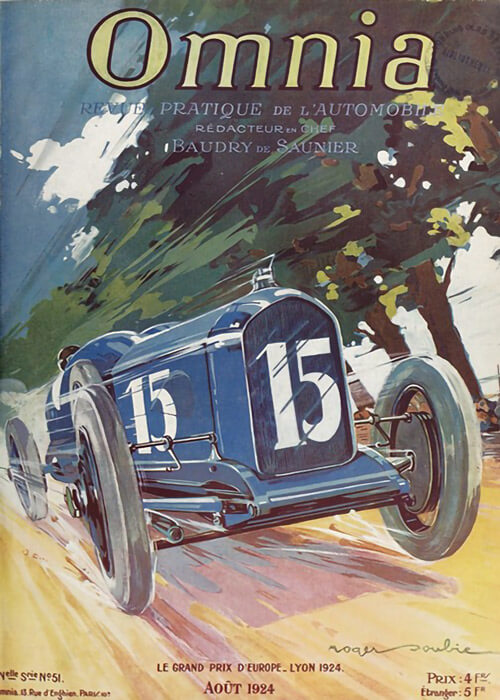
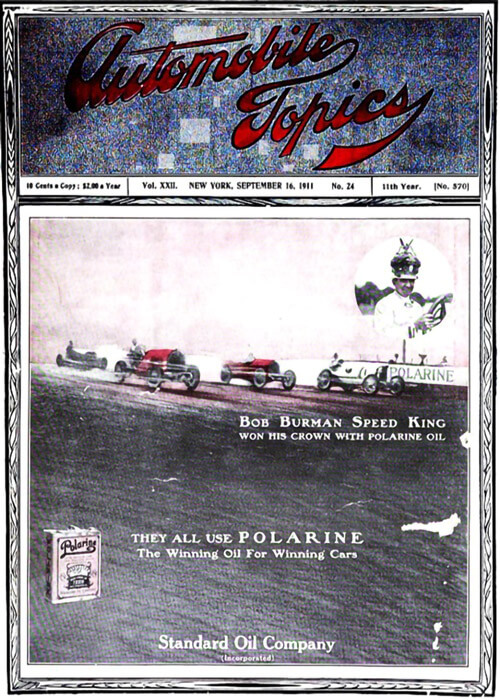
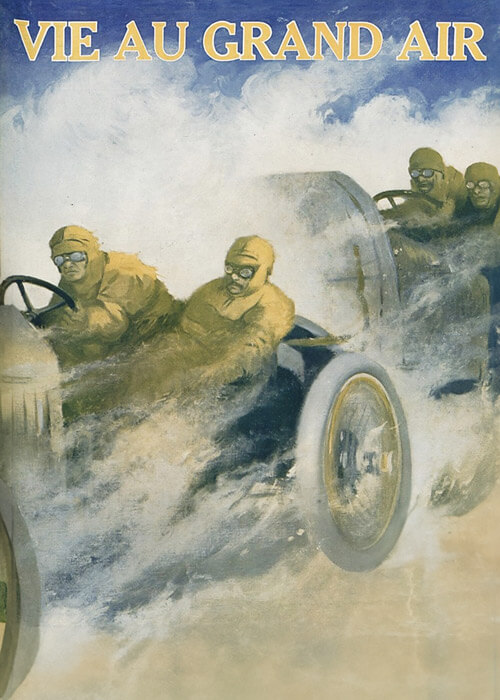
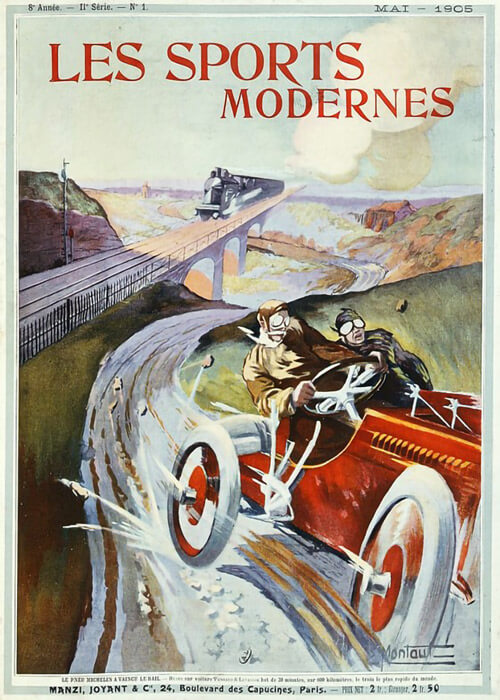
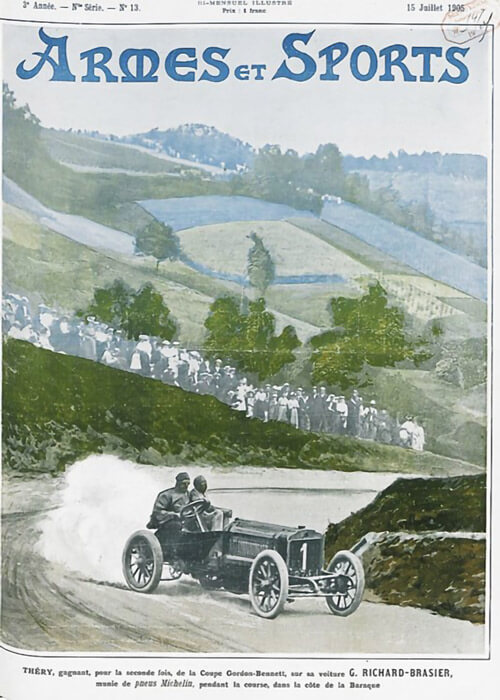
Shortly after the Paris-Vienna race was completed and with her, the Gordon Bennett race, The Horseless Age published a general and maybe conclusive opinion on both city-to-city racing and the distance limited Gordon Bennett races. What was to become of both contests? Looking at the journalists‘ opinion, it seems they did seem to have a hunch of the near future.
With permission of hathitrust hathitrust.org == Text and fotos compiled by motorracinghistory
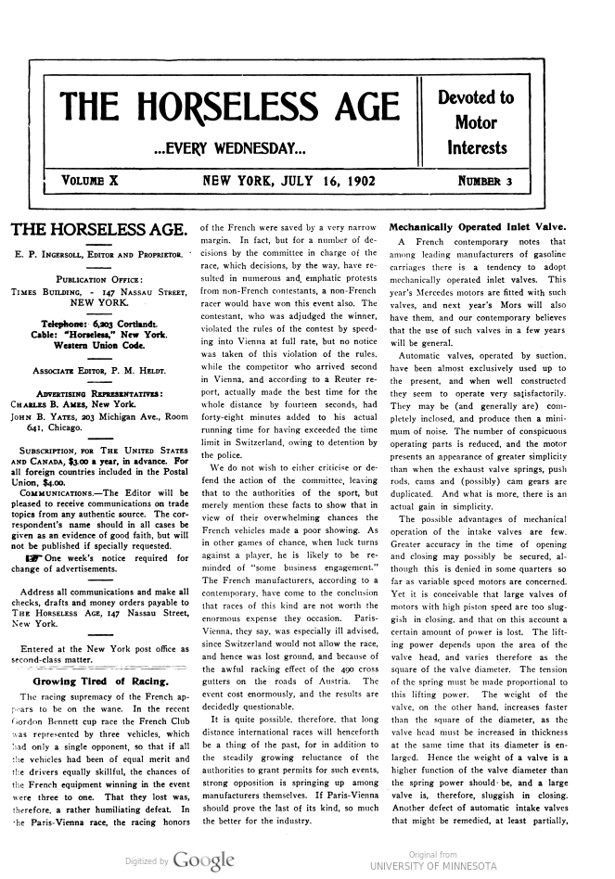
THE HORSELESS AGE — Volume 10, No. 3, July 16, 1902
The Paris-Vienna Race.
Growing Tired of Racing.
The racing supremacy of the French appears to be on the wane. In the recent Gordon Bennett cup race the French Club was represented by three vehicles, which had only a single opponent, so that if all the vehicles had been of equal merit and the drivers equally skillful, the chances of the French equipment winning in the event were three to one. That they lost was, therefore, a rather humiliating defeat. In the Paris-Vienna race, the racing honors of the French were saved by a very narrow margin. In fact, but for a number of decisions by the committee in charge of the race, which decisions, by the way, have resulted in numerous and emphatic protests from non-French contestants, a non-French racer would have won this event also. The contestant, who was adjudged the winner, violated the rules of the contest by speeding into Vienna at full rate, but no notice was taken of this violation of the rules, while the competitor who arrived second in Vienna, and according to a Reuter report, actually made the best time for the whole distance by fourteen seconds, had forty-eight minutes added to his actual running time for having exceeded the time limit in Switzerland, owing to detention by the police.
We do not wish to either criticise or defend the action of the committee, leaving that to the authorities of the sport, but merely mention these facts to show that in view of their overwhelming chances the French vehicles made a poor showing. As in other games of chance, when luck turns against a player, he is likely to be reminded of „some business engagement.“ The French manufacturers, according to a contemporary, have come to the conclusion that races of this kind are not worth the enormous expense they occasion. Paris-Vienna, they say, was especially ill advised, since Switzerland would not allow the race, and hence was lost ground, and because of the awful racking effect of the 490 cross gutters on the roads of Austria. The event cost enormously, and the results are decidedly questionable.
It is quite possible, therefore, that long distance international races will henceforth be a thing of the past, for in addition to the steadily growing reluctance of the authorities to grant permits for such events, strong opposition is springing up among manufacturers themselves. If Paris-Vienna should prove the last of its kind, so much the better for the industry.
————
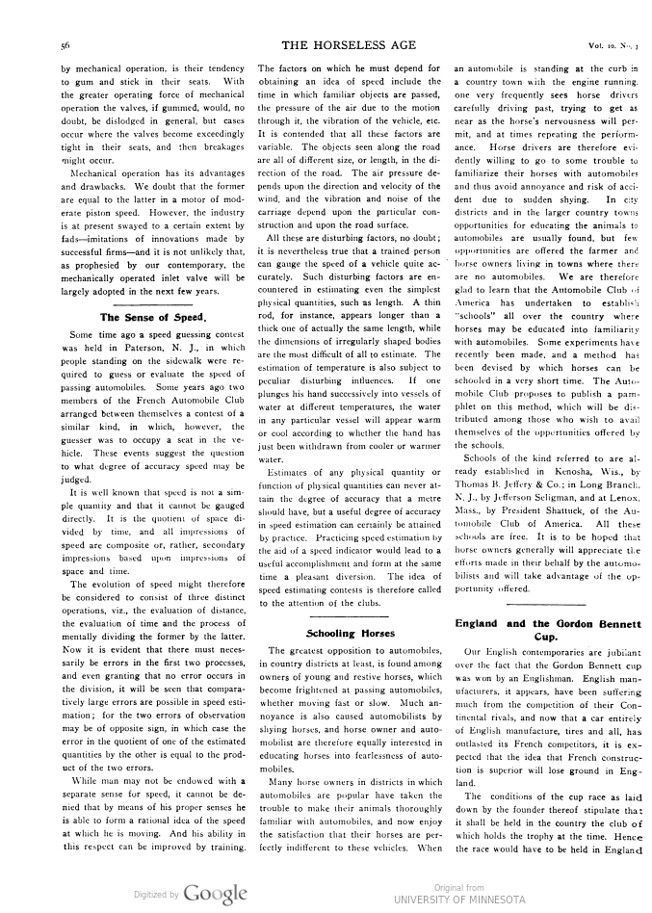
England and the Gordon Bennett Cup.
Our English contemporaries are jubilant over the fact that the Gordon Bennett cup was won by an Englishman. English manufacturers, it appears, have been suffering much from the competition of their Continental rivals, and now that a car entirely of English manufacture, tires and all, has outlasted its French competitors, it is expected that the idea that French construction is superior will lose ground in England.
The conditions of the cup race as laid down by the founder thereof stipulate that it shall be held in the country the club of which holds the trophy at the time. Hence the race would have to be held in England next year. But the sanction of the authorities for a 550-mile road race in England is practically unthinkable. The contest will then have to be held in some other country or some other form of contest must be substituted for the cup race. If the latter course is decided upon, track racing will probably be resorted to in order to compete for the cup. An unlimited non-stop contest on the road at legal speed would undoubtedly be of greater practical value, but since the cup was donated originally as a sporting trophy, it is hardly likely that questions of practical utility will have any weight with the founder or the clubs in whose custody the trophy has been placed.