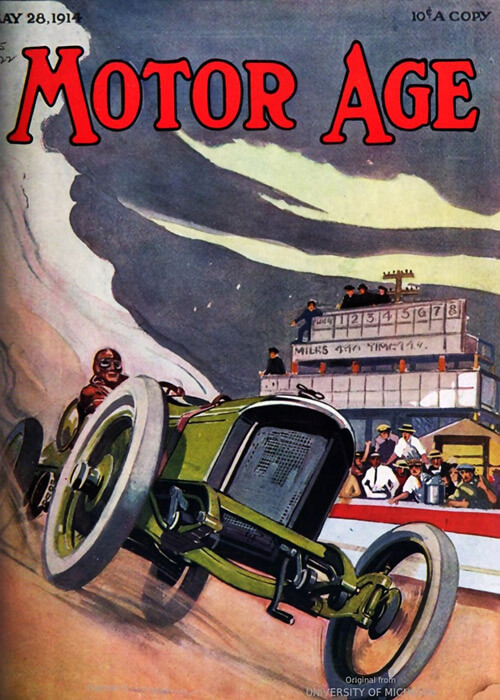
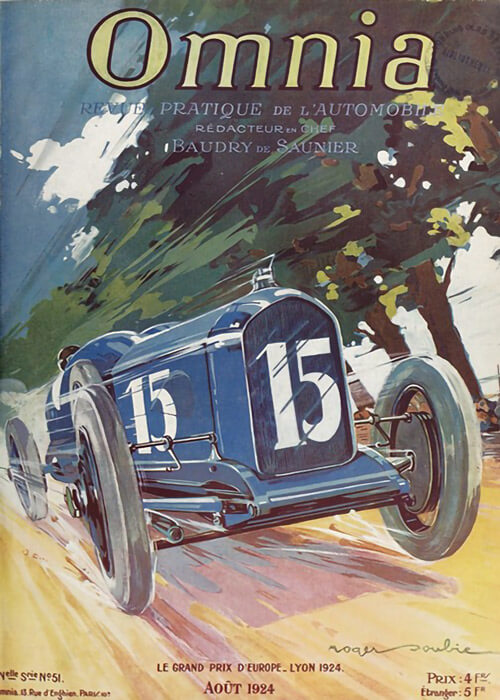
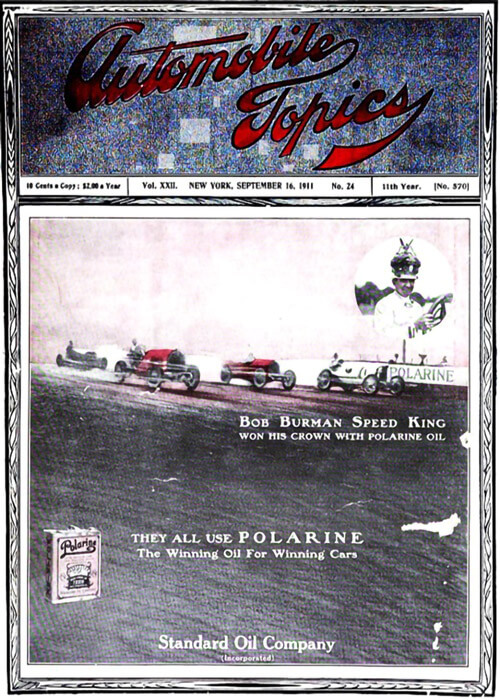
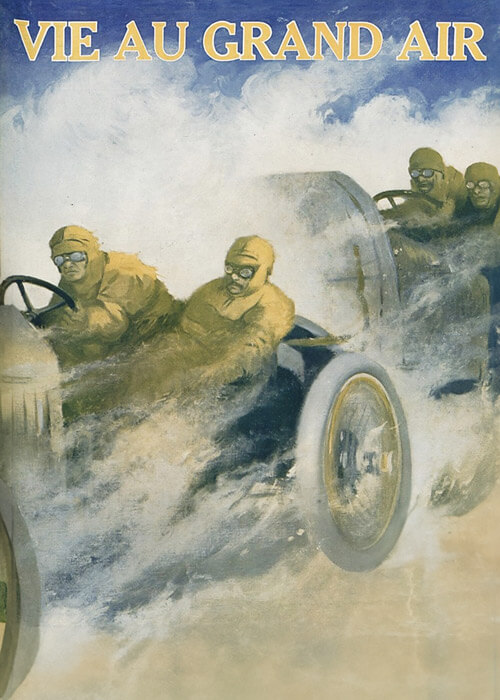
In the last week for the start of the 500-Mile Liberty Sweepstakes, the latest experiences during the several, but limited number of practice sessions, were more and more known by the „railbirds“.
Text and jpegs by courtesy of hathitrust.org www.hathitrust.org, compiled by motorracinghistory.com
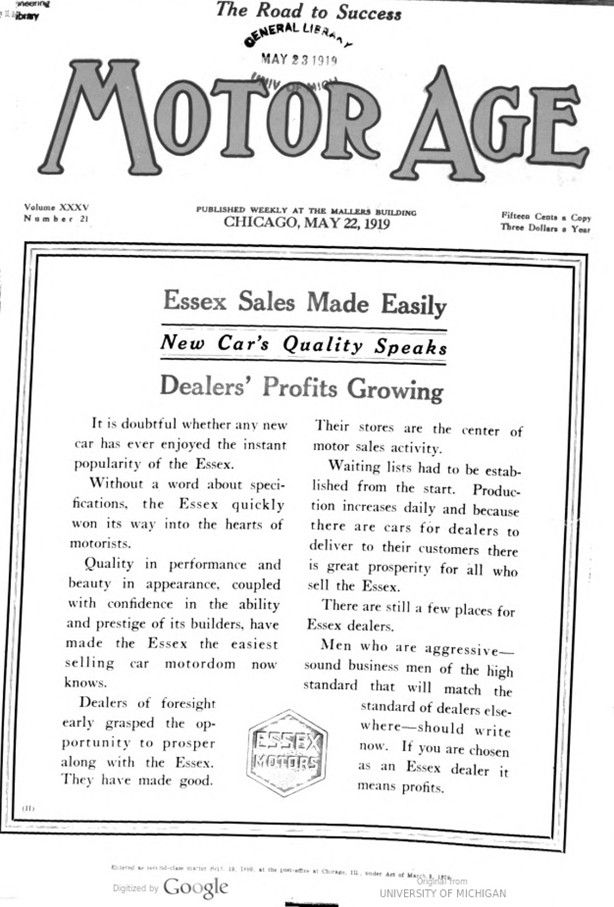
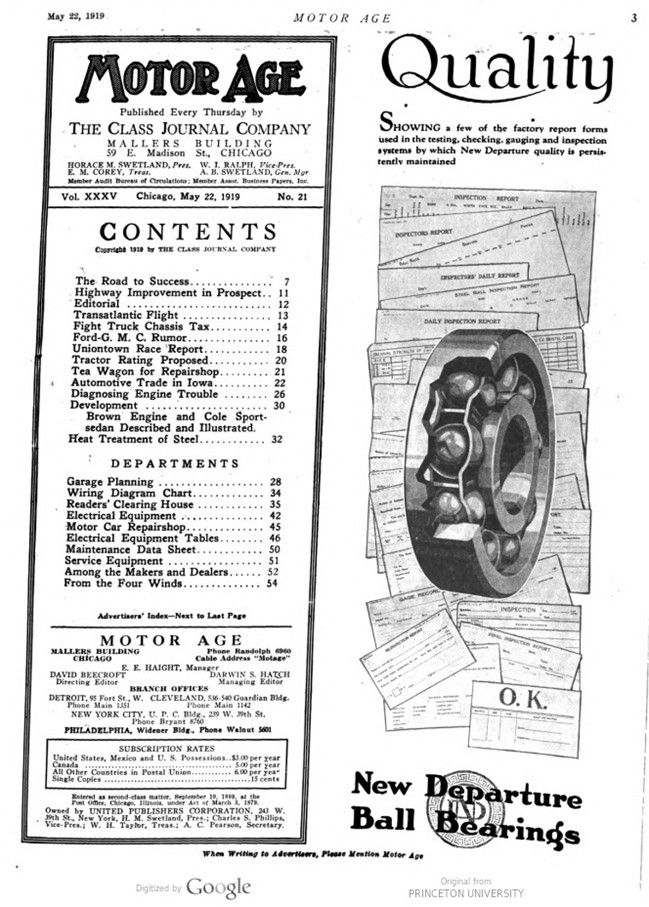
MOTOR AGE – Vol. XXV 35, No. 21, May 22, 1919
Drivers Check In for Indianapolis Event
Practice on Speedway for May 31 Race Has Begun
INDIANAPOLIS, Ind., May 19 – Practice on the brick oval for the 500-mile race May 31 is under way in earnest, with new drivers and cars checking in every day. The contingent from Uniontown is expected to arrive within a few days now that the Pennsylvania event is off the cards. Uniontown held a good many of the speed merchants who otherwise would have been at practice in Indianapolis before this.
Practice on the speedway already has developed a number of thrills for the railbirds, the most exciting of which was a near accident to Rene Thomas, winner of the 1914 Indianapolis, 500-mile race who narrowly escaped disaster during his first dash around the track in one of the new Ballot cars that are the dark horses of the coming event. The shock absorbers on Thomas’s car had not been tightened sufficiently to take care of the rebound caused by a tricky wave in the track.
Thomas, on his first trip around the course, hit the wave at a high speed and was thrown a foot into the air with his grip on the steering wheel as the only means of support while his car entered a dangerous swerve that usually means a spiral spin on the embankment of the track and often a crash at the end. The French driver got his car straightened out and stopped without injury. After tightening the shock absorber, he speeded up for several laps without trouble.
Cars Hide Speed
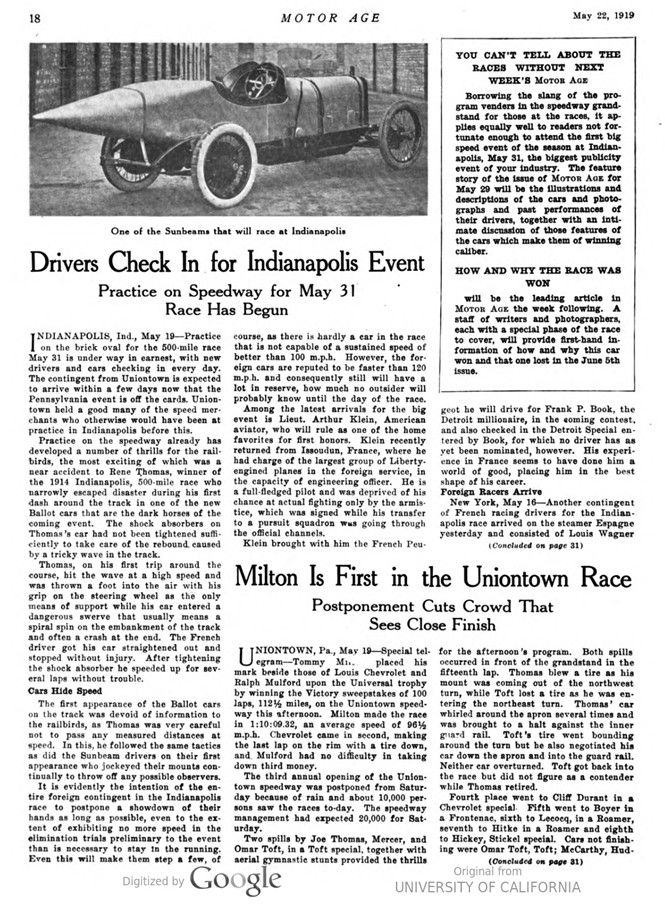
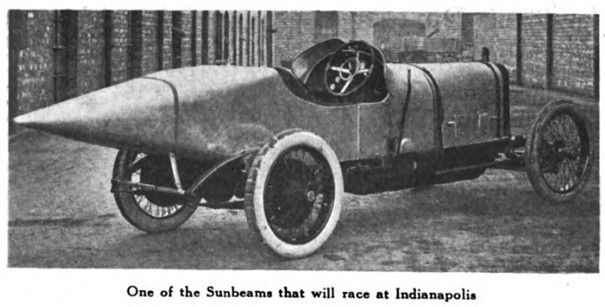
The first appearance of the Ballot cars on the track was devoid of information to the railbirds, as Thomas was very careful not to pass any measured distances at speed. In this, he followed the same tactics as did the Sunbeam drivers on their first appearance who jockeyed their mounts continually to throw off any possible observers.
It is evidently the intention of the entire foreign contingent in the Indianapolis race to postpone a showdown of their hands as long as possible, even to the extent of exhibiting no more speed in the elimination trials preliminary to the event than is necessary to stay in the running. Even this will make them step a few, of course, as there is hardly a car in the race that is not capable of a sustained speed of better than 100 m.p.h. However, the foreign cars are reputed to be faster than 120 m.p.h. and consequently still will have a lot in reserve, how much no outsider will probably know until the day of the race.
Among the latest arrivals for the big event is Lieut. Arthur Klein, American aviator, who will rule as one of the home favorites for first honors. Klein recently returned from Issoudun, France, where he had charge of the largest group of Liberty-engined planes in the foreign service, in the capacity of engineering officer. He is a full-fledged pilot and was deprived of his chance at actual fighting only by the armistice, which was signed while his transfer to a pursuit squadron was going through the official channels.
Klein brought with him the French Peugeot he will drive for Frank P. Book, the Detroit millionaire, in the coming contest, and also checked in the Detroit Special entered by Book, for which no driver has as yet been nominated, however. His experience in France seems to have done him a world of good, placing him in the best shape of his career.
Foreign Racers Arrive
New York, May 16 – Another contingent of French racing drivers for the Indianapolis race arrived on the steamer Espagne yesterday and consisted of Louis Wagner and Paul Bablot, who will drive Ballot cars, and Andre Boillot, a brother of Georges Boillot, the famous French racer, who appeared at the May 27, 1914, Indianapolis race and who was shot while serving as an aviation pilot in the war.
Andre Boillot will drive one of the Peugeot cars. He has not had an illustrious career as his brother, and his driving was confined to two years on the Brooklands track in England. He has not driven in any of the great French races.
The Ballot cars which Wagner and Bablot will drive, arrived on the same steamer. With them came three mechanics.
YOU CAN’T TELL ABOUT THE RACES WITHOUT NEXT WEEK’S MOTOR AGE
Borrowing the slang of the program venders in the speedway grand- stand for those at the races, it ap- plies equally well to readers not fortunate enough to attend the first big speed event of the season at Indianapolis, May 31, the biggest publicity event of your industry. The feature story of the issue of MOTOR AGE for May 29 will be the illustrations and descriptions of the cars and photographs and past performances of their drivers, together with an intimate discussion of those features of the cars which make them of winning caliber.
HOW AND WHY THE RACE WAS WON
will be the leading article in MOTOR AGE the week following. A staff of writers and photographers, each with a special phase of the race to cover, will provide first-hand information of how and why this car won and that one lost in the June 5th issue.