This is a secure sequencing of the complete race over all the 200 laps or over all of the 500 miles. More like a speciality for Motor Age of those days. Indeed, covering the whole race with such a detailed description, really gives a long and extended read. But it’s one that gives you the feeling: You Were There!
Text and jpegs by courtesy of hathitrust.org www.hathitrust.org, compiled by motorracinghistory.com
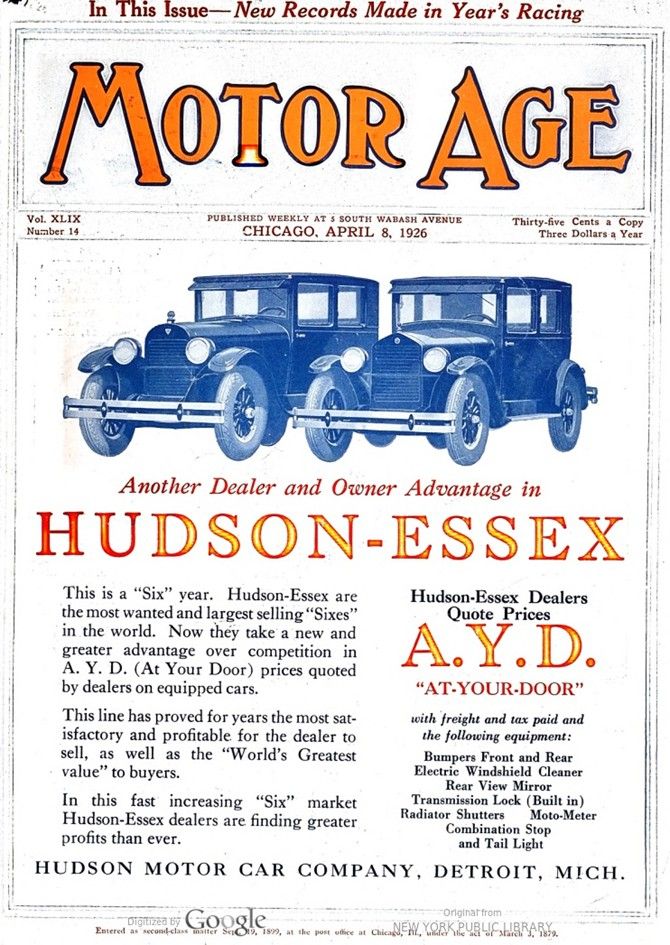
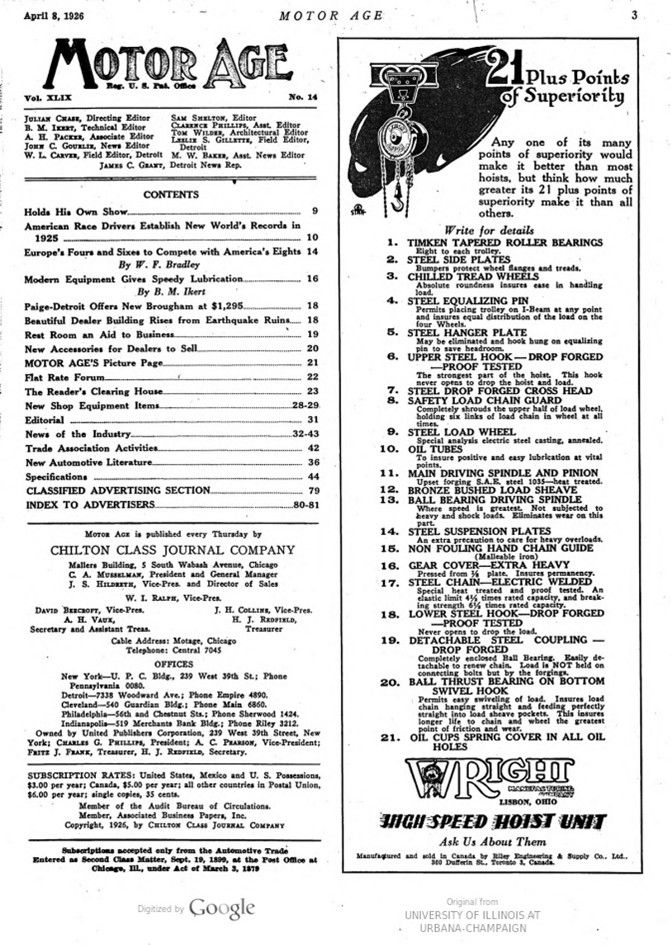
Motor Age, Vol. XLIX, 49, No. 14, April 8, 1926
Speed Goes Up In Swift Automobile Racing Championship Contest
How Pete De Paolo, Whirlwind of the Tracks, Forced Record After Record Down in 1925 Season and Won $90,000
By PAUL C. POMMER
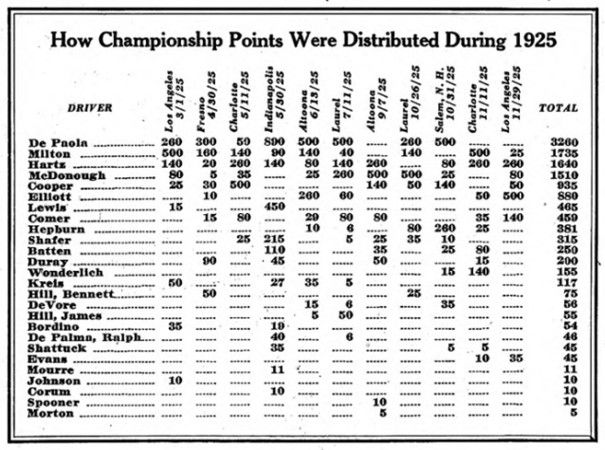
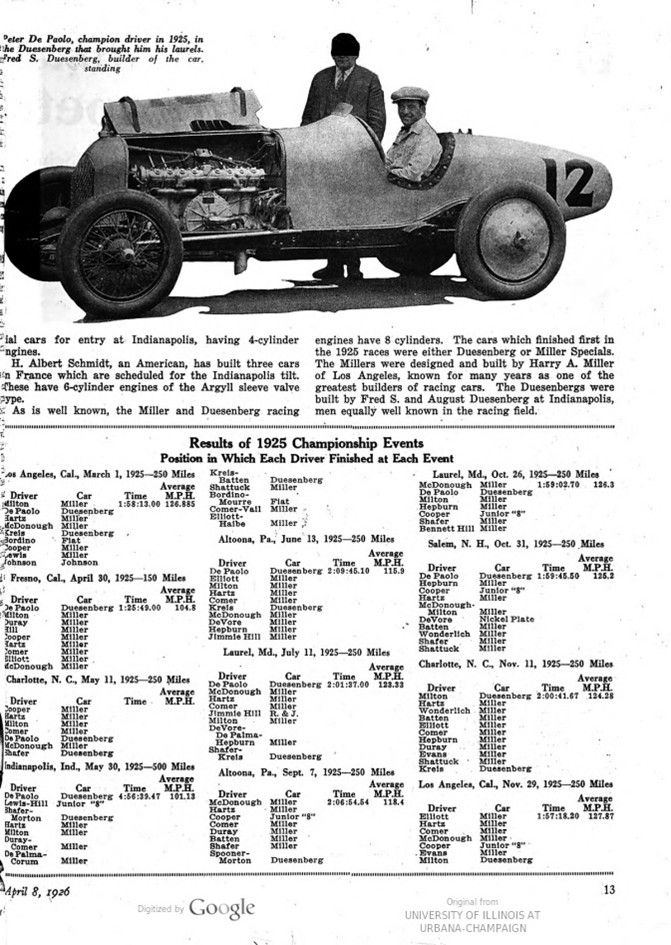
THE mad race for the title of World’s Champion Racing Driver of 1925 developed the greatest year in the history of automobile racing. Its story, in a great measure, is the story of the rise to fame of one Peter De Paolo, and Peter in his flying Duesenberg proved without a doubt his right to be called the Speed King of the year.
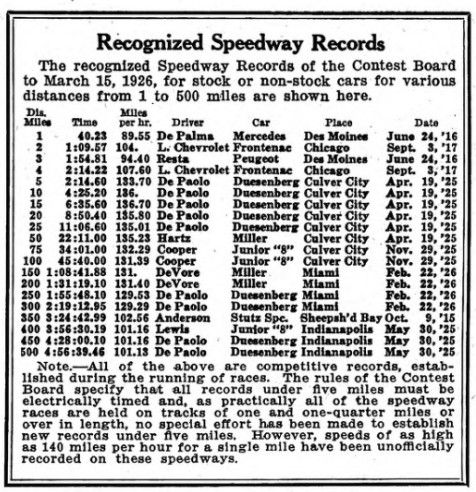
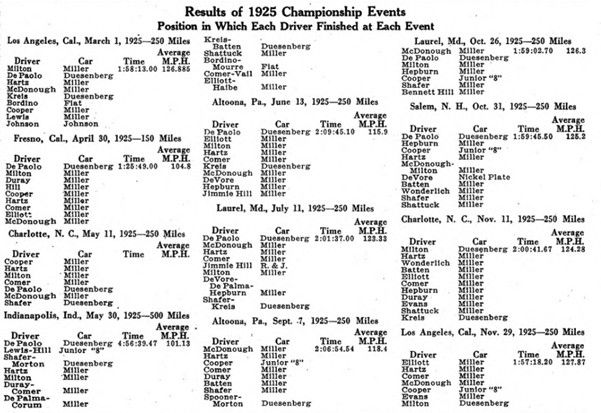
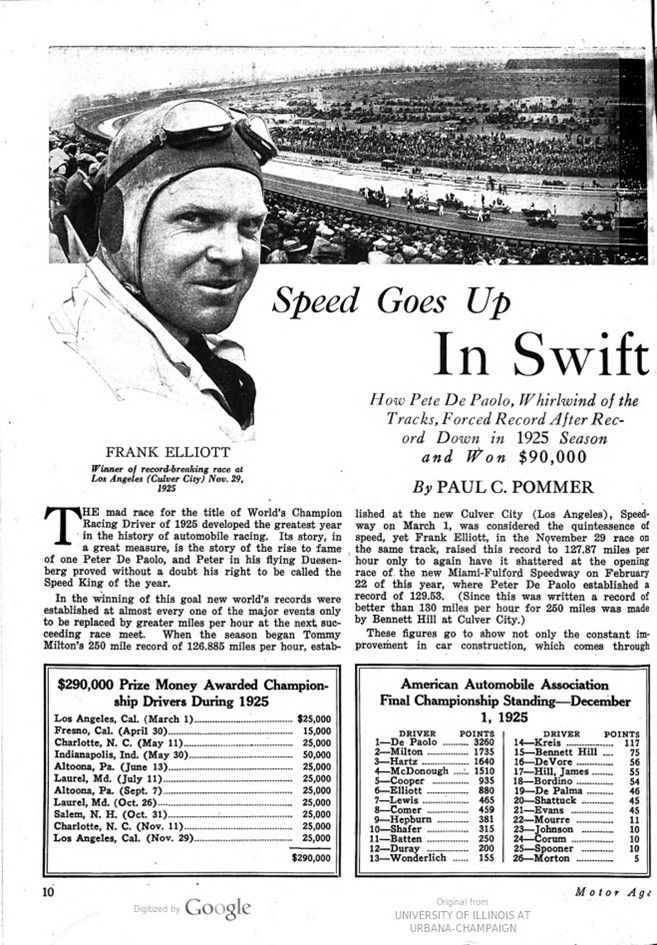
In the winning of this goal new world’s records were established at almost every one of the major events only to be replaced by greater miles per hour at the next, succeeding race meet. When the season began Tommy Milton’s 250 mile record of 126.885 miles per hour, established at the new Culver City (Los Angeles), Speed- way on March 1, was considered the quintessence of speed, yet Frank Elliott, in the November 29 race on the same track, raised this record to 127.87 miles per hour only to again have it shattered at the opening race of the new Miami-Fulford Speedway on February 22 of this year, where Peter De Paolo established a record of 129.53. (Since this was written a record of better than 130 miles per hour for 250 miles was made by Bennett Hill at Culver City.)
These figures go to show not only the constant improvement in car construction, which comes through the lessons learned in the heat of these racing battles, but also in a measure improvements speedway construction. A fact not generally known to the average layman is that several of these speed cars are owned or maintained by passenger car and accessory manufacturers and are used for experimental work, the knowledge gained thereby to be incorporated in their commercial products as improvements and new models offered to the public.
The qualities developed by Peter De Paolo in his mount constitute one of the secrets of his success. De Paolo had fewer pit stops than any other driver for the year, in fact went through most of them without a stop-his feat of completing the entire grueling 300 miles at Miami-Fulford for a world’s record of 129.29 miles per hour stamped him not only the champion driver but champion mechanic. His remarkable performance in winning the Indianapolis Memorial Day event at the heretofore unthought of speed of 101.13 miles per hour for the 500 miles is only another example of his preparation for his remarkable feat.
No races were held on the Kansas City Speedway during 1925, this track having been dismantled. New board speedways were constructed, however, at Laurel, Md., and Salem, N. H., and another track at Ful- ford-by-the-Sea, near Miami, Fla., held its inaugural race February 22, 1926. A fourth one is now in course of construction near Atlantic City, N. J., which is scheduled to open May 1. This is to be a one and one-half mile board track, the largest of its kind in the world, and is being built on a safety factor of 160 miles per hour.
The high-speed board „bowl type“ of speedway has firmly established itself as the most popular track, due largely to the fact that cars can maintain such thrilling speed on them and again because all of the cars are in view of the spectators all of the time. Of these board tracks, the one at Fresno, California, is a one mile oval, that at Laurel 1% miles, those at Culver City, Calif., Altoona, Pa., Salem, N. H., Charlotte, N. C., and Miami- Fulford, Fla., 14 miles in length, and at Atlantic City 1½ miles in length. The 22-mile brick track at Indianapolis, however, still maintains its prestige as the home of the country’s greatest sporting event, its Memorial Day attendance of 145,000 in 1925 topping the largest crowd of any other gathering of sport fans.
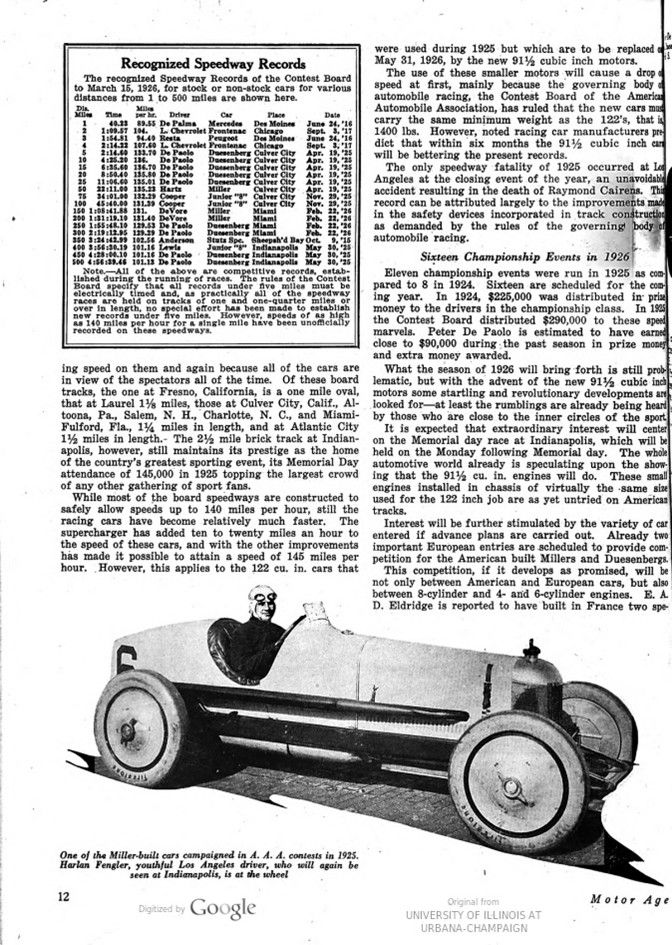
While most of the board speedways are constructed to safely allow speeds up to 140 miles per hour, still the racing cars have become relatively much faster. The supercharger has added ten to twenty miles an hour to the speed of these cars, and with the other improvements has made it possible to attain a speed of 145 miles per hour. However, this applies to the 122 cu. in. cars that were used during 1925, but which are to be replaced or May 31, 1926, by the new 912 cubic inch motors.
The use of these smaller motors will cause a drop of speed at first, mainly because the governing body of automobile racing, the Contest Board of the American Automobile Association, has ruled that the new cars must carry the same minimum weight as the 122’s, that is, 1400 lbs. However, noted racing car manufacturers predict that within six months the 912 cubic inch cars will be bettering the present records.
The only speedway fatality of 1925 occurred at Los Angeles at the closing event of the year, an unavoidable accident resulting in the death of Raymond Cairens. This record can be attributed largely to the improvements made in the safety devices incorporated in track construction as demanded by the rules of the governing body of automobile racing.
Sixteen Championship Events in 1926
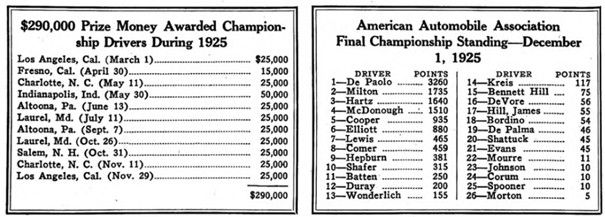
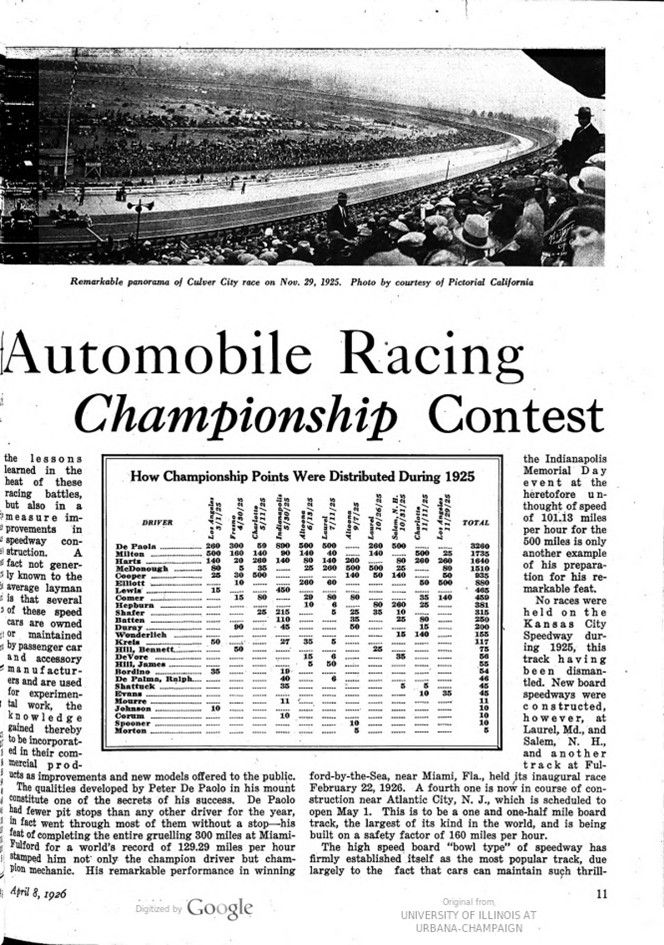
Eleven championship events were run in 1925 as compared to 8 in 1924. Sixteen are scheduled for the coming year. In 1924, $225,000 was distributed in prize money to the drivers in the championship class. In 1925 the Contest Board distributed $290,000 to these speed marvels. Peter De Paolo is estimated to have earned close to $90,000 during the past season in prize money and extra money awarded.
What the season of 1926 will bring forth is still problematic, but with the advent of the new 912 cubic inch motors some startling and revolutionary developments are looked for at least the rumblings are already being heard by those who are close to the inner circles of the sport.
It is expected that extraordinary interest will center on the Memorial day race at Indianapolis, which will be held on the Monday following Memorial day. The whole automotive world already is speculating upon the showing that the 912 cu. in. engines will do. These small engines installed in chassis of virtually the same size used for the 122-inch job are as yet untried on American tracks.
Interest will be further stimulated by the variety of car entered if advance plans are carried out. Already two important European entries are scheduled to provide com- petition for the American built Millers and Duesenberg’s.
This competition, if it develops as promised, will be not only between American and European cars, but also between 8-cylinder and 4- and 6-cylinder engines. E. A. D. Eldridge is reported to have built in France two special cars for entry at Indianapolis, having 4-cylinder engines.
H. Albert Schmidt, an American, has built three cars in France which are scheduled for the Indianapolis tilt. These have 6-cylinder engines of the Argyll sleeve valve type.
As is well known, the Miller and Duesenberg racing engines have 8 cylinders. The cars which finished first in the 1925 races were either Duesenberg or Miller Specials. The Millers were designed and built by Harry A. Miller of Los Angeles, known for many years as one of the greatest builders of racing cars. The Duesenberg’s were built by Fred S. and August Duesenberg at Indianapolis, men equally well known in the racing field.
Photos.
Page 10.
FRANK ELLIOTT – Winner of record-breaking race at Los Angeles (Culver City) Nov. 29, 1925
Remarkable panorama of Culver City race on Nov. 29, 1925. Photo by courtesy of Pictorial California
Page 11.
One of the Miller-built cars campaigned in A. A. A. contests in 1925. Harlan Fengler, youthful Los Angeles driver, who will again be seen at Indianapolis, is at the wheel
Page 12.
Peter De Paolo, champion driver in 1925, in the Duesenberg that brought him his laurels. Fred S. Duesenberg, builder of the car, standing